🕷️ Bee communication: waggle dance basics
🧾 Quick Facts
The waggle dance is a fascinating form of communication used by honeybees (Apis species) to convey vital information about the location of resources. This behavior highlights the complex social interactions within bee colonies, showcasing their cooperation and intelligence.
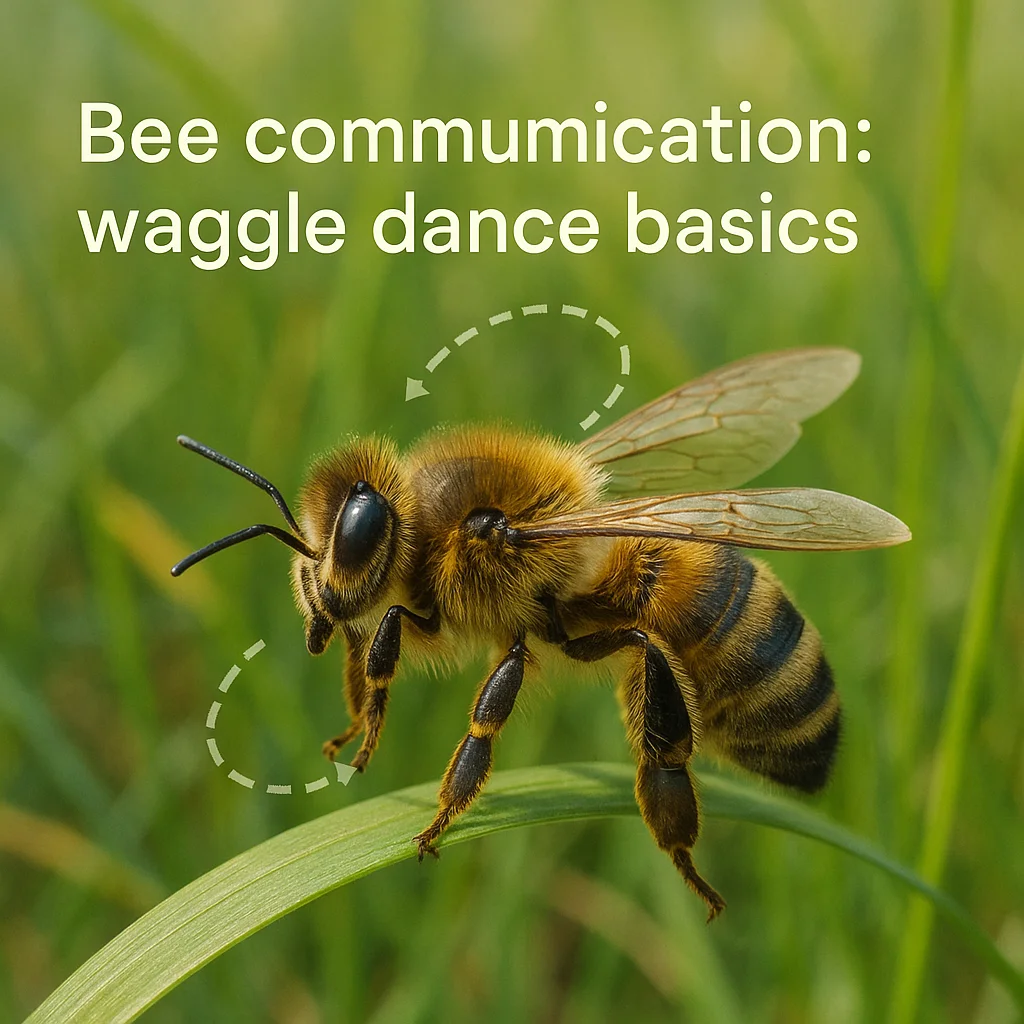
- Common names: Waggle dance
- Scientific name: Varies among Apis species
- Insect or not: Yes, it is an invertebrate insect
- Order / family: Hymenoptera / Apidae
- Typical size range (adult): 0.5 to 0.8 inches (honeybee size)
- Key colors/patterns: Black and yellow, striped patterns
- Activity: Diurnal
- Typical habitats: Meadows, gardens, orchards, forests
- Where in the world it occurs: Worldwide, except Antarctica
- Seasonality: Spring through autumn in temperate regions
🔍 Identification
The waggle dance itself is not an individual species, but an activity performed by the worker bees of certain species of honeybees. Recognizing it requires observing the characteristic movements bees make within the hive.
- Body shape and silhouette: Bees are robust with slight oval bodies that taper at the rear.
- Antennae type: Short with elbowed joints, sensitive to pheromones.
- Wing features: Two pairs of membranous wings that overlap when at rest.
- Leg traits and movement style: Six legs with specialized structures for pollen collection; seamless movement between walking and flying.
- Distinguishing look-alikes and common confusion: Differentiate from wasps (slimmer bodies, longer legs, no pollen baskets).
- Robust, striped, and hairy body
- Short, elbowed antennae
- Membranous wings with visible veins
- Pollen baskets on hind legs
- Strong fliers and organized in colonies
- Typically in group interactions
- Noticeable as "busy" in gardens and flowers
- Unique waggle or circular dances
🧠 Basic Body Structure
The body structure of honeybees, like all insects, is divided into three main sections: the head, thorax, and abdomen. They possess six legs attached to the thorax and two pairs of wings. Their bodies are covered with fine hairs that aid in pollen collection. Bees have a hard, protective exoskeleton that they shed periodically through molting to allow growth.
Invertebrate: Honeybees are invertebrates, meaning they lack an internal spine, relying on their exoskeleton for structural support.
🌍 Habitat & Distribution
Bees are found in a variety of environments conducive to their survival and activity, including forests, grasslands, urban gardens, and agricultural fields. They prefer areas abundant in flowering plants. Microhabitats within these environments include tree hollows, under logs, or other naturally sheltered spots.
Geographically, honeybees are present on every continent except Antarctica, thriving in temperate to tropical climates. Changes in habitat, due to urbanization and agriculture, affect their distribution and visibility.
📅 Seasonal Appearance & Activity
Most active in warmer months, honeybees emerge in spring and are visible through autumn. They are primarily diurnal, with activities peaking in the morning and afternoon. Weather conditions such as temperate temperatures and sunny days enhance their activity, while rain and cold limit it.
- Spring to autumn in temperate zones
- Best seen during the day
- Warm, clear weather increases activity
- Typically seen around flowering plants and gardens
🥚 Reproduction & Egg-Laying
Honeybees exhibit complex reproductive behaviors. Queen bees mate in flight with multiple drones, ensuring genetic diversity. After mating, queens return to the hive to lay eggs in wax cells. Queens can lay thousands of eggs during their lifetime.
Eggs are laid in hexagonal cells constructed by worker bees. Larvae hatch from these eggs and are nurtured by the worker bees until they metamorphose into adults. Egg-laying and colony growth primarily occur in seasons of plenty, especially spring and summer.
🌀 Metamorphosis & Life Cycle
Complete Metamorphosis: Honeybees undergo complete metamorphosis, consisting of egg, larva, pupa, and adult stages.
The eggs, laid by the queen in the wax comb, hatch into larvae that are fed by worker bees. This larval stage lasts about six days. Afterward, larvae spin a cocoon and pupate within their cells for about 12 days. Mature adults emerge from the cells, ready to perform hive duties or become future queens.
🍽️ Diet & Feeding Behavior
Bees primarily consume nectar and pollen during their lifecycle. Nectar is collected by worker bees and transported back to the hive, where it is converted into honey as a food reserve. Bees use chewing-lapping mouthparts to extract nectar from flowers and are considered crucial pollinators in ecosystems.
Their role as pollinators is vital for plant reproduction, benefiting both natural ecosystems and human agriculture by enhancing crop yields.
🦉 Predators & Defense
Honeybees face various predators, including birds, spiders, wasps, and mammals. Their primary defense mechanisms include stinging any threat, although they die shortly afterward due to the stinger being detached from their body structure.
Bees also use collective defense strategies. Alarm pheromones can be released to alert other bees to danger, prompting defensive swarming behaviors.
- Stinging as a deterrent
- Alarm pheromone release
- Dense group defense
- Camouflage through mimicking surrounding flowers
👥 Social Behavior & Swarms
Honeybees are social insects that live in colonies, often numbering in the tens of thousands. Within these colonies, complex social structures are maintained, with clearly defined roles such as queens, drones, and worker bees. Communication within the hive includes the waggle dance to share information about food locations.
Swarms may occur when a colony becomes too large and a queen, along with a portion of workers, seeks a new nesting site. This natural colony division often happens in spring or early summer.
🧭 Senses & Communication
Honeybees rely on a variety of senses for survival and communication, including sight, smell, and touch. Their compound eyes detect ultraviolet light, which helps locate flowers. Smell is crucial for pheromone communication, both for colony identification and defense.
The waggle dance is a sophisticated form of communication involving dance-like movements that convey information about the direction and distance of food sources relative to the sun's position. This tactile and visual cue showcases their intricate social interactions.
🌱 Role in the Ecosystem
Honeybees play a pivotal role in ecosystems as pollinators. They facilitate the reproduction of flowering plants, contributing to biodiversity. Their actions help ensure the survival of plant species and agricultural crops, which depend on pollination for fruit and seed production.
These interactions highlight mutualistic relationships where both plants and bees benefit. However, bees can also impact agricultural yields positively through effective pollination.
📉 Population & Conservation Notes
While honeybees are commonly encountered in many regions, their populations face threats from habitat loss, pesticides, diseases, and climate change. These stresses contribute to colony declines and highlight the need for conservation efforts to support bee health and habitats.
- Plant native flowering plants to support bee foraging
- Minimize pesticide use, especially during active bee seasons
- Create gardens with diverse plant species for year-round food
- Preserve natural habitats and nesting sites
⚠️ Human Interaction & Safety
Bees are not typically aggressive but will defend their hive if threatened. Bee stings occur typically when they feel provoked or threatened. In the case of stings, one should calmly wash the area with soap and water, avoid scratching, and seek professional medical advice if there is a severe reaction.
Respectful observation and habitat support are encouraged, avoiding the collection of wild specimens to minimize stress on local populations.
📌 Summary
- Honeybees identified by robust bodies, elbowed antennae, and striped patterns
- Waggle dance communicates resource locations within hives
- Found globally in varied habitats supporting flowering plants
- Active during the day, especially in warmer months
- Undergo complete metamorphosis with distinct life stages
- Feed on nectar and pollen, crucial pollinators in ecosystems
- Defend against predators through stings and group tactics
- Support conservation through planting flowers and reducing pesticide use