🕷️ Bee-friendly gardens: simple planting tips
🧾 Quick Facts
Creating a bee-friendly garden involves selecting plants that support the diverse needs of bee species around the world. Various bees, including honeybees and solitary species like mason bees, can thrive in gardens that are thoughtfully planned with their needs in mind.
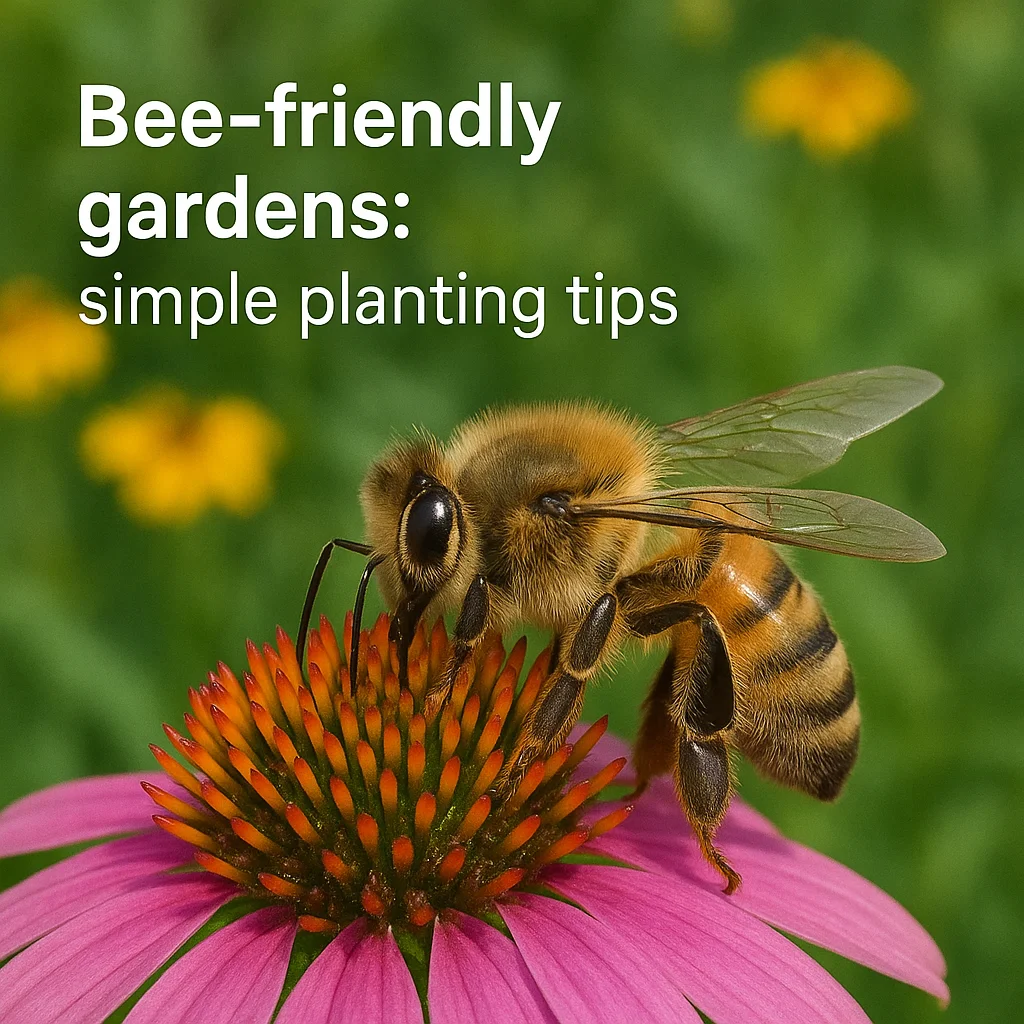
- Common names: Honeybee, Bumblebee, Mason bee, Leafcutter bee
- Scientific name: Varies
- Insect: Yes, all bees are insects
- Order/Family: Hymenoptera/Apidae and Megachilidae
- Typical size range: 0.2 to 1.2 inches (5–30 mm)
- Key colors/patterns: Yellow, black, metallic green or blue, striped pattern
- Activity: Day (diurnal)
- Typical habitats: Gardens, meadows, orchards, urban areas
- World distribution: Global, except Antarctica
- Seasonality: Varies by species, but usually spring to autumn
🔍 Identification
Recognizing bees in the garden requires attention to their distinctive body shapes and behaviors. While all bees have a few things in common, such as a three-part body and six legs, different species exhibit their own unique characteristics.
- Body shape: Compact, with distinct head, thorax, and abdomen
- Antennae: Medium length, typically elbowed
- Wing features: Transparent with visible veins; bumblebees have a more robust set
- Leg traits: Often hairy; bees collect pollen in 'pollen baskets'
- Top look-alikes: Wasps and hoverflies, which can be differentiated by their slimmer bodies and narrower waists
- Top ID Tips:
- Look for hairy bodies and carrying pollen on hind legs
- Note the flight pattern — bees tend to hover and dart
- Listen for a low hum or buzz sound
- Check for entry/exit behavior in flowers
- Look for nests in the ground or hollow stems
- Observe flower preference – bees are often drawn to blue and purple blooms
🧠 Basic Body Structure
Bees are invertebrates, meaning they lack a backbone. Their bodies comprise three distinct segments: the head, thorax, and abdomen. They possess six legs and two pairs of wings attached to the thorax. An exoskeleton protects their body, which they cannot shed once mature.
🌍 Habitat & Distribution
Bee-friendly environments range from urban gardens to expansive meadows. Microhabitats include bare soil, hollow plant stems, and tree cavities where they can nest and find food. Globally, bees are most commonly found in temperate regions, though they can adapt to various climates. Habitat changes, such as urbanization and intensive agriculture, can impact their presence and activities.
📅 Seasonal Appearance & Activity
Bee activity varies by region, depending on seasonal blooms. They are most visible during warmer months. Temperature plays a significant role in their emergence and foraging patterns, with most bees being diurnal. Rainy or cold weather may hinder their activity.
- Best Time to Spot It:
- Daylight hours during spring and summer
- Warm, sunny days increase activity
- Peak blooming times for local flowers
- When gardens are lush with diverse plants
🥚 Reproduction & Egg-Laying
Bee mating behaviors and egg-laying practices vary among species. Most bees lay their eggs in individual cells within a nest. Honeybees form social colonies with structured roles, whereas solitary bees like mason bees find their own nest sites. Egg numbers range widely, depending on species and environmental factors.
🌀 Metamorphosis & Life Cycle
Bees undergo complete metamorphosis, passing through the stages of egg, larva, pupa, and adult. The duration and characteristics of each phase depend on the species:
Egg stage: Eggs are laid in protected environments, where they remain until hatching. Timing varies based on temperature and species.
Larval stage: The larva consumes pollen and nectar gathered by the female. This stage lasts from several days to weeks.
Pupal stage: During pupation, the larva transforms within a cocoon, leading to its adult form.
🍽️ Diet & Feeding Behavior
Bees primarily feed on nectar and pollen, using specialized mouthparts to extract food. As pollinators, they play a crucial role in plant reproduction by transferring pollen from flower to flower. Larvae feed on provisions laid by the adult female, which ensures their growth and development.
🦉 Predators & Defense
Bees face various predators, including birds, spiders, and mammals. They defend themselves using camouflage, stings (in honeybees), and evasive flight maneuvers. Bumblebees and other species exhibit robust body armor and warning colors.
- Defense Highlights:
- Use of stingers for defense by honeybees
- Camouflage and fast flight
- Thick exoskeleton for protection
- Buzzing as a startle mechanism
👥 Social Behavior & Swarms
Bee social behavior varies; honeybees are known for their complex social structures including queens, workers, and drones. Solitary bees do not form colonies but may nest in proximity. Swarming, in honeybees, occurs when a queen leaves the colony to establish a new one, a natural reproductive process.
🧭 Senses & Communication
Bees have acute vision and can detect ultraviolet patterns on flowers. They communicate through pheromones and the famous "waggle dance" used to inform the colony about food source locations. Scent and sound play major roles in their interactions.
🌱 Role in the Ecosystem
Bees are vital pollinators, supporting the reproduction of many flowering plants, which contributes to ecosystem diversity. They also help sustain food webs by aiding plant growth, which provides habitats and resources for other organisms.
📉 Population & Conservation Notes
Bee populations face challenges due to habitat loss, pesticides, and climate change. Some species are experiencing declines, though in some regions, local abundance may still be high.
- How to Help (Low-Impact):
- Plant native flowering plants
- Avoid using pesticides
- Leave areas with loose soil for nesting
- Provide water sources in gardens
⚠️ Human Interaction & Safety
While bees generally do not sting unless provoked, they should be observed respectfully and from a distance. In case of stings, wash the affected area and seek professional advice if a severe reaction occurs. Encouraging respectful observation helps ensure these essential pollinators thrive.
📌 Summary
- Bees are critical pollinators found globally.
- They require habitats rich in flowering plants.
- They experience complete metamorphosis.
- Pollen and nectar are their primary food sources.
- Natural predators include birds and spiders.
- Bees use stings, camouflage, and flight for defense.
- Honeybees are social creatures with complex colonies.
- Conservation efforts can support bee populations.
- Respectful observation minimizes human interaction risks.