🕷️ Bumblebees: fluffy pollinators explained
🧾 Quick Facts
Bumblebees are one of the most beloved and well-known groups of pollinating insects, noted for their gentle demeanor and fluffy appearance. They play a pivotal role in maintaining the health of our ecosystems through their pollination activities.
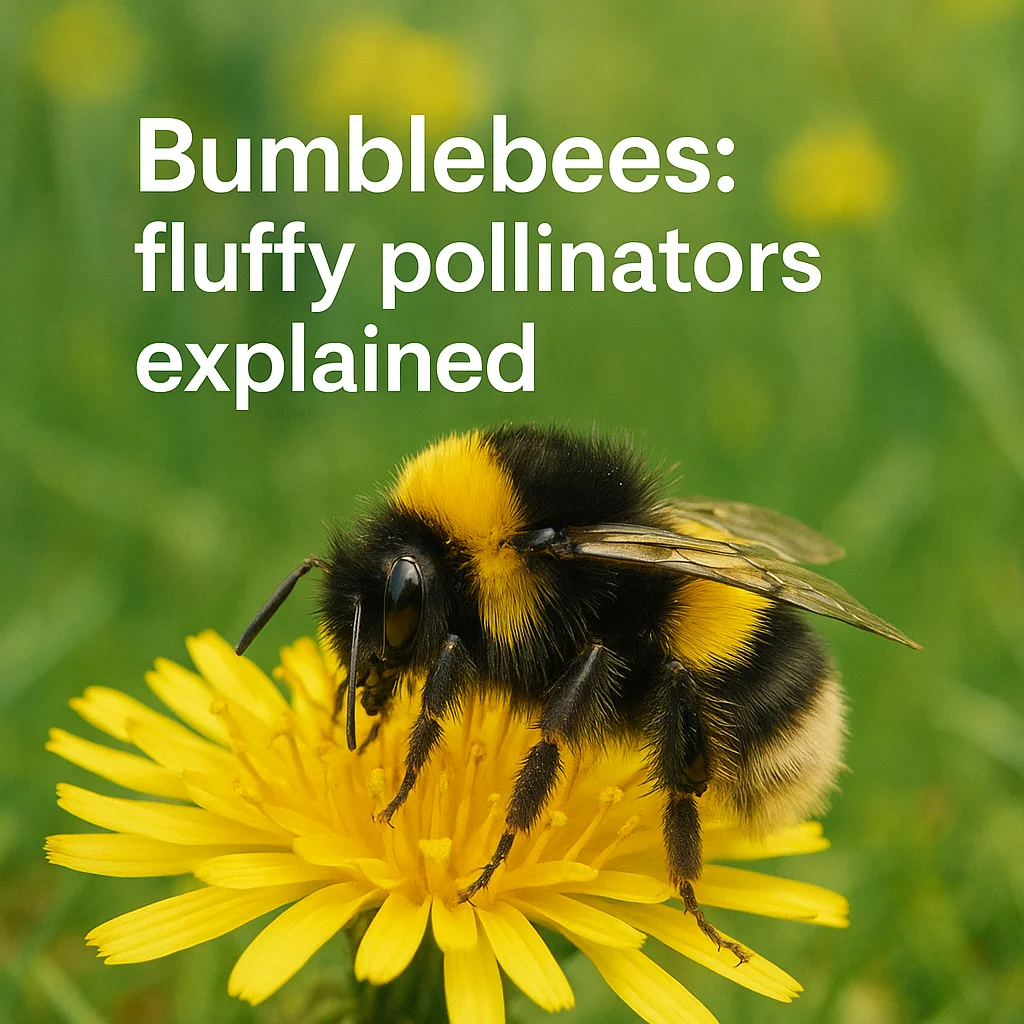
- Common names: Bumblebee
- Scientific name: Bombus species (varies)
- Insect or not: Yes, bumblebees are insects, specifically invertebrates
- Order / family: Hymenoptera / Apidae
- Typical size range: 1 to 2.5 cm (adult)
- Key colors/patterns: Black and yellow bands, some with white or orange
- Activity: Diurnal (active during the day)
- Typical habitats: Meadows, gardens, farmlands, open woodlands
- Where in the world: Worldwide, except for Antarctica
- Seasonality: Spring to late summer (varies by region)
🔍 Identification
Recognizing bumblebees in the field can be a rewarding experience. Their plump bodies and dense, furry hair give them a distinctive silhouette. Bumblebees have short, rounded antennae and are equipped with large, transparent wings that hum when they fly. Their movement is typically slow and deliberate, making them easily distinguishable from other bee-like insects.
While bumblebees share similarities with honeybees, they can be differentiated by their larger size and more robust, hairy bodies. Another potential for confusion can occur with certain solitary bees, but bumblebees' sociable nature and distinctive banding patterns are key identification features.
- Top ID Tips:
- Plump and furry body
- Black and yellow banding patterns
- Short, rounded antennae
- Large wings producing a hum
- Sociable behavior
- Robust, slow-moving flight
- Typically found on flowers
- Whole specimen in frame with color contrasts
🧠 Basic Body Structure
Bumblebees, like all insects, have three main body parts: the head, thorax, and abdomen. The head houses the eyes, antennae, and mouthparts. The thorax is where the wings and legs are attached, playing a crucial role in flight and mobility. The abdomen contains vital internal organs and the stinger in females.
Bumblebees have six legs, each jointed and adapted for bustling activity among flowers. With their exoskeleton, bumblebees can protect themselves and support their body structure, shedding parts of it in a process known as molting during immature life stages as they grow. Bumblebees are invertebrates, meaning they lack a backbone, a distinguishing feature from vertebrate animals.
🌍 Habitat & Distribution
Bumblebees are highly adaptable, residing in a range of environments, from lush gardens and meadows to edges of suburban areas and forests. They are partial to habitats rich in flowering plants, providing ample food sources. Within these ecosystems, they can often be found nesting underground in old rodent burrows or grassy tussocks.
Globally, bumblebees are found predominantly in temperate climates across North America, Europe, and parts of Asia. While different bumblebee species have specific preferences, they generally favor cooler temperatures and regions where seasonal flowering is abundant. Habitat modifications can affect populations, with urbanization leading to loss of suitable nesting and foraging locations.
📅 Seasonal Appearance & Activity
Bumblebees are typically visible from spring through to late summer as floral resources peak. As diurnal insects, they are most active during sunny days, diligently visiting blossoms in search of nectar and pollen.
- Best Time to Spot It:
- Spring to late summer
- Mid-mornings and early afternoons
- Warm, sunny days
- Calm, dry weather conditions
- Bloom periods of flowers
🥚 Reproduction & Egg-Laying
In the world of bumblebees, reproduction begins with the queen bee, who mates soon after emerging from her overwintering site. Following mating, the queen searches for a suitable site to establish her nest, commonly choosing an abandoned rodent hole or a tussock of grass.
Egg-laying occurs at this new nesting site where the queen initially lays a batch of worker eggs, fertilizing each with stored sperm. These workers then take over foraging duties and support the queen in expanding the colony. Egg counts and laying strategies vary between species, with some queens producing hundreds of eggs over a season to ensure colony growth and sustainability.
🌀 Metamorphosis & Life Cycle
Bumblebees undergo complete metamorphosis, encompassing four distinct life stages: egg, larva, pupa, and adult.
In the spring, after choosing her nesting site, the queen lays eggs that hatch into larvae. These larvae consume a nourishing mixture derived from pollen and nectar supplied by the queen, developing rapidly over a couple of weeks. Afterward, the larvae enter the pupal stage, where they undergo transformation, emerging as adult workers ready to assist in the colony's efforts.
The life span of bumblebees varies among different species and roles within the hive, but typical worker bees may live for several weeks, while a queen's life extends up to a year, encompassing multiple breeding seasons.
🍽️ Diet & Feeding Behavior
Bumblebees are generalist foragers that primarily feed on nectar and pollen, serving as crucial pollinators. In their larval stages, they depend on protein-rich pollen that the adult bumblebees have gathered from flowers.
With their specialized mouthparts, including a long, flexible proboscis, bumblebees adeptly extract nectar from deep floral tubes. As proficient pollinators, they transfer pollen grains while moving from flower to flower, facilitating the reproductive processes of many plant species, ensuring ecosystem health and the production of crops.
🦉 Predators & Defense
Bumblebees face a variety of natural predators including birds, wasps, and spiders. They have evolved numerous defense strategies to counter these threats. Their most renowned defense is their ability to sting potential threats, although they are not aggressive and typically sting only when threatened. Bumblebees' vibrant patterns can also serve as a warning to predators about their capability to defend themselves.
Other defensive strategies involve creating their nests in concealed locations and developing a thick coat of fur that not only aids in maintaining warmth but also provides physical protection.
- Defense Highlights:
- Capable of stinging
- Warning coloration
- Nest concealment
- Thick fur as armor
👥 Social Behavior & Swarms
Bumblebees are social insects, living in colonies that can comprise 50 to 500 individuals, governed by a sole queen. The colony structure is organized into roles that include the queen, workers, and in the latter part of the season, drones (males) and new queens are produced.
Within these colonies, bumblebees communicate through chemical signals and tactile interactions, enabling efficient resource allocation and task distribution among community members. While bumblebees do not swarm in large migratory groups, they do exhibit organized seasonal expansion based on resource availability and reproductive cycles.
🧭 Senses & Communication
Bumblebees possess acute senses that aid them in navigation and foraging. They use their compound eyes to detect UV patterns on flowers, which leads effectively to nectar sources. Bumblebees also employ olfactory senses through their antennae to recognize floral scents and pheromones essential for intra-colony communication.
Communication within a colony is further facilitated by pheromones, which alert colony members to key events such as threats or the need for increased foraging. While not as well-known for dances as honeybees, bumblebees exhibit intricate behaviors to relay resource information and maintain social cohesion.
🌱 Role in the Ecosystem
Bumblebees are indispensable pollinators, contributing significantly to the reproductive success of numerous wild plants and cultivated crops. Their foraging behavior fosters ecosystem diversity and the production of seeds and fruits essential for various wildlife.
Through pollination, bumblebees establish mutualistic relationships, particularly with flowers that are adapted to their robust build. This ensures continued plant reproduction and biodiversity across different habitats. While bumblebees benefit agriculture, enhancing crop yields, they face challenges from habitat loss and agricultural intensification, requiring balance between human activities and ecosystem conservation.
📉 Population & Conservation Notes
Bumblebee populations vary globally. While some species are common, others face declines attributed to habitat destruction, pesticide use, and climate change. These pressures necessitate proactive conservation measures.
- How to Help (Low-Impact):
- Plant native flowering plants
- Reduce pesticide use
- Leave parts of gardens undisturbed for nesting
- Engage in citizen science monitoring programs
⚠️ Human Interaction & Safety
Bumblebees can sting, but they are docile and sting only when provoked. The sting may cause a mild reaction, but if severe, professional medical advice should be sought. Observers should enjoy and respect bumblebees without disturbing natural behaviors or attempting to capture them.
By fostering respectful and safe interactions, we can promote bumblebee conservation while appreciating their ecological significance.
📌 Summary
- Recognizable by their fluffy bodies and black-yellow banding
- Habitat includes meadows, gardens, and forests worldwide
- Visible during warm months, active in daylight
- Undergo complete metamorphosis
- Nectar and pollen as main diet; key pollinators
- Natural predators and effective defenses
- Social bees with colonies featuring distinct roles
- Vital ecological roles; conservation needed
- Non-aggressive; peaceful coexistence encouraged