🕷️ Hornets vs wasps: quick differences
🧾 Quick Facts
Hornets and wasps are often confused due to their similar appearance and behaviors, but there are distinct differences between the two. Understanding these differences is crucial for identification and learning about their roles in the ecosystem.
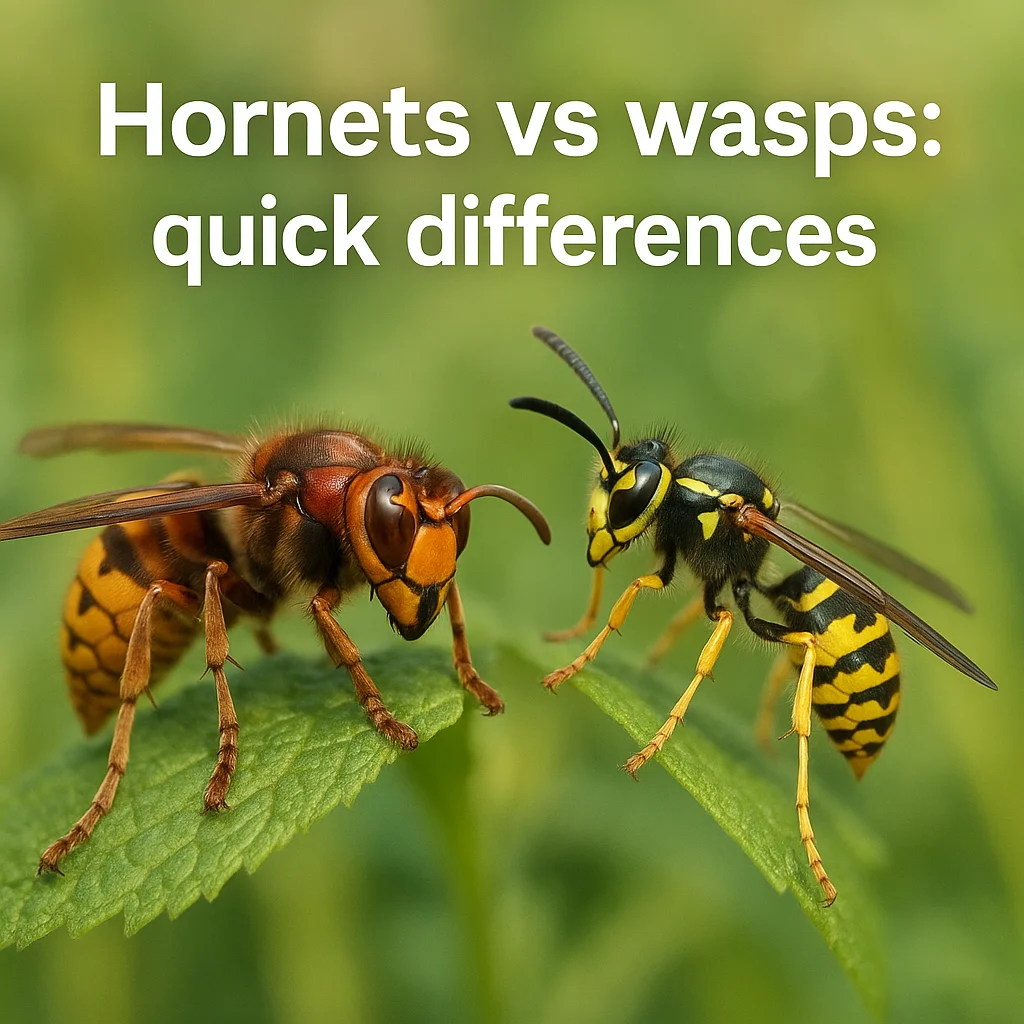
- Common names: Hornet, Wasp
- Scientific name: Varies by species
- Insect or not: Both are insects; they are invertebrates with an exoskeleton
- Order/Family: Hymenoptera/Vespidae
- Typical size range: Hornets are generally larger, ranging from 2.5 to 3.5 cm; wasps typically range from 1 to 2.5 cm
- Key colors/patterns: Hornets often have a black and orange or yellow pattern; wasps may have a wider range of color patterns including yellow and black
- Activity: Primarily diurnal (active during the day)
- Typical habitats: Forests, gardens, urban areas
- Where in the world it occurs: Found worldwide, though specific species vary by region
- Seasonality: Most visible in spring and summer months
🔍 Identification
Distinguishing hornets from wasps can be challenging due to their similar shapes and nesting behaviors. However, with careful observation, there are features that can help in identifying which is which.
- Hornets have a robust body with a more rounded abdomen compared to wasps.
- Wasps often have slender, elongated bodies with a narrow waist (petiole).
- Both hornets and wasps possess long, segmented antennae.
- The wings of hornets and wasps are generally clear with distinct venation.
- Hornets tend to have larger heads relative to their body size compared to wasps.
- Top ID Tips:
- Look for size difference: hornets are usually larger.
- Check color patterns: hornets often darker, with more reddish tones.
- Observe body shape: hornets are generally bulkier.
- Note antennae: similar across both but can help confirm identification.
- Inspect nest type: paper nests in trees or buildings often indicate wasps or hornets.
- Watch movement patterns: both can hover, but hornets may appear more deliberate.
- Identify activity: seen more commonly during day time.
🧠 Basic Body Structure
As insects, both hornets and wasps share a basic body plan consisting of a head, thorax, and abdomen. They possess six legs and two pairs of wings. Their bodies are covered by an exoskeleton, which they must molt as they grow. Hornets and wasps are invertebrates, meaning they have no spine and rely on their exoskeleton for structural support.
🌍 Habitat & Distribution
Hornets and wasps are highly adaptable, inhabiting a variety of environments ranging from forests and grasslands to urban gardens and parks. Microhabitats such as underneath bark, within leaf litter, and along the edges of water bodies can house their nests. Their distribution is global, though particular species are more common in specific regions due to climatic conditions, such as temperate or tropical climates. Changes in land use, urbanization, and climate can affect their habitats and sightings.
📅 Seasonal Appearance & Activity
Both hornets and wasps are typically observed in the warmer months, especially during spring and summer when temperatures rise and food is plentiful. These insects are primarily active during the day. Weather conditions such as rain or extreme heat can influence their visibility and behavior.
- Best Time to Spot It:
- Late spring to early autumn
- Daytime when temperatures are mild
- Dry, warm days are ideal
- Less active during cold or rainy periods
🥚 Reproduction & Egg-Laying
Mating behaviors in hornets and wasps include intricate aerial displays and pheromone signaling. After mating, females typically lay eggs in secure nests made from chewed plant material and saliva, creating a paper-like structure. Egg-laying locations vary by species but can include tree branches, eaves of buildings, or subterranean environments. Egg counts can vary significantly, with some species laying only a few eggs and others potentially laying hundreds over a lifetime.
🌀 Metamorphosis & Life Cycle
Hornets and wasps undergo complete metamorphosis, progressing from egg to larva to pupa before reaching adulthood. The larvae are usually fed by the adults with chewed-up insects or nectar. This stage typically lasts a few weeks. The pupal stage is a time of transformation, where the living organism develops its adult features within a protective casing. Adult lifespan varies by species, with some living only a few weeks while others survive for several months.
🍽️ Diet & Feeding Behavior
Hornets and wasps exhibit varied diets depending on their stage of life. They are generally predatory as larvae, consuming other insects, and as adults may consume nectar, fruits, and sometimes even prey. Their mouthparts are adapted for both chewing and sucking, allowing flexibility in diet. They play important roles as both predators of pest species and as pollinators, contributing significantly to ecosystem health.
🦉 Predators & Defense
Both hornets and wasps face predation from birds, reptiles, amphibians, spiders, and even mammals. Defense strategies include camouflage, quick escape, and aggressive stinging. Some species produce chemicals to ward off threats, and their distinct colorations serve as warnings to potential predators.
- Defense Highlights:
- Stinging as a primary defense
- Warning coloration (aposematism)
- Camouflage in certain species
- High-speed escape flights
👥 Social Behavior & Swarms
Hornets and wasps can be either social or solitary. Social species form colonies with distinct roles including workers, queens, and drones. Communication within colonies is crucial, often relying on chemical signals (pheromones) to coordinate activities. While individual hornets and wasps are not typically aggressive, disturbances to their nests can trigger swarming as a defense mechanism.
🧭 Senses & Communication
Equipped with acute senses, hornets and wasps rely on vision and smell to navigate their environments. They use chemical signals—pheromones—to communicate among colony members or to mark trails to food sources. Some wasps may even produce sounds through stridulation or wing vibrations to communicate specific messages.
🌱 Role in the Ecosystem
Hornets and wasps are vital components of ecosystems. They act as pollinators, assisting in the reproduction of flowering plants. As predators, they help control pest populations. They also serve as prey for higher-level predators, making them integral to the food web. While they can be considered nuisances when their nests are near human activity, they contribute significantly to ecological balance.
📉 Population & Conservation Notes
Populations of hornets and wasps are generally stable in many regions, though local abundance can vary. Habitat loss, pesticide use, and climate change pose threats to some species. Conservation efforts focus on reducing pesticide use and preserving natural habitats. Public education about their ecological roles can aid in their conservation by reducing unnecessary fear and hostility.
- How to Help (Low-Impact):
- Plant native flowering plants
- Avoid using broad-spectrum pesticides
- Provide nesting habitats, like undisturbed soil or natural wood
- Encourage habitat diversity in gardens
⚠️ Human Interaction & Safety
Both hornets and wasps can sting, particularly when threatened or when their nests are disturbed. Stings can be painful but usually are not dangerous unless a person is allergic or stung multiple times. General first aid involves washing the area and applying a cold compress to reduce swelling. It is important to seek professional medical assistance if a severe allergic reaction occurs. Observing these insects from a distance and not provoking them is key to safe interactions.
📌 Summary
- Hornets and wasps are insects with distinct body shapes despite similarities.
- They inhabit a wide range of environments globally.
- Most active during warm months of spring and summer.
- Complete metamorphosis: egg to adult stages.
- Diverse diet ranging from insects to nectar.
- Natural defense mechanisms include stinging and coloration.
- Social structures vary from solitary to complex colonies.
- Significant ecological roles as predators and pollinators.
- Population status generally stable, but local variations exist.
- Stings are a primary human concern; caution and respect advised.