🕷️ Fig Wasps The Pollination Partnership Explained
🧾 Quick Facts
Fig wasps represent a fascinating group of insects that play a crucial role in the pollination of fig trees. These tiny creatures are integral to the life cycle of figs, establishing a unique mutualistic relationship.
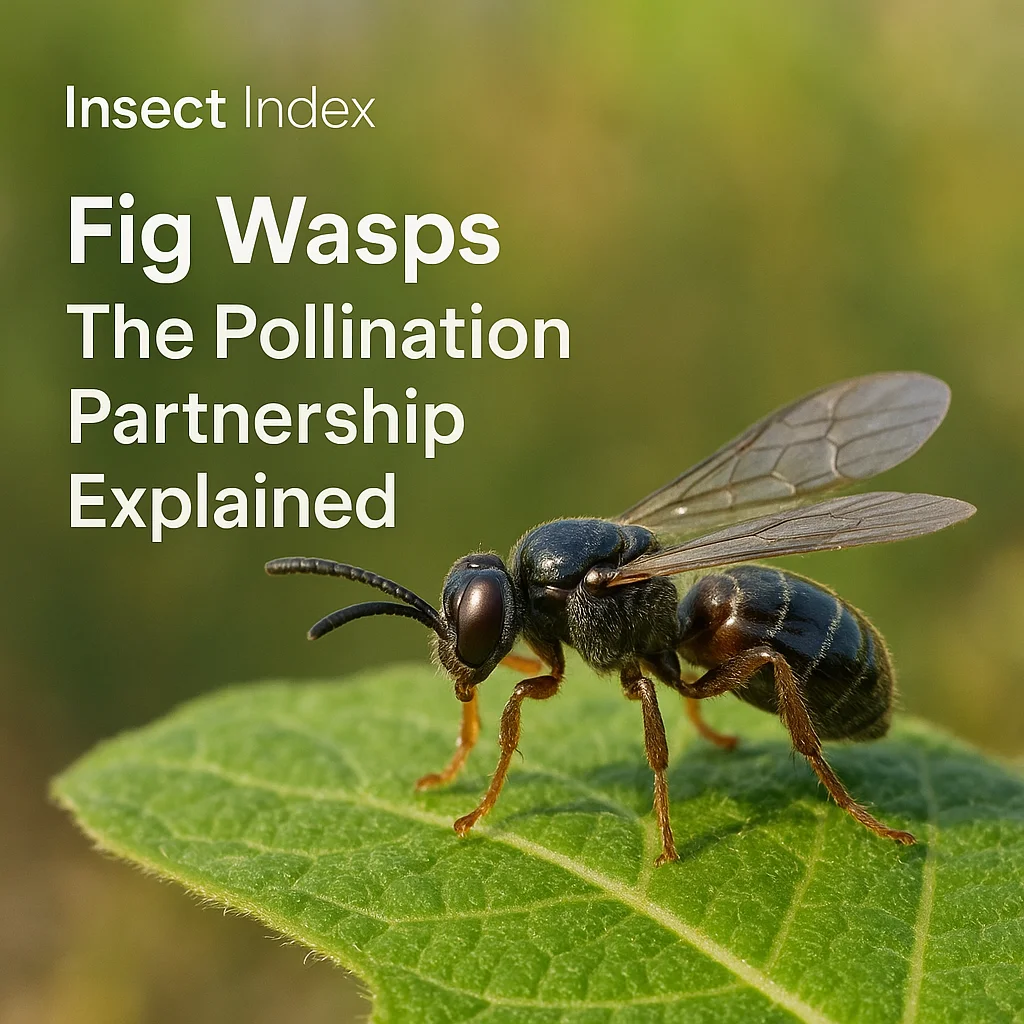
- Common names: Fig wasps
- Scientific name: Varies
- Insect or not: Insect (invertebrate)
- Order / family: Hymenoptera / Agaonidae
- Typical size range: 1 to 2 mm
- Key colors/patterns: Brown or black, often glossy
- Activity: Day and night, varies by species
- Typical habitats: Tropical and subtropical forests
- Where in the world it occurs: Primarily in Africa, Asia, the Americas, and Oceania
- Seasonality: Year-round in tropical areas; varies by region
🔍 Identification
Identifying fig wasps involves observing their very small size and distinctive behaviors associated with figs. They have a compact body with a clear division between the head, thorax, and abdomen. These wasps typically have smooth, shiny bodies and two pairs of membranous wings. The antennae are elbowed, a common trait in many wasps. Fig wasps navigate in and out of fig syconia—a unique feature that sets them apart from other small insects.
- Very small, typically 1-2 mm in length
- Glossy brown or black bodies
- Membranous wings neatly tucked over the back when at rest
- Elbowed antennae distinguish them from other small wasps and flies
- Associate closely with fig trees, often seen entering or exiting figs
- Notable for their specific fig-related behaviors
- Look for them inside figs, a distinct habitat feature
- Glossy exoskeleton gives them a distinctive sheen
🧠 Basic Body Structure
Like all insects, fig wasps are composed of three main body segments: the head, thorax, and abdomen. The head houses sensory organs such as the compound eyes and antennae. They have six legs attached to the thorax, and two pairs of wings which are crucial for their short flights between figs. Fig wasps have an exoskeleton, providing structure and protection. As invertebrates, they lack a vertebral column.
🌍 Habitat & Distribution
Fig wasps thrive in tropical and subtropical forest habitats where fig trees abound. They find suitable microhabitats within the enclosed environments of figs. Geographically, they are found across various continents including Africa, Asia, and regions of the Americas and Oceania. Their presence correlates closely with the distribution of fig trees. Habitat degradation, especially deforestation, significantly impacts their distribution and local population dynamics.
📅 Seasonal Appearance & Activity
Fig wasps are generally active year-round, especially in regions where fig trees produce fruit continuously. Visibility slightly varies, peaking during times of fig production. Their activity is typically not limited to specific times of day, showing both diurnal and nocturnal behaviors.
- Peak visibility during fig tree flowering/fruiting seasons
- Active in both dry and rainy seasons in tropical climates
- Primarily spotted during times of fig cultivation
- Activity persists in diverse weather, though heavy rain can limit movement
- Better observations in regions with abundant fig species
🥚 Reproduction & Egg-Laying
Fig wasps engage in a fascinating courtship within figs, where mating generally occurs. The female lays her eggs inside the fig after pollination. After depositing eggs, the fig often seals, protecting developing larvae. Depending on the species and regional contexts, egg count can vary, but the strategy of embedding eggs within a secure fig environment is common across the board.
🌀 Metamorphosis & Life Cycle
Fig wasps undergo complete metamorphosis, transitioning through egg, larva, pupa, and adult stages. Eggs are laid within fig inflorescences where larvae feed on fig seeds or gall tissue. This ensures they have the nutrition required for development. The pupation occurs within the fig's protective structure. Once the wasp reaches adulthood, it emerges to continue the cycle, often timing its life cycle to coincide with the fig's reproductive phase.
🍽️ Diet & Feeding Behavior
At all life stages, fig wasps depend on their symbiotic fig trees. Larvae consume fig seeds or gall tissues, depending on the type of fig wasp. Ultimately, the adults feed minimally, as their primary role is reproduction and pollination. Their feeding tools are not specialized for external foraging, reinforcing their reliance on the fig tree for sustenance.
🦉 Predators & Defense
Fig wasps face predation from a variety of insectivores such as birds, reptiles, and larger predatory insects. Their primary defense strategy is concealment within figs, which provides physical protection. Some also engage in mimicry and remain motionless to avoid detection.
- Seek refuge inside figs, minimizing exposure
- Small and glossy appearance helps in camouflage
- Quick movements when disturbed
- Protection by fig structures makes predators' access difficult
👥 Social Behavior & Swarms
Fig wasps are not generally social and do not form colonies. They engage in solitary behaviors, focused largely on breeding and pollination within the fig microhabitat. Their interactions are chiefly between mating pairs and competing for optimal breeding sites within figs.
🧭 Senses & Communication
Fig wasps rely on a range of senses to interact with their environment, particularly smell and touch. Pheromones play an essential role in mating, while their ability to perceive the specific chemistry of figs helps them locate suitable breeding sites. They do not communicate via sound but rather through chemical cues.
🌱 Role in the Ecosystem
Fig wasps are pivotal in ecosystems due to their exclusive role as pollinators for fig trees. This mutualistic relationship ensures the continuation of both species. Furthermore, figs serve as a keystone species within tropical habitats; their pollination supports a wide array of wildlife that rely on fig fruits as a food resource.
📉 Population & Conservation Notes
Generally, fig wasps are abundant where fig trees thrive, but habitat destruction results in localized population declines. Climate change and deforestation pose serious threats. The conservation of fig trees directly benefits fig wasp populations, ensuring their ecological role continues.
- Plant native fig species to restore habitats
- Minimize pesticide use near fig trees
- Support efforts in tropical forest conservation
- Avoid disrupting natural fig tree cycles
⚠️ Human Interaction & Safety
Fig wasps are non-aggressive and pose no direct threat to humans. They do not sting or bite as part of their normal behavior. However, as with any insect, it is advisable to observe them respectfully and avoid damage to their habitat. In the rare case of an allergic reaction, professional medical advice should be sought.
📌 Summary
- Fig wasps are small, glossy insects essential for fig pollination
- They live primarily in tropical/subtropical habitats with fig trees
- Year-round visibility depends on fig production cycles
- Unique complete metamorphosis cycle within fig structures
- Larvae feed on seeds and structures within figs
- Predators include birds and larger insects
- Contribute to ecosystems by pollinating keystone fig trees
- Population health tied to fig tree and habitat conservation
- Non-threatening to humans, best observed respectfully in nature