🕷️ How to avoid wasp conflicts (practical tips)
🧾 Quick Facts
Wasps are a diverse group of insects that play vital roles in ecosystems worldwide. Understanding their behavior and habitat can help minimize conflicts. Here's a concise overview of wasps:
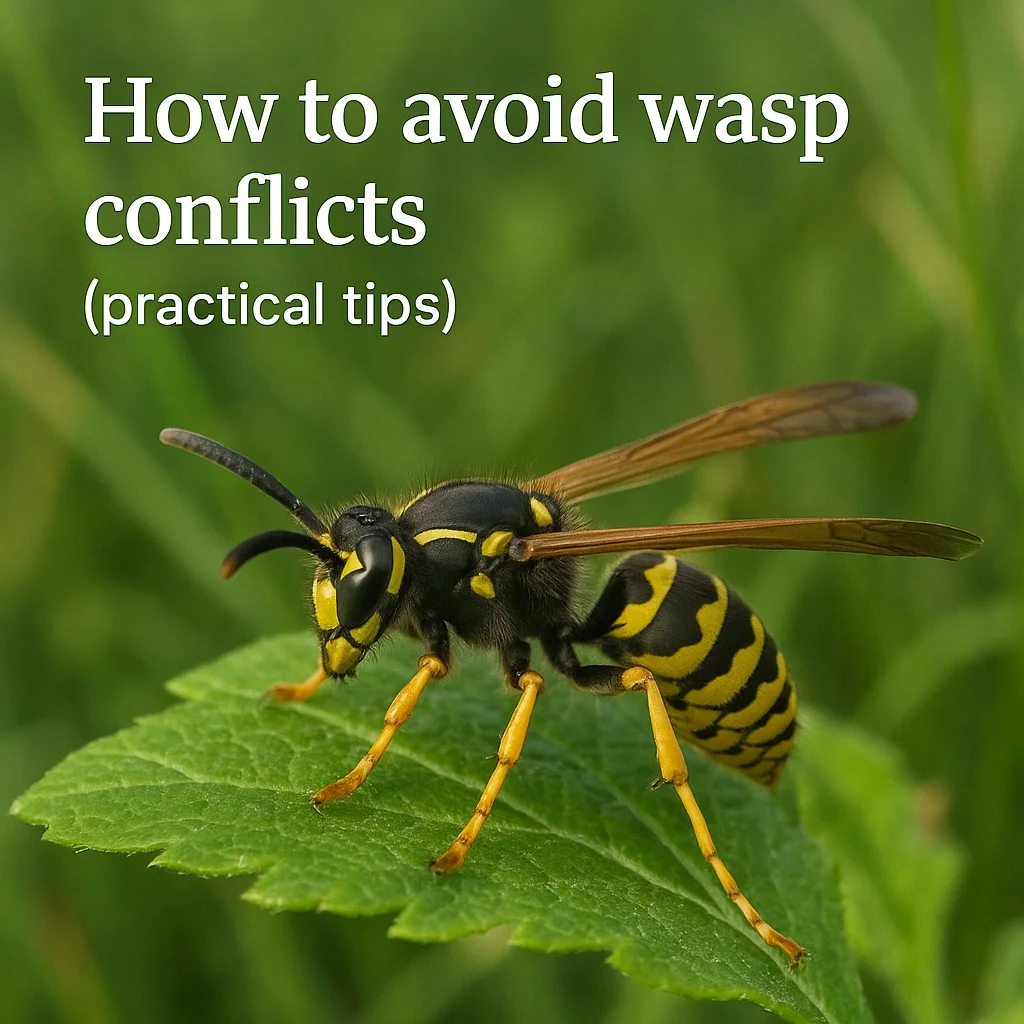
- Common names: Wasps, Hornets, Yellowjackets (varies by region)
- Scientific name: Varies by species
- Insect or not: Insects (invertebrates with six legs)
- Order/Family: Hymenoptera; families include Vespidae, Pompilidae, Sphecidae
- Typical size range (adult): 0.1 to 2 inches (3 to 50 mm)
- Key colors/patterns: Black, yellow, red, orange; banded patterns common
- Activity: Diurnal (active during the day)
- Typical habitats: Forests, grasslands, urban areas, gardens
- Where in the world it occurs: Worldwide
- Seasonality: Spring to late summer, varies with climate
🔍 Identification
Identifying wasps involves recognizing their characteristic features. Wasps generally have a distinct body shape with a narrow waist, long antennae, and wings that rest flat on their backs. Below are key identification cues to assist in recognizing wasps:
- Body shape and silhouette: Slender, elongated bodies with a narrow waist
- Antennae type: Long and segmented
- Wing features: Two pairs of wings with the forewings larger than the hind wings
- Leg traits and movement style: Six long legs with a swift, direct flying style
- Distinguishing look-alikes: Often confused with bees, but generally less hairy
- Top ID Tips:
- Look for yellow and black banding
- Observe the distinct waist
- Note the smooth, streamlined body
- Check for the aggressive flight pattern
- Watch for their activity near nests
- Listen for characteristic buzzing
🧠 Basic Body Structure
Wasps, like all insects, have a body divided into three main parts: the head, thorax, and abdomen. The head houses sensory organs and mouthparts, the thorax anchors the wings and legs, and the abdomen often contains stingers. Wasps are invertebrates, meaning they have an external skeleton, known as an exoskeleton, which provides structural support. They undergo molting to grow, shedding their exoskeleton for a larger one.
🌍 Habitat & Distribution
Wasps thrive in various environments, from dense forests to urban gardens. They are often found in trees, shrubs, under eaves, or even underground. Wasps are adaptable, inhabiting areas across all continents except Antarctica. Their presence can be influenced by habitat changes, such as deforestation or urbanization, which may either reduce or increase sightings depending on nest availability.
📅 Seasonal Appearance & Activity
Wasps are typically seen during warmer months when they are most active. Their activity is diurnal, with most visible during the day. Wasps are sensitive to temperatures and generally become more agitated before storms or during heat. For those wishing to avoid wasp encounters, understanding these patterns can be helpful:
- Best Time to Spot It:
- Spring to late summer
- Midday when temperatures are warmest
- Clear, sunny days
- Avoid late evening or after rain
🥚 Reproduction & Egg-Laying
Wasps engage in intriguing mating behaviors, often involving courtship rituals and aerial displays. Eggs are generally laid in safeguarded environments such as in nests built of chewed plant fibers or burrows. Egg counts vary, ranging from a few to several hundreds, depending on the species and environmental conditions.
🌀 Metamorphosis & Life Cycle
Wasps undergo complete metamorphosis, which includes the following stages:
Egg: Eggs are laid in nests where the larvae will have initial food.
Larva: Hatched larvae are usually fed by adult wasps on carrion or prey, such as insects.
Pupa: Once sufficiently grown, larvae spin cocoons and pupate, undergoing transformation.
Adult: Emerge as fully developed wasps ready to forage and reproduce. The life cycle duration is variable, typically lasting a few weeks to months.
🍽️ Diet & Feeding Behavior
Wasps are omnivorous, feeding on a wide range of resources throughout their lives. In larval stages, they often consume protein-rich foods provided by adults, such as insects. Adult wasps typically feed on carbohydrates found in nectar, overripe fruits, and sweet human foods. Some species are also crucial as pollinators or predators, aiding in pest control.
🦉 Predators & Defense
Wasps face numerous natural threats, including birds, reptiles, and other insects like spiders. Despite their predators, wasps have developed numerous defense mechanisms:
- Camouflage and mimicry to blend in
- Sting deterrents against predators
- Warning coloration to signify danger
- Aggressive swarming behavior
👥 Social Behavior & Swarms
Wasps can be either social or solitary. Social wasps live in intricate colonies with established roles among the queen, workers, and drones. These roles facilitate cooperation and community tasks such as nest defense and food acquisition. In contrast, solitary wasps often mark territory and are more likely to interact aggressively with potential threats.
🧭 Senses & Communication
Wasps possess acute senses, facilitating their foraging and defense roles. Their sense of vision allows them to detect movement and colors, crucial for locating nectar and avoiding threats. They also utilize a sophisticated system of pheromones for communication within colonies, signaling danger or leading others to food sources.
🌱 Role in the Ecosystem
Wasps play several essential ecological roles, acting as pollinators, predators, and scavengers. They control pest populations, leading to healthier crop yields and gardens. Additionally, they are a food source for various animals, contributing to the food web. Despite their importance, wasps can be misunderstood, so educating about their roles can alter perceptions positively.
📉 Population & Conservation Notes
Overall, wasp populations are stable, though local abundances can vary greatly. Factors such as habitat loss, pesticide use, and climate changes impact their numbers. Conservation efforts focus on creating habitats with diverse flora and reducing pesticide applications. Here are some low-impact actions to support wasps:
- Plant native plants
- Avoid chemical pesticides
- Maintain gardens with diverse species
- Leave some natural areas semi-wild
⚠️ Human Interaction & Safety
Wasps are generally non-aggressive unless threatened or their nests disturbed. They sting to defend themselves, which can cause reactions in sensitive individuals. In case of a wasp sting, wash the area with soap and avoid scratching. For severe reactions, seeking professional medical advice is key. Observers should approach respectfully and avoid collecting wild specimens to minimize conflicts.
📌 Summary
- Identification: Narrow waist, banded colors, aggressive flight
- Habitat: Forests, gardens, urban areas
- Seasonality: Active from spring to late summer
- Life cycle: Complete metamorphosis (egg, larva, pupa, adult)
- Diet: Omnivorous; larvae eat protein, adults consume carbohydrates
- Predators: Birds, reptiles, spiders
- Defense: Stingers, camouflage
- Ecology: Pollinators, pest controllers
- Human notes: Non-invasive observation advised