🕷️ Parasitic wasps: nature’s pest control
🧾 Quick Facts
Parasitic wasps play an essential role in controlling pest populations in various ecosystems. These wasps are a large and diverse group of species known for their parasitic behavior, which makes them incredibly beneficial to the natural balance and agricultural systems.
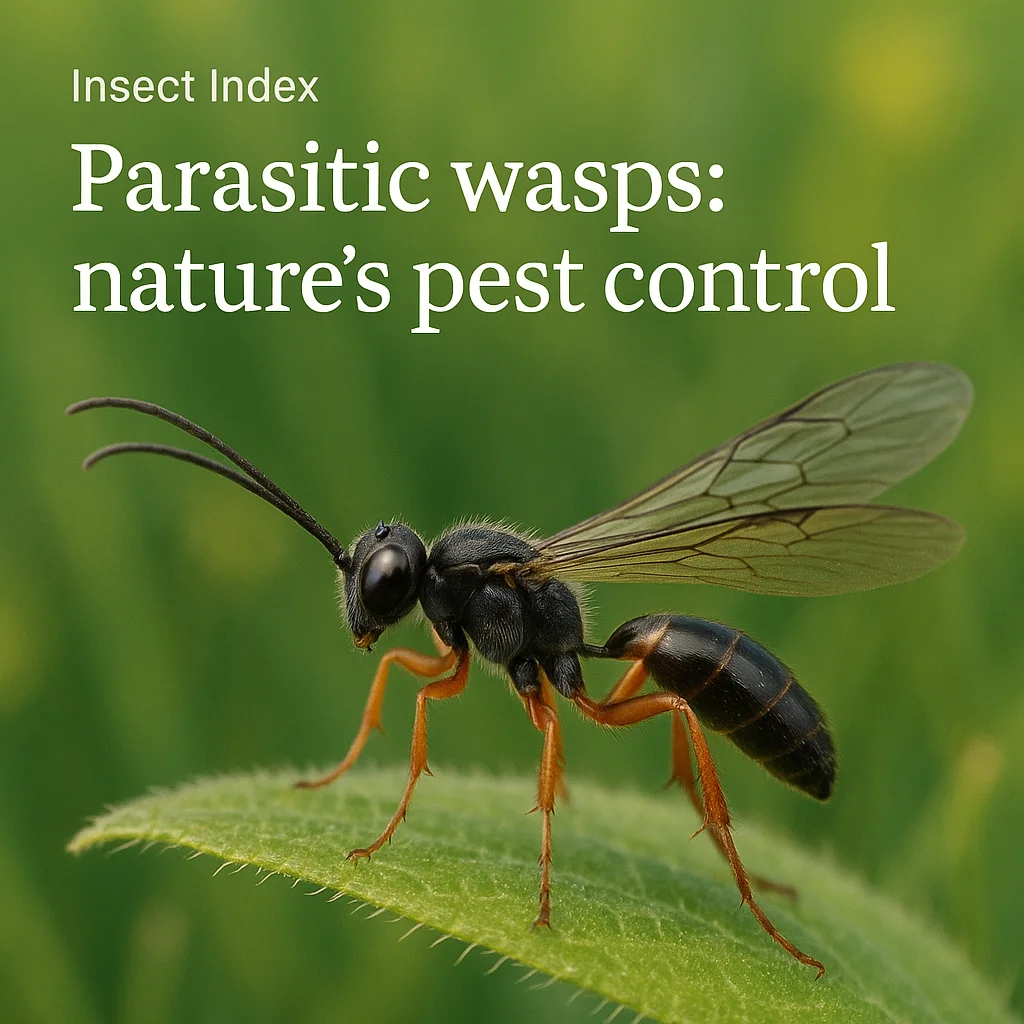
- Common Names: Parasitic wasps
- Scientific Name: Varies by species
- Insect or Not: Yes, they are insects (invertebrates)
- Order / Family: Hymenoptera / various families
- Typical Size Range (Adult): 0.2 mm to 3 cm long
- Key Colors/Patterns: Often small, typically black, brown, or metallic in color
- Activity: Mostly diurnal
- Typical Habitats: Gardens, forests, fields, urban areas
- Where in the World: Worldwide, more prevalent in temperate and tropical areas
- Seasonality: Varies, many are most active in warmer months
🔍 Identification
Recognizing parasitic wasps in the field can be challenging due to their small size and similarity to other insects. However, some key features can aid identification, such as their slender bodies, relatively long antennae, and distinct wing venation patterns. Many have clear or slightly tinted wings, often with reduced wing structures compared to their relatives.
Some parasitic wasps may be mistaken for non-parasitic species due to their size and coloration. It's important to note that parasitic wasps usually possess notched or segmented antennae, which can help distinguish them from other insects.
- Slender body shape, often with a distinct narrowing between the thorax and abdomen
- Long, segmented antennae
- Transparent wings with minimal venation
- Typically exhibit rapid, darting flight
- Resemble small ants or flies but with a more wasp-like shape
- Behavior often associated with specific host-seeking activities
🧠 Basic Body Structure
Like all insects, parasitic wasps possess a body divided into three segments: the head, thorax, and abdomen. Their six legs and usually two pairs of wings are attached to the thorax. Parasitic wasps have an exoskeleton, which they must molt to grow, although this is primarily relevant in their developmental stages. These wasps are invertebrates, meaning they do not have a backbone or internal skeleton.
🌍 Habitat & Distribution
Parasitic wasps thrive in various environments, from dense forests and open fields to urban gardens and agricultural landscapes. Microhabitats where they are commonly found include under leaves, within flower clusters, or along the edges of wooded areas. Geographically, they occur worldwide, but their populations are denser in temperate and tropical climates, where their host species are more abundant.
The availability of hosts and environmental conditions significantly influences their sightings and presence in a particular habitat.
📅 Seasonal Appearance & Activity
Parasitic wasps are generally more active during warmer months when their host populations are also at their peak. They are primarily diurnal, with peak activities occurring during daylight hours when they search for hosts to parasitize. Weather conditions such as temperature, humidity, and availability of host species can also affect their activity levels.
- Most common during late spring and summer
- Active on warm, sunny days
- Reduced activity during rainy or cold weather
- Best spotted in areas with abundant flowering plants
🥚 Reproduction & Egg-Laying
Mating behaviors among parasitic wasps can vary significantly across species. Some exhibit elaborate courtship displays, while others rely on pheromones to locate mates. Generally, female parasitic wasps lay their eggs directly onto or inside a host organism. The choice of host and egg-laying strategy can vary, with some species depositing hundreds of eggs, while others lay only a few, depending largely on host availability and environmental conditions.
🌀 Metamorphosis & Life Cycle
Parasitic wasps undergo complete metamorphosis, progressing through the egg, larva, pupa, and adult stages. The larvae typically develop inside or on the host organism, feeding on its tissue. This close association with their host makes them effective biological control agents.
After completing its larval development, the wasp enters the pupal stage, often hidden or protected within or near the host. Once metamorphosis is complete, the adult emerges, ready to seek mates and continue the cycle. These stages can vary in duration depending on species and environmental factors.
🍽️ Diet & Feeding Behavior
The diet of parasitic wasps is closely tied to their life stage and species. Larvae are primarily parasitic, often feeding on the host's internal or external tissues. Adults, however, may consume nectar, pollen, or bodily fluids from pierced hosts. Their mouthparts are adapted to their feeding habits, often possessing structures for piercing-sucking or feeding on liquids.
Units within an ecosystem can distinguish parasitic wasps as predators due to their role in controlling host populations. They are considered key players in maintaining ecological balance through their interactions.
🦉 Predators & Defense
Parasitic wasps face predation from birds, reptiles, amphibians, spiders, and larger insects. Their primary defense strategies include camouflage, mimicry, and rapid flight behaviors to escape threats. Additionally, some parasitic wasps may possess stingers for defense or chemicals that deter potential predators.
- Camouflage to blend with surroundings
- Mimicry of dangerous wasp species
- Rapid flight to avoid capture
- Use of potent chemicals as deterrents
👥 Social Behavior & Swarms
Parasitic wasps are typically solitary, focusing their efforts on locating suitable hosts for egg-laying rather than forming large social structures. Unlike social wasps, parasitic wasps do not build nests or maintain colonies. Their behavior centers around finding hosts and dispersing to reduce competition for resources.
🧭 Senses & Communication
Parasitic wasps rely heavily on their keen sense of smell to locate hosts, using pheromones to identify suitable egg-laying sites. Their compound eyes are adapted to detect movement and navigate through complex environments, while their antennae are crucial in detecting chemical cues in the air. Communication may include subtle tactile signals or pheromone trails used for reproduction or territory marking.
🌱 Role in the Ecosystem
Parasitic wasps are invaluable to ecosystems for their role in controlling pest populations naturally. They help maintain the balance by selectively targeting specific insect hosts, reducing the need for chemical pesticides. Their parasitic relationships, primarily affecting herbivorous insects, can indirectly support plant health and agricultural productivity.
In ecological terms, parasitic wasps contribute to various food webs, supporting biodiversity by limiting overly abundant pest populations.
📉 Population & Conservation Notes
While typically common, local population abundance of parasitic wasps can vary widely depending on habitat conditions and host availability. Factors such as habitat destruction, pesticide use, and climate changes pose threats to their populations by altering the ecosystems they rely on.
- Encourage native plant growth in gardens
- Avoid widespread use of insecticides
- Provide habitats with diverse plant structures
- Support conservation of natural habitats
⚠️ Human Interaction & Safety
Parasitic wasps generally pose little harm to humans. They may sting if handled roughly, but this is rare and often mild. If stung, washing the area and avoiding scratching is recommended. Severe reactions are uncommon, but professional advice should be sought in case of allergic reactions. Observing these wasps from a distance respecting their ecological roles is advised over collecting them.
📌 Summary
- Parasitic wasps aid in pest control and ecosystem balance.
- Located globally, especially in temperate and tropical regions.
- Easy to identify with their slender body and segmented antennae.
- Typically active during daytime, mostly in warmer months.
- Undergo complete metamorphosis, with a host-dependent larval stage.
- Roles as predators and beneficial organisms in agriculture.
- Have natural defenses like mimicry and rapid flight.
- Solitary with strong environmental sensory abilities.
- Population affected by human activities like pesticide use.
- Recommended to respect and protect their natural habitats.