🕷️ Wasp myths: “wasps are useless” (false)
🧾 Quick Facts
Wasps are often misunderstood creatures in the animal kingdom. Contrary to popular belief, they hold significant ecological roles and are not useless as often perceived.
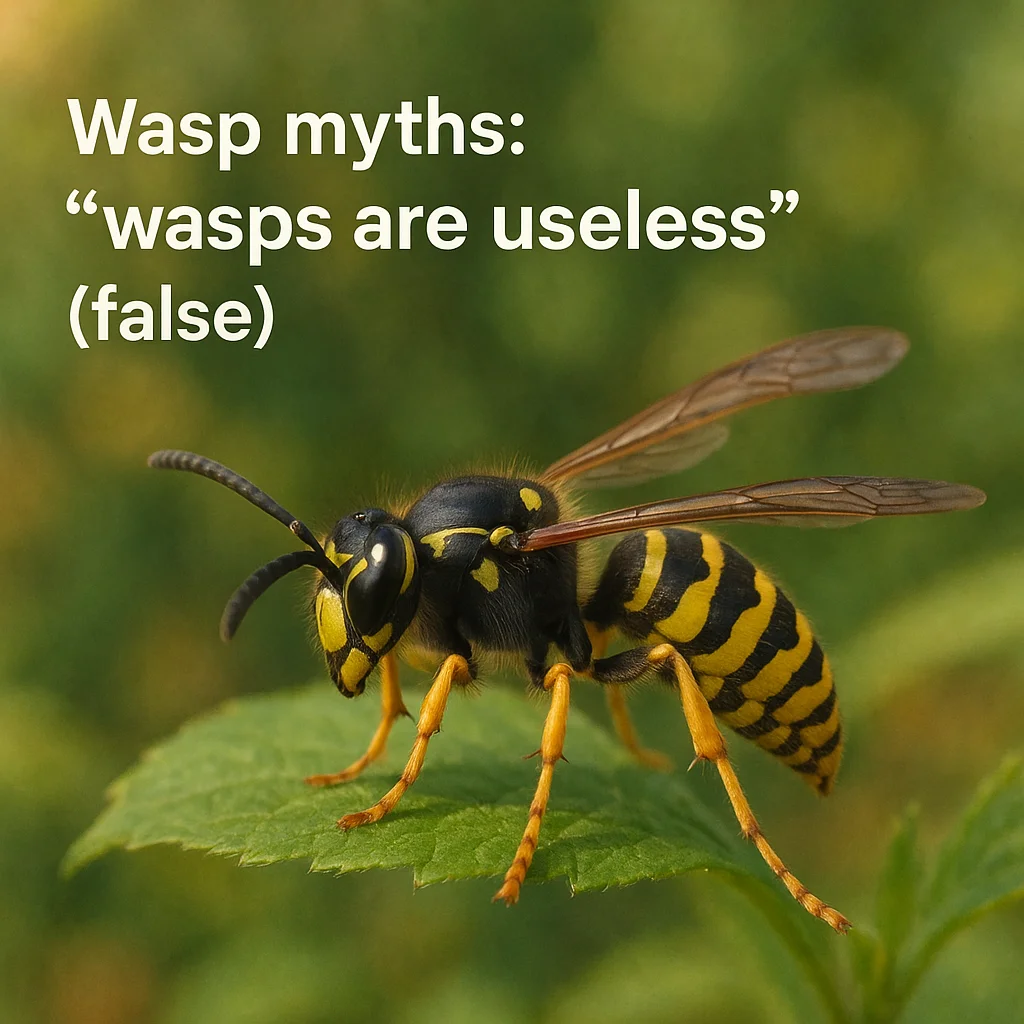
- Common names: Wasps, Yellowjackets, Hornets
- Scientific name: Varies among species
- Insect status: Yes, wasps are invertebrates
- Order / family: Hymenoptera / Vespidae (varies)
- Typical size range (adult): 0.5 to 1.5 inches
- Key colors/patterns: Yellow and black stripes, sometimes brown or metallic
- Activity: Mostly diurnal
- Typical habitats: Urban gardens, forests, grasslands
- Distribution: Worldwide, except extremely cold regions
- Seasonality: Spring through fall
🔍 Identification
Identifying wasps in the field can be straightforward once you familiarize yourself with their key characteristics.
Wasps have a slender, elongated body shape with a distinctive thin "waist" called the petiole. Their long antennae are usually bent, and their wings lay flat along their bodies when at rest. The legs are often slender and long, aiding in their agile movement as they hover and dart about. Careful consideration is needed to distinguish wasps from bees; bees tend to be fuzzier and bulkier.
- Top ID Tips:
- Slim, elongated body
- Pronounced "waist" (petiole)
- Flat, long wings
- Smooth, shiny appearance (less furry than bees)
- Alert, rapid, and wandering flight pattern
- Often seen exploring flowers or food
- Vibrant yellow and black striped patterns
- Maintain respectful distance for safe observation
🧠 Basic Body Structure
Wasps, as insects, have a three-part body structure consisting of a head, thorax, and abdomen. They possess six legs attached to the thorax and a tough exoskeleton that requires periodic molting. Depending on the species, wasps may have one or two pairs of membranous wings, aiding in their swift and responsive flight. As invertebrates, they lack a backbone, heavily relying on their exoskeleton for support.
🌍 Habitat & Distribution
Wasps exhibit a broad habitat range, thriving in diverse environments from urban gardens to natural forests and grasslands. They often favor sunny, warm climates and can be frequently found nesting in sheltered locations, such as under eaves, within tree hollows, or even underground. Wasps are distributed worldwide, predominantly inhabiting temperate to tropical regions. Habitat alteration, such as urban expansion, can increase their visibility as they adapt to gardens and parks.
📅 Seasonal Appearance & Activity
Most wasp species are active from spring to autumn, with peak activity during warmer months. They are predominantly diurnal, bustling around during daylight hours to forage and build nests. Rain and cooler weather can reduce their visibility, as they stay more protected in their nests during inclement conditions.
- Best Time to Spot It:
- Mid to late spring
- Throughout summer
- Warm sunny days
- During daylight hours
- When flowering plants abound
🥚 Reproduction & Egg-Laying
Wasp reproduction generally involves courtship, where queens select suitable mates in late summer. After mating, queens locate protected nesting sites to lay eggs. Eggs are typically placed in isolated cells within nests, using nearby material like wood fibers or mud. The number and strategy vary among species—some lay singular eggs while social species may lay dozens in larger communal structures.
🌀 Metamorphosis & Life Cycle
Wasps undergo complete metamorphosis, with life stages encompassing egg, larva, pupa, and adult.
The eggs hatch into larvae that remain inside the nest, where they are fed by adults. During the larval stage, which varies in duration based on species and environmental conditions, wasps consume pre-digested insects or nectar. Following metamorphosis, the larvae form pupae, wherein they remain quiescent and transform into adults. Emerging as adults, these wasps will continue to forage, spread, and reproduce.
🍽️ Diet & Feeding Behavior
As adults, many wasps are omnivorous, consuming nectar and pollen as well as hunting smaller insects and arthropods, aiding in pest control. In their larval stage, they often rely on protein-rich diets, requiring adult wasps to forage for prey or meat sources. Adult wasps employ chewing mouthparts, adept at manipulating different food types and substrates.
🦉 Predators & Defense
Wasps face predation from birds, spiders, reptiles, and other insects, including parasitoid wasps. Their primary defense mechanisms include the ability to deliver painful stings or bites to deter predators. Many wasps also employ coloration as a warning or mimicry strategy, resembling more dangerous species to discourage attacks. Their agility and speed can assist in avoiding threats; some utilize cryptic behaviors and nesting sites as additional protection.
- Defense Highlights:
- Protective stings
- Warning coloration
- Nimble dodging
- Nesting concealment
👥 Social Behavior & Swarms
While some wasp species are solitary, others are social, forming colonies that include a queen, workers, and drones. In social species, colonies work cooperatively, with distinct roles for building nests, foraging, and defending the hive. Communication often occurs through pheromones, especially when rallying bees to food sources or in response to threats. Swarming can occur as new queen wasps search for a suitable nesting site.
🧭 Senses & Communication
Wasps utilize a sophisticated array of senses to navigate and communicate. They rely on acute vision to locate food and navigate their environment. Chemical communication through pheromones plays a critical role in social species, using scents to signal danger or direct others to resources. Wasps are sensitive to vibrations, which assists in detecting potential threats or prey within their vicinity.
🌱 Role in the Ecosystem
Wasps crucially contribute to ecosystems as pest controllers and pollinators. By preying on pest species, they naturally manage insect populations, benefiting agricultural practices. Furthermore, their movement between flowers facilitates pollination, supporting plant reproduction. In many cases, wasps participate in mutualistic relationships with plants or act as indicators of ecosystem health. While wasps can stung or disrupt outdoor activities, they play an indispensable role within their ecological niches.
📉 Population & Conservation Notes
Many wasp species remain widespread and common, although specific population trends can fluctuate based on regional environmental pressures. Habitat loss, pesticide use, and climate change are potential threats affecting population sustainability. Consequently, promoting the growth of native flora and minimizing chemical exposure can aid in conservation efforts.
- How to Help (Low-Impact):
- Plant native flowering shrubs
- Avoid pesticides in gardens
- Maintain habitat diversity
- Provide sheltered nesting spaces
⚠️ Human Interaction & Safety
While most wasps pose minimal threat, they can deliver painful stings if provoked or threatened. To minimize risk, maintain a respectful distance during observation and try not to swat or attempt to capture them. In case of a sting, wash the area with soap and water and refrain from scratching. Seek professional help for severe allergic reactions or multiple stings.
📌 Summary
- Wasps are misunderstood yet ecologically essential insects.
- They inhabit diverse environments worldwide, thriving from spring to fall.
- Exhibit complete metamorphosis with diets varying by life stage.
- Predators include birds, spiders, and parasitoids; defense includes stings.
- Some wasps exhibit complex social structures and colony dynamics.
- Essential for pollination and pest control, impacting ecosystems positively.
- Conservation efforts focus on habitat preservation and pesticide reduction.
- Human interaction should be cautious, respecting wasps' space and defense.