🕷️ Firefly seasons: when and where to see them
🧾 Quick Facts
Fireflies, also known as lightning bugs, are fascinating insects most famous for their bioluminescent capabilities. Here is a quick overview:
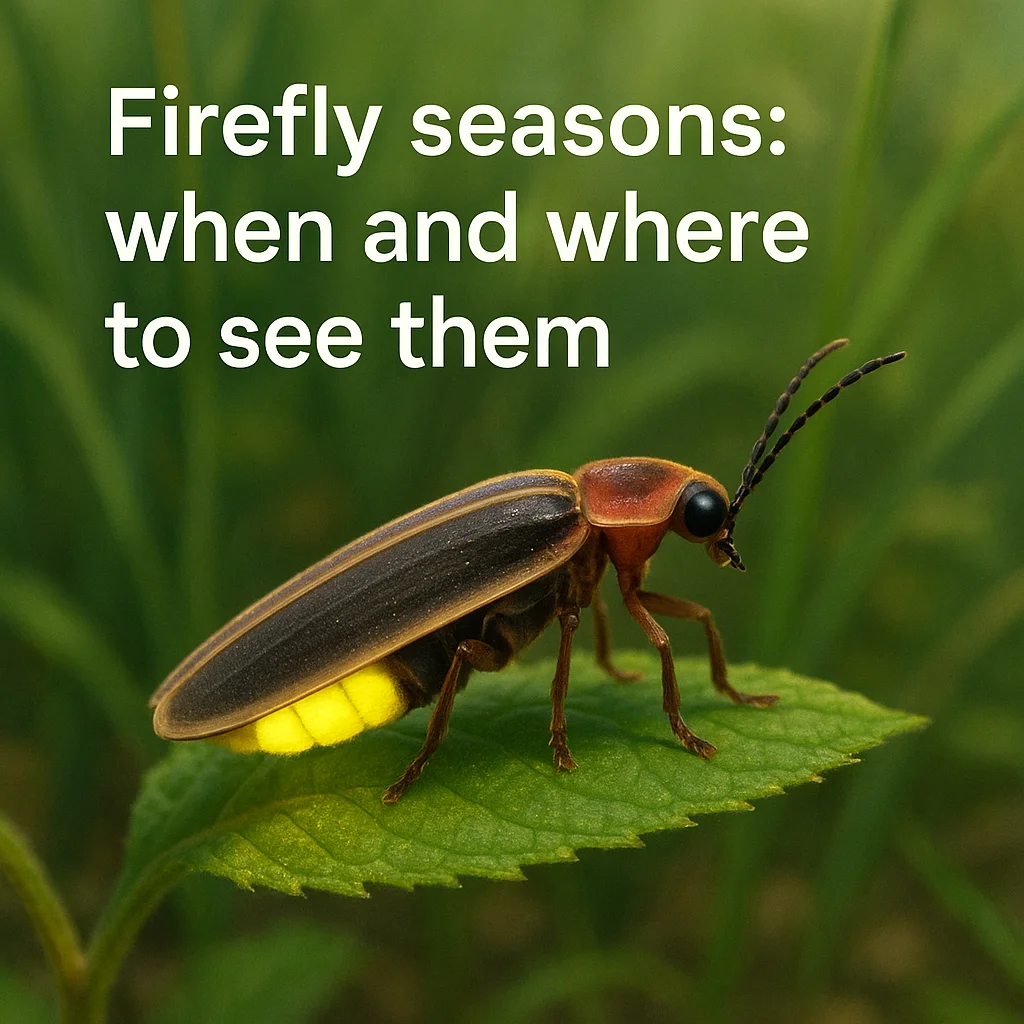
- Common names: Firefly, Lightning Bug
- Scientific name: Varies across species
- Insect: Yes, they are invertebrates
- Order / Family: Coleoptera / Lampyridae
- Typical size range: 5 to 25 mm (adult)
- Key colors/patterns: Black or brown bodies with yellow or orange markings
- Activity: Predominantly nocturnal
- Typical habitats: Deciduous forests, meadows, marshes
- Where in the world it occurs: Across temperate and tropical regions
- Seasonality: Late spring to summer
🔍 Identification
Recognizing fireflies in the field is made easier by their unique body structure and the glow they emit:
Fireflies have a soft-bodied, elongated shape, and their segmented abdomen is equipped with light-emitting organs. They possess long, thread-like antennae which help them navigate their environment. Their wings are typical of beetles, with a hard outer covering called elytra. Fireflies can be confused with other beetles, but their bioluminescent behavior is quite distinctive.
- Top ID Tip: Look for their glow during dusk and night time
- Top ID Tip: Notice their soft, elongated bodies
- Top ID Tip: Check for black or brown coloring with yellow markings
- Top ID Tip: Observe the presence of thread-like antennae
- Top ID Tip: Their bioluminescent glow can be a different color depending on the species
- Top ID Tip: Generally slow-moving to moderate speed in flight
🧠 Basic Body Structure
Fireflies adhere to the typical insect body plan comprising three main parts - the head, thorax, and abdomen. Like all insects, they have six legs, two pairs of wings, and an exoskeleton, which provides structure and protection. Fireflies are invertebrate, meaning they lack a spinal column.
🌍 Habitat & Distribution
Fireflies thrive in diverse environments ranging from warm forests to moist meadows and wetlands. They are often found near water bodies like ponds and streams. These habitats provide abundant food and suitable sites for laying eggs. The geographic range of fireflies spans across temperate and tropical regions, being prevalent in North America, Europe, Asia, and parts of Africa. Urban development, light pollution, and agriculture can impact their habitats and reduce sightings.
📅 Seasonal Appearance & Activity
Fireflies are most likely to be seen during warmer months. Their activity peaks in the late spring through summer when they exhibit their characteristic glowing displays. Primarily nocturnal, their activity and glowing are influenced by temperature and humidity levels; warmer, humid conditions lead to more active firefly displays.
- Best Time to Spot It: Late spring nights
- Best Time to Spot It: Warm summer evenings
- Best Time to Spot It: Right after rain
- Best Time to Spot It: High-humidity environments
- Best Time to Spot It: In areas with less light pollution
🥚 Reproduction & Egg-Laying
Fireflies have an intriguing mating ritual primarily driven by their glowing lights. Different species have specific light patterns used to attract mates. Once mating occurs, females lay eggs in the soil or under leaf litter. Each female can lay between 50 to several hundred eggs depending on the species. Eggs hatch in a few weeks.
🌀 Metamorphosis & Life Cycle
Fireflies undergo complete metamorphosis, transitioning through egg, larva, pupa, and adult stages:
The larval stage, often called "glowworms," lasts one to two years, where they primarily feed on small insects and snails. The larva is predatory, using digestive enzymes to neutralize prey. It resides in moist habitats, like decaying wood or forest floors.
Upon entering the pupal stage, the firefly transforms inside a cocoon-like structure for several weeks before emerging as an adult. The adult stage is crucial for reproduction and often spans only a few weeks.
🍽️ Diet & Feeding Behavior
Firefly larvae are predatory, consuming snails, slugs, and other small insects using specialized mouthparts to inject digestive fluids. As adults, their diet varies with some species feeding on pollen and nectar, while others do not feed at all.
🦉 Predators & Defense
Birds, amphibians, reptiles, and spiders prey on fireflies. To defend themselves, fireflies may utilize camouflage, nocturnal activity, and release noxious chemicals that deter predators. Their bioluminescent glow is also believed to act as a warning signal.
- Defense Highlights: Bright glowing as a predator deterrent
- Defense Highlights: Nocturnal activity avoids predators
- Defense Highlights: Chemical deterrents released when threatened
- Defense Highlights: Camouflage-equipped coloring
👥 Social Behavior & Swarms
Fireflies are generally solitary insects, particularly outside mating season. During mating, males may congregate in large numbers for group displays, forming an enchanting spectacle known as "swarms." These gatherings are primarily to enhance mating chances, with flashes synchronized to improve visibility to females.
🧭 Senses & Communication
Fireflies rely heavily on their sense of vision, especially for their glowing signals. Communication is largely based on bioluminescent flashing patterns. These patterns are species-specific and assist in mate attraction. They also utilize chemical signals (pheromones) to some extent during mating displays.
🌱 Role in the Ecosystem
Fireflies contribute significantly to ecosystems by acting as predators of garden pests like slugs and snails. Their presence indicates a healthy environment, and they serve as food for various predators. Additionally, firefly larvae aid in decomposing decaying plant material.
📉 Population & Conservation Notes
Firefly populations exhibit varied abundance, with certain species facing declines due to habitat loss, light pollution, and pesticide use. Conservation efforts focus on preserving natural habitats and minimizing artificial lighting.
- How to Help (Low-Impact): Plant native species to improve habitat quality
- How to Help (Low-Impact): Reduce pesticide usage
- How to Help (Low-Impact): Limit nighttime lighting in natural areas
- How to Help (Low-Impact): Leave leaf litter undisturbed in gardens
⚠️ Human Interaction & Safety
Fireflies are harmless to humans and do not bite or sting. Observers should enjoy them respectfully, refraining from handling or collecting them. Leaving them undisturbed helps ensure their ecological functions and population stability remain intact.
📌 Summary
- Fireflies, or lightning bugs, belong to the Lampyridae family.
- They can be seen from late spring through summer during warm, humid nights.
- Identification involves noting their glowing patterns, body shape, and colors.
- Fireflies are predators during their larval stage and vary in adult diet.
- They face threats from habitat disruption, pesticides, and artificial lights.
- Mostly solitary, save for the breeding season when swarms can occur.
- Their bioluminescence serves as a unique communication method for mating.
- Conservation measures are crucial for maintaining firefly habitats.
- Enjoy observing these magical insects without disrupting their natural state.