🕷️ Leaf-mining Beetles Tunnels In Leaves And What Causes Them
🧾 Quick Facts
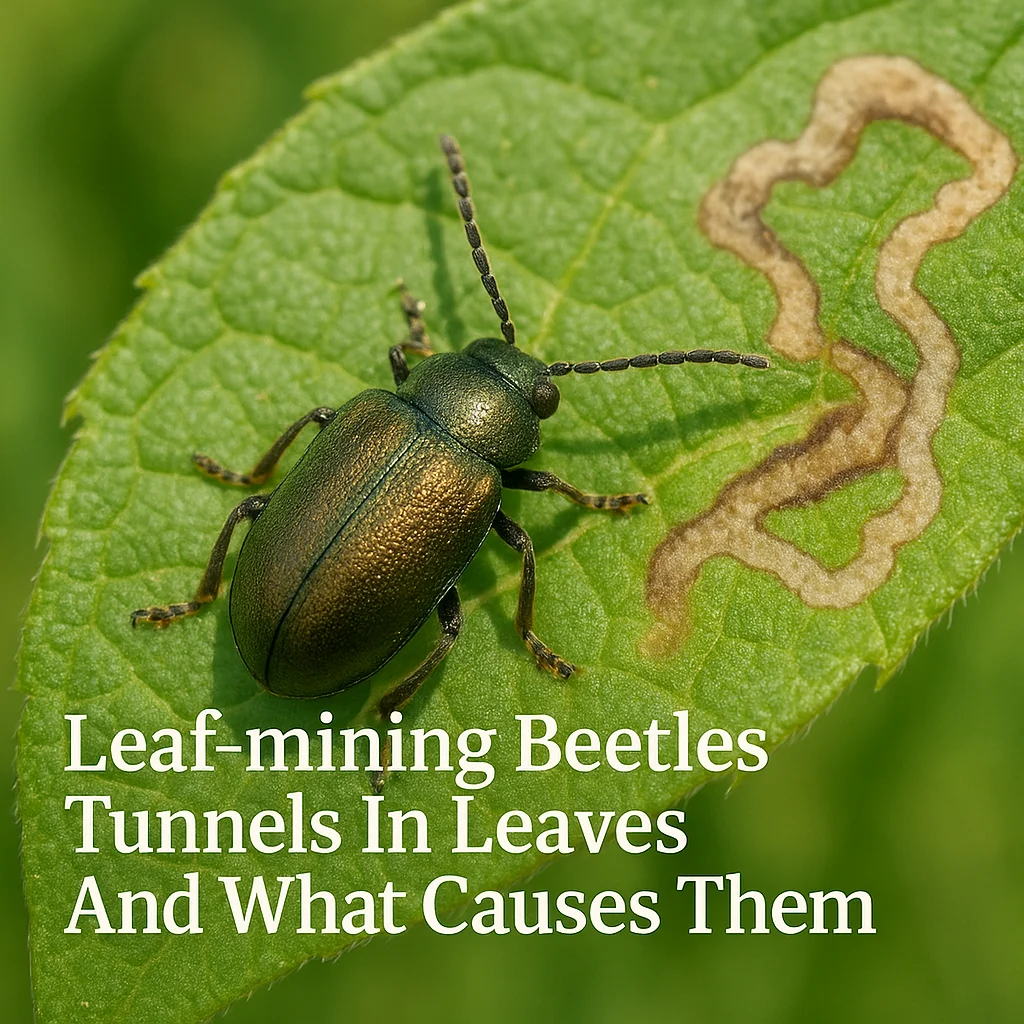
Leaf-mining beetles are fascinating insects known for the intricate tunnels they create in leaves. These tunnels are a result of their larval feeding habits, where larvae live and eat between the layers of leaf tissue, leaving visible trails. The patterns and the appearance of these trails vary greatly depending on the species and the host plant. Here are some quick facts about these intriguing creatures:
- Common names: Leaf miners, Leaf-mining beetles
- Scientific name: Varies by species
- Insect or not: Yes, insects (invertebrates)
- Order / family: Coleoptera (beetles), numerous families
- Typical size range: 1–8 mm in length as adults
- Key colors/patterns: Often brown, black, or metallic; pattern varies with species
- Activity: Primarily nocturnal
- Typical habitats: Forests, gardens, agricultural areas
- Where in the world it occurs: Found worldwide, with higher diversity in tropical and temperate regions
- Seasonality: Most active during growing seasons (spring and summer)
🔍 Identification
Leaf-mining beetles are small insects that can be challenging to identify due to their minute sizes and diverse appearances. However, key characteristics help distinguish them in the field:
- Body shape and silhouette: Compact and often ovate, fitting within the leaf layers
- Antennae type: Filiform or clubbed, varying with species
- Wing features: Elytra covers the hind wings; may be smooth or textured
- Leg traits and movement style: Six short legs, adapted for movement within the confined spaces of leaves
- Distinguishing look-alikes and common confusion: Easily confused with other small beetle groups or insect larvae; trails in leaves are a definitive clue
Top ID Tips:
- Look for distinctive mining patterns in leaves
- Note the small size and compact body
- Check for variance in antenna structure
- Observe beetle activity primarily at night
- Compare mining trails with known species examples
- Examine host plants commonly associated with leaf miners
🧠 Basic Body Structure
Leaf-mining beetles, like all insects, consist of three primary body parts: the head, thorax, and abdomen. They possess six legs attached to the thorax and are equipped with a hard exoskeleton that provides protection. As insects, they are invertebrates, meaning they lack a vertebral column. Their small size is deceptive, housing complex bodily systems adapted for their leaf-mining lifestyle. Some species also exhibit wing morphology suited for dispersal, albeit their primary adult form is relatively short-lived.
🌍 Habitat & Distribution
Leaf-mining beetles thrive in environments where their host plants are abundant, such as forests, gardens, and agricultural landscapes. These beetles are found worldwide but are more diverse in tropical and temperate climates. Within these habitats, they can be found primarily under the surface of leaves, where their larvae can tunnel and feed. Consequently, habitat changes such as deforestation or urban development can significantly impact their populations by reducing host plant availability.
📅 Seasonal Appearance & Activity
These beetles are most visible during the warmer months when host plants are in full leaf. The exact timing can vary depending on regional climate conditions, but beetles are generally more active during spring and summer. Their nocturnal nature means they are more likely to be observed at night, although evidence of their presence is visible during daylight hours due to the conspicuous mining patterns on leaves.
Best Time to Spot It:
- Spring and summer in temperate regions
- Tropical regions may see activity year-round
- Look for fresh mining patterns in the morning
- Observe leaf underside in shaded areas
🥚 Reproduction & Egg-Laying
Reproduction behaviors of leaf-mining beetles can vary significantly among species. In general, mating often involves pheromone communication to attract partners. Females lay eggs directly onto or within the tissues of host plants, choosing sites where larvae will have immediate access to food. Egg-laying strategies are largely dependent on host plant characteristics, and egg count per batch can vary widely, ranging from a few eggs to dozens, depending on environmental conditions and specific species traits.
🌀 Metamorphosis & Life Cycle
Leaf-mining beetles undergo complete metamorphosis, consisting of four stages: egg, larva, pupa, and adult. The larval stage is the most distinctive as it involves the mining activity within leaves. Larvae feed on the internal leaf tissue, creating visible trails, and each stage's duration can vary depending on temperature and food availability. Once larvae are mature, they exit the leaf to pupate in the soil or leaf litter, eventually emerging as adults. Adults focus on reproduction, live only several weeks, and die shortly thereafter.
🍽️ Diet & Feeding Behavior
At the larval stage, leaf-mining beetles predominantly consume the soft tissues of various plant leaves, which provides both nourishment and habitat. These beetles have chewing mouthparts adapted for skimming layers within the leaves, which distinguishes them from other herbivores. The adults feed minimally, often focusing on softer plant parts or nectar, and some species cease feeding entirely during the adult phase. As larvae, they are more herbivorous and their feeding contributes to leaf litter, impacting nutrient cycling.
🦉 Predators & Defense
Leaf-mining beetles face a myriad of natural predators, including birds, spiders, parasitoid wasps, and even small mammals. Their primary defense during the larval stage is concealment within the leaf, which protects them from many larger predators. Some species also employ chemical defenses or remain within thick leaves that are hard for predators to penetrate. Adults rely on camouflage and rapid movement to avoid detection, and some exhibit thickened exoskeletons for additional protection.
Defense Highlights:
- Concealment within leaf tissue
- Camouflage matching leaf substrates
- Rapid escape responses
- Tough exoskeletons
👥 Social Behavior & Swarms
Typically, leaf-mining beetles are solitary in nature. They do not form swarms or social structures like ants or bees. The interaction between individuals primarily occurs during mating. Solitary lifestyles mean encounters between these beetles can often result in competition for resources, particularly suitable leaves for egg-laying. This competition is particularly evident during peak breeding seasons when the availability of fresh leaves is crucial.
🧭 Senses & Communication
Leaf-mining beetles utilize various senses and communication methods to navigate their world. Vision plays a moderate role, but chemical communication via pheromones is critical, especially during the mating season. Adult beetles may use vibration or substrate-borne signals to detect rivals or mates. Larvae, however, are particularly reliant on environmental cues like moisture or leaf quality to determine feeding places.
🌱 Role in the Ecosystem
Leaf-mining beetles contribute significantly to ecosystems; they aid in decomposition by breaking down plant material, influencing nutrient recycling. Often considered pests due to their potential to damage ornamental and crop plants, their presence in gardens can serve as an indicator of plant health, signaling biodiversity balance. Their interactions with natural predators also highlight their importance in the food web, maintaining ecological equilibrium by supporting insectivorous species.
📉 Population & Conservation Notes
The population status of leaf-mining beetles is generally stable in areas with abundant vegetation but can decline due to habitat loss from agriculture, urbanization, or climate change. In some regions, pesticide use poses a significant threat to their populations. Conservation efforts can aid by promoting planting native plants and minimizing chemical usage to ensure that beetle populations remain an integral part of healthy ecosystems.
How to Help (Low-Impact):
- Plant and conserve native host plants
- Avoid broad-spectrum pesticide use
- Leave leaf litter during fall and winter
- Create garden habitats that support diverse insect life
⚠️ Human Interaction & Safety
Leaf-mining beetles are inherently harmless to humans, as they neither bite nor sting. In gardens, their presence can indicate plant stress but does not pose direct threats to human safety. For severe reactions to plants touched by these insects, washing the affected area and avoiding scratching is recommended, followed by seeking professional advice if symptoms persist. Observing these beetles should be done respectfully, avoiding habitat disturbance.
📌 Summary
- Recognizable by leaf-mining trails and small size
- Found in a variety of plant-rich habitats globally
- Most active during growing seasons, at night
- Undergo complete metamorphosis with distinct larval stages
- Larvae primarily herbivorous, adults varied diets
- Significant role in nutrient cycling and ecological balance
- Subject to threats from habitat loss and pesticides
- Observe respectfully; they pose no danger to humans