🕷️ Rove Beetles Staphylinidae Short Wing Covers Fast Predators
🧾 Quick Facts
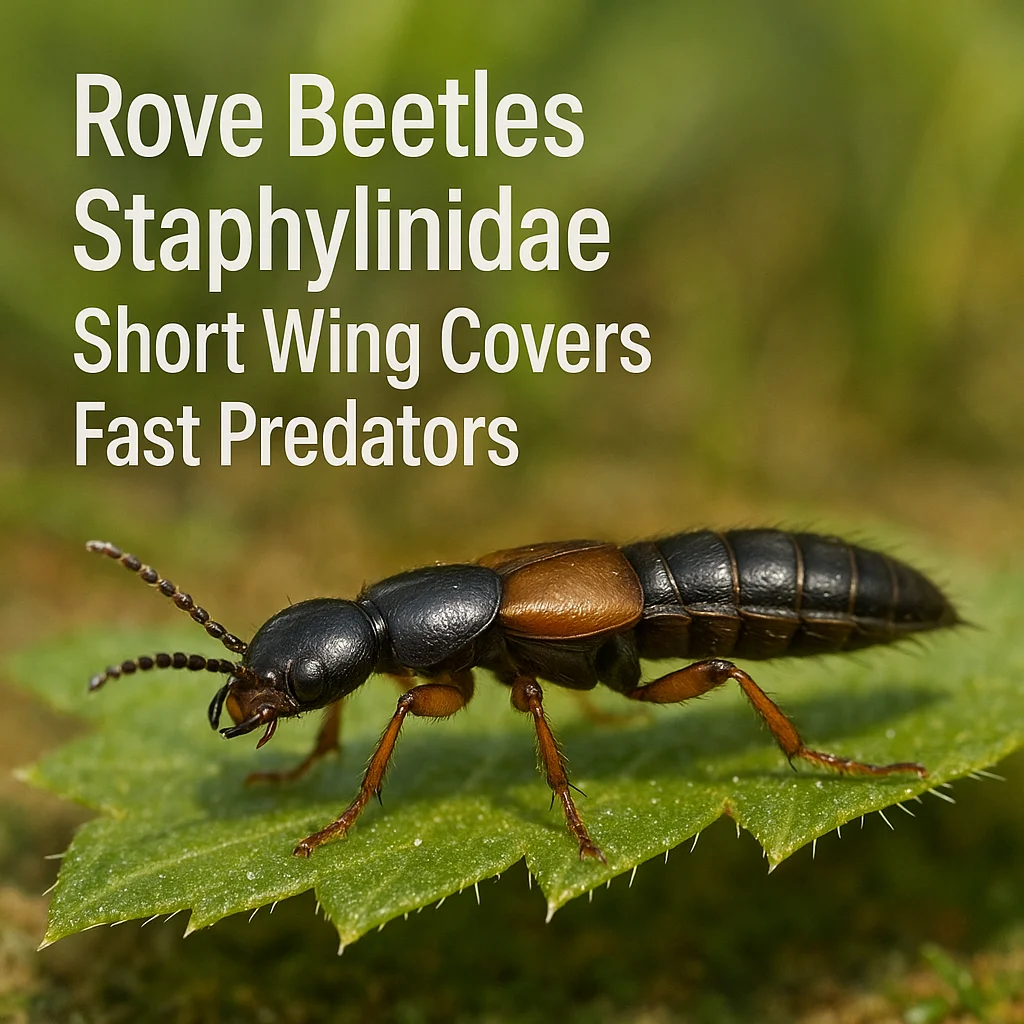
Rove beetles are a fascinating group of insects belonging to the family Staphylinidae. Known for their distinctive short wing covers and quick movements, these beetles are primarily predatory, making them important players in the ecological balance. Here are some key facts:
- Common names: Rove beetles
- Scientific name: Staphylinidae (family name, with many genera and species)
- Insect or not: Insect (an invertebrate)
- Order / family: Coleoptera / Staphylinidae
- Typical size range: 1 to 35 mm in length
- Key colors/patterns: Varies widely; often black, brown, or metallic
- Activity: Primarily nocturnal
- Typical habitats: Forests, grasslands, gardens, wetlands
- Where in the world it occurs: Worldwide, except in extreme polar regions
- Seasonality: Visible year-round, more active in warmer months
🔍 Identification
Rove beetles can be recognized by their unique body shape and behavior. Here’s what to look for when identifying them:
- Body shape: Slender and elongated with short wing covers that expose several abdominal segments, giving a tapered look.
- Antennae: Typically filiform (thread-like) and moderately long.
- Wing features: Short elytra (wing covers) reveal flexible abdomens with functional hind wings underneath for flight.
- Leg traits: Adapted for rapid movement, they possess relatively long legs that allow them to scuttle quickly.
- Distinguishing look-alikes: Rove beetles are often confused with earwigs but lack pincers at the abdomen's end.
- Top ID Tips:
- Look for short elytra exposing abdomen
- Notice rapid scuttling movement
- Acknowledge the slender body form
- Check for thread-like antennae
- Do not mistake for earwigs (no pincers)
- Observe their behavior as active predators
🧠 Basic Body Structure
Rove beetles, like all beetles, have a three-part body plan:
- Head: Equipped with compound eyes and antennae.
- Thorax: Bears the wings and six legs, providing mobility.
- Abdomen: Flexible and often exposed, aids in movement.
They are invertebrates, meaning they lack a backbone and are comprised of an exoskeleton that supports and protects their bodies. Rove beetles, like other insects, undergo molting as they grow and mature.
🌍 Habitat & Distribution
Rove beetles thrive in varied habitats due to their adaptability. They are commonly found in:
- Preferred environments: Forests, grasslands, wetlands, urban gardens, and agricultural fields.
- Microhabitats: Under bark, within leaf litter, flower heads, near water edges, and within decomposing organic matter.
- Geographic range: Found globally across continents except Antarctica, thriving in tropical, temperate, and taiga regions.
As habitats change and become fragmented, the visibility and abundance of rove beetles may vary accordingly.
📅 Seasonal Appearance & Activity
Rove beetles' activities are influenced by the environmental conditions, displaying varying visibility throughout the year:
- Months/seasons: Observed all year, with peak activity during spring and summer.
- Time of day: Mostly active at night (nocturnal), especially damp evenings.
- Weather influences: Prefer moist and warm conditions, with increased activity post-rainfall.
- Best Time to Spot It:
- Spring evenings
- Summer months
- During or after rain
- In warm, damp environments
🥚 Reproduction & Egg-Laying
The reproductive strategies of rove beetles are varied across species:
- Mating behavior: Specific courtship behavior is not well-documented and varies among species.
- Egg-laying locations: Eggs are typically deposited in secluded spots such as soil crevices, under decaying leaves, or beneath logs.
The number of eggs laid and the strategies employed can vary greatly depending on environmental factors and species.
🌀 Metamorphosis & Life Cycle
Rove beetles undergo complete metamorphosis with four life stages: egg, larva, pupa, and adult.
- Egg: Laid in damp, secluded areas; hatch in days to weeks, depending on temperature.
- Larva: Predatory like adults, feeding on small insects and organic matter; remains as larva for several weeks.
- Pupa: Generally hidden within the soil or under bark, the pupal stage is a transformation phase lasting from days to weeks.
- Adult: Emerges fully formed and ready to continue the cycle; lifespan ranges from a few months to a year.
🍽️ Diet & Feeding Behavior
Rove beetles are primarily predatory at all life stages, using their robust jaws to grasp prey. Their diet includes:
- Small insects
- Aphids
- Caterpillars
- Other soft-bodied arthropods
As versatile feeders, some rove beetles also scavenge, contributing to the decomposition cycle by consuming decaying organic matter.
🦉 Predators & Defense
Rove beetles face predation from a variety of animals, including:
- Birds
- Reptiles
- Amphibians
- Spiders
They employ numerous defense strategies, such as:
- Defense Highlights:
- Speed and agility
- Chemical deterrents
- Camouflage
- Quick retreat into crevices
👥 Social Behavior & Swarms
Rove beetles are generally solitary creatures, focusing on individual survival and predation. There is little evidence of complex social behaviors.
🧭 Senses & Communication
Utilizing a range of senses, rove beetles are well-equipped to detect their environment:
- Vision: Compound eyes aid in navigation under low light conditions.
- Smell/pheromones: Pheromone cues play a role in finding mates and marking territory.
- Touch and vibration: Sensory hairs detect vibrations and tactile information.
🌱 Role in the Ecosystem
Rove beetles contribute significantly to their ecosystems:
- Predation: By preying on pests, they help control insect populations.
- Decomposition: Scavenging aids in breaking down organic material, enhancing soil quality.
- Food-web role: Serve as prey for larger animals, contributing to the food chain.
While beneficial to agriculture by controlling pests, some species can impact non-target organisms, though this varies by habitat and species.
📉 Population & Conservation Notes
Rove beetles are generally abundant, but specific habitats face threats:
- Population status: Often reported as common in various environments, though local abundance can vary.
- Threats: Habitat loss, pesticide use, and climate changes can affect local populations.
- How to Help (Low-Impact):
- Preserve native vegetation
- Avoid pesticides
- Support organic gardening
- Maintain leaf litter and natural debris
⚠️ Human Interaction & Safety
While rove beetles can bite if handled roughly, they are non-threatening and not harmful to humans. To ensure safety:
- Observe without touching or collecting.
- If bitten, wash the affected area with soap and water.
- Seek professional advice if experiencing a severe reaction.
Rove beetles offer benefits by reducing pest populations and should be respected in their natural habitats.
📌 Summary
- ID: Slender, elongated body with short elytra
- Habitat: Versatile; forests, gardens, fields
- Seasonality: Active year-round, nocturnal
- Life cycle: Complete metamorphosis
- Diet: Predatory, feeds on small insects
- Predators: Birds, reptiles, spiders
- Ecology: Controls pest populations
- Human notes: Beneficial; non-threatening