🕷️ Japanese Rhinoceros Beetle (Trypoxylus dichotomus): iconic species
🧾 Quick Facts
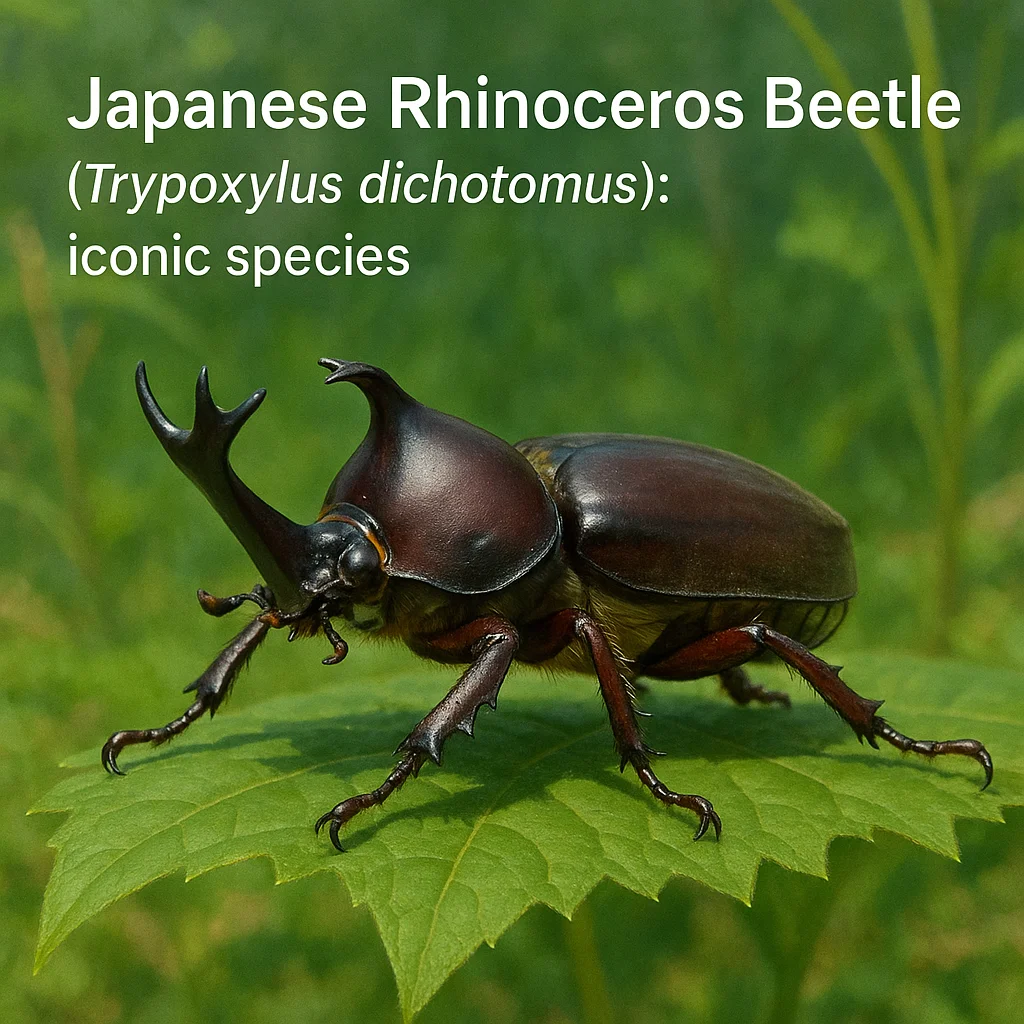
The Japanese Rhinoceros Beetle, Trypoxylus dichotomus, is a fascinating and iconic insect commonly found in Asia. Known for their impressive horned appearance, these beetles are a popular subject for nature enthusiasts.
- Common names: Kabutomushi (Japanese Rhinoceros Beetle)
- Scientific name: Trypoxylus dichotomus
- Insect: Yes, they are invertebrates.
- Order / family: Coleoptera / Scarabaeidae
- Typical size range: 30-80 mm (adult)
- Key colors/patterns: Mostly brown to black with a shiny carapace
- Activity: Nocturnal
- Typical habitats: Deciduous forests and wooded areas
- Where in the world: East Asia, primarily Japan, Korea, China, and Taiwan
- Seasonality: Summer months, especially July to September
🔍 Identification
Recognizing the Japanese Rhinoceros Beetle is straightforward due to its distinctive body shape and features. They have a robust body with a pronounced horn on males, which is used for battling other males during the mating season. Their antennae are clubbed and bent, aiding in their sensory navigation.
The beetle's forewings (elytra) are hardened, covering the membranous hind wings often used for flying. They possess strong, clawed legs that enable efficient movement across surfaces.
In terms of appearance, they can be confused with other horned beetles, but the specific arrangement and shape of their horns help in accurate identification.
- Top ID Tips:
- Horns: Males have a large, curved central horn.
- Body: Stout and robust construction.
- Color: Typically glossy dark brown or black.
- Wings: Hard elytra covering the hind wings.
- Legs: Clawed for better grip on surfaces.
- Antennae: Short and clubbed, crucial for sensing the environment.
🧠 Basic Body Structure
Like all insects, the Japanese Rhinoceros Beetle's body is divided into three main parts: head, thorax, and abdomen. They have six legs and a protective exoskeleton made of chitin, which they molt as they grow. Their two pairs of wings include the hard, protective elytra and the membranous flight wings beneath.
They are invertebrates, meaning they lack a backbone, which contrasts with vertebrates like mammals, birds, and reptiles.
🌍 Habitat & Distribution
These beetles prefer deciduous forests where they can find ample food, such as tree sap and ripe fruit. They are often found under bark and within leaf litter, which provides shelter and moisture.
Geographically, they are native to East Asia, with a presence in Japan, Korea, China, and Taiwan. They thrive in regions with warm, humid climates, and any significant changes in these conditions can affect their population and visibility.
📅 Seasonal Appearance & Activity
The Japanese Rhinoceros Beetle is most active and visible during the summer months, particularly between July and September. Being nocturnal, they are primarily active at night. They are less likely to be seen during cold, wet, or extremely dry spells.
- Best Time to Spot It:
- Summer (July to September)
- Warm, humid nights
- During mating season
- In deciduous forests
🥚 Reproduction & Egg-Laying
The Japanese Rhinoceros Beetle engages in courtship behaviors where males often battle each other for access to females. The victorious male will mate with the female, who then lays her eggs in decaying wood or soil, the environment providing essential nutrients and protection for larvae development.
Egg laying typically happens in the summer, with a female laying dozens of eggs, though this can vary based on environmental conditions.
🌀 Metamorphosis & Life Cycle
This beetle undergoes complete metamorphosis, featuring four life stages: egg, larva, pupa, and adult.
The eggs hatch into larvae, which primarily consume decaying wood and organic matter. This larval stage can last up to a year, depending on food availability and climate conditions. The larva then pupates, undergoing a transformation that lasts several weeks, before emerging as an adult.
Adults feed on tree sap and ripe fruit and are often spotted during the breeding season when they are most active.
🍽️ Diet & Feeding Behavior
As larvae, Japanese Rhinoceros Beetles feed on decaying wood and organic matter, playing a crucial role in decomposition. Adult beetles primarily feed on tree sap and ripe fruits, using strong mandibles adapted for chewing.
In their ecosystems, they act as herbivores and decomposers, contributing to nutrient cycling and forest health.
🦉 Predators & Defense
These beetles are preyed upon by birds, reptiles, amphibians, and some mammals. To defend themselves, they rely on their armor-like exoskeleton and the impressive horn shape as deterrents.
The horn, while primarily a mating tool, also serves as a defensive weapon against smaller predators or in fights with rivals.
- Defense Highlights:
- Thick exoskeleton for protection
- Large horn as a visual deterrent
- Camouflage against tree bark and leaves
- Ability to fly away quickly when disturbed
👥 Social Behavior & Swarms
Japanese Rhinoceros Beetles are generally solitary except during mating season when males can be observed battling each other. While not social insects like bees or ants, they do communicate through pheromones to find mates.
There is no swarm formation typical of this species, and their interactions are limited to breeding-related activities.
🧭 Senses & Communication
Their key senses include smell and touch, which they use to locate food and mates. Pheromones play a critical role in communication, signaling reproductive readiness and aiding in navigation through dense forest environments.
Although they have compound eyes, these beetles rely more heavily on olfactory signals for orientation and detecting others.
🌱 Role in the Ecosystem
Japanese Rhinoceros Beetles play an important ecological role as decomposers, breaking down rotting wood and recycling nutrients back into the soil. As adults, by feeding on sap, they may also assist in minor pollination activities.
They form part of intricate food webs, serving as prey for various species and contributing to the ecological balance in their habitats.
📉 Population & Conservation Notes
Though not currently threatened, their populations can be sensitive to habitat changes, pesticide use, and light pollution. Local abundance varies, with data indicating declines in areas subject to urbanization and deforestation.
- How to Help (Low-Impact):
- Plant native trees and maintain forested areas
- Avoid using synthetic pesticides
- Reduce artificial night lighting in habitats
- Maintain garden areas with ample decaying wood
⚠️ Human Interaction & Safety
Japanese Rhinoceros Beetles are harmless to humans. They do not bite or sting, and pose no threat when observed in the wild. For those interested in observing them, it is advised to do so respectfully and without disturbing their habitats.
Should someone have an allergic reaction or a rare adverse encounter, professional medical advice should be sought if symptoms are severe.
📌 Summary
- Distinctive horned beetle native to East Asia.
- Prefers forested and wooded environments, visible in warmer months.
- Undergoes complete metamorphosis with significant ecological roles.
- Diet consists of tree sap, fruits, and decaying wood.
- Faces threats from habitat changes and increased pesticides.
- Solitary except during mating, relies on pheromones for communication.
- Provides critical ecosystem services by aiding decomposition.
- Avoid disturbing these beetles in the wild to maintain ecological balance.