🕷️ Cetoniinae colors: patterns and camouflage
🧾 Quick Facts
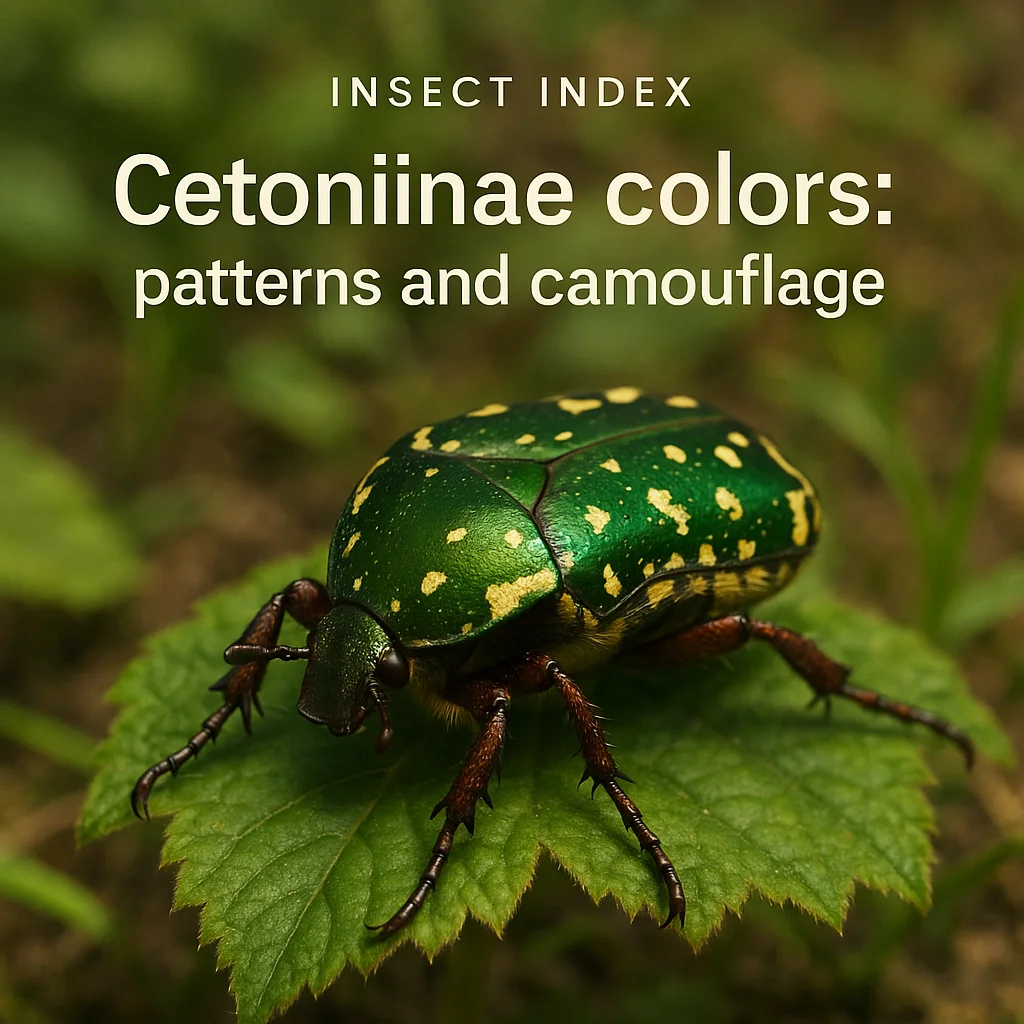
The Cetoniinae subfamily, commonly known as flower chafers or scarab beetles, is renowned for their dazzling array of colors and intricate patterns. These beetles are a joy to observe in their natural habitats.
- Common names: Flower chafers, Scarab beetles
- Scientific name: Cetoniinae (subfamily under Scarabaeidae)
- Insect or not: Yes, they are insects (order Coleoptera)
- Order / family: Coleoptera / Scarabaeidae
- Typical size range: Adults range from 1.2 to 3.5 cm in length
- Key colors/patterns: Iridescent greens, metallic golds, blacks with striking patterns
- Activity: Typically diurnal (active during the day)
- Typical habitats: Forests, meadows, gardens, and parks with ample flowering plants
- Where in the world it occurs: Primarily in tropical and subtropical regions worldwide
- Seasonality: Most visible during warm months, generally spring to late summer
🔍 Identification
Cetoniinae beetles can be identified by their robust and often glossy bodies, which display a range of vibrant colors. Their body shape is usually elongate-oval, and they possess clubbed antennae that are not as prominent as other beetle species. The wings are often beautifully colored with hard elytra that cover the hindwings and do not totally cover the abdomen when closed.
- Body shape and silhouette: Elongate-oval, robust build
- Antennae type: Clubbed
- Wing features: Hard elytra with brilliant colors
- Leg traits and movement style: Strong legs adapted for digging and gripping surfaces
- Distinguishing look-alikes and common confusion: They are often confused with jewel beetles, which are typically more slender
- Top ID Tips:
- Iridescent and metallic coloration
- Broad bodies with short elytra
- Clubbed antennae
- Daytime activity near flowers
- Close association with flowering plants
- Best Time to Spot It:
- Late spring to late summer
- Sunny, warm days
- Near blooming flowers
- After rainfall in temperate areas
- Defense Highlights:
- Camouflage with natural surroundings
- Mimicry of other insects like bees
- Hard exoskeleton for protection
- Rapid flight to escape predators
- How to Help (Low-Impact):
- Plant native flowers and trees
- Reduce pesticide use in gardens
- Create beetle-friendly habitats with decaying wood
- Maintain pond areas for habitat diversity
- Identified by their iridescent colors and robust, oval bodies
- Found in various habitats with plenty of flowers
- Most active during warmer months and sunny days
- Undergoes complete metamorphosis with distinct life stages
- Plays roles as both a pollinator and nutrient recycler
- Faces predation from various animals, with several defense mechanisms
- Minor human impact, largely beneficial ecological role
- Conservation efforts can help maintain stable populations
🧠 Basic Body Structure
These beetles, like all insects, have a body divided into three main parts: head, thorax, and abdomen. They possess six legs, characteristic of insects, and a hard outer exoskeleton that offers protection and support. As invertebrates, they lack a backbone, their support structure is external. The wings, if present, are hidden beneath the hard elytra.
🌍 Habitat & Distribution
Flower chafers thrive in environments rich in flowering plants where they can feed on nectar and pollen. They are often found in forests, gardens, meadows, and grasslands. Microhabitats include spaces within flowers, under loose bark, and among dense foliage. Geographically, they are spread predominantly across tropical and subtropical regions, making them less common in more temperate zones. Changes in habitat such as urbanization and deforestation significantly affect their population visibility and distribution.
📅 Seasonal Appearance & Activity
Cetoniinae beetles are most visible during the warmer months when flowers are abundant. Typically diurnal, their activity peaks during sunny days. Their appearance can be influenced by regional rainfall, with increased activity following wet weather that encourages flower blooms.
🥚 Reproduction & Egg-Laying
Mating behavior among Cetoniinae typically involves the male signaling the female through pheromone release. Eggs are generally laid in decaying wood, compost, or rich soil environments. This setting offers security and ample food for the larvae, which emit an earthy odor. Egg counts can vary widely depending on the species and environmental conditions, with females known to lay clusters rather than singularly.
🌀 Metamorphosis & Life Cycle
Cetoniinae beetles undergo complete metamorphosis which includes an egg, larva, pupa, and adult stage. Larvae, known for their C-shaped posture, feed primarily on decaying plant matter, playing a role as decomposers in their ecosystem. This stage may last several months, or even up to a year depending on environmental conditions. The pupal stage, a period of transformation, typically occurs within the soil or sheltered environments. Upon reaching adulthood, beetles emerge to feed, mate, and propagate the cycle.
🍽️ Diet & Feeding Behavior
The diet of Cetoniinae beetles varies by life stage. Larvae predominantly consume decaying organic material, aiding in nutrient cycling. Adult beetles focus on flowering plants, using chewing mouthparts to consume nectar, pollen, and occasionally overripe fruit. Through their feeding activities, they can act as pollinators, transferring pollen from one flower to another.
🦉 Predators & Defense
Predators of Cetoniinae beetles include birds, small mammals, reptiles, and larger predatory insects. They have adapted several defense strategies to evade these threats. Their brilliant coloration acts as camouflage, blending them with the floral environment, while some species can even mimic the appearance of bees or wasps. Startle displays, speed, and hard protective shells further enhance their survival.
👥 Social Behavior & Swarms
Cetoniinae beetles generally exhibit solitary behavior, primarily engaging socially during mating periods. Encounters between males can result in combat, as they vie for the opportunity to mate with a receptive female. Though not typically swarming insects, they may gather in larger numbers around abundant food sources like blossoming trees.
🧭 Senses & Communication
Flower chafers possess well-developed senses that aid in their survival. Their vision is adapted for seeing in daylight, allowing them to navigate complex floral terrains. The sense of smell, facilitated through their antennae, is crucial for locating food and mates. Communication often involves the use of pheromones to attract mates and may include specific postures or movements.
🌱 Role in the Ecosystem
These beetles play a significant ecological role as both pollinators and decomposers. As adults, they assist in plant pollination, while larvae help decompose dead plant matter, recycling nutrients back into the soil. They form part of the food-web, providing prey for various animal species. In some agricultural settings, they contribute to soil health, although large populations may occasionally damage crops.
📉 Population & Conservation Notes
The population of Cetoniinae can vary significantly across different regions. While many species remain common, some are experiencing declines due to habitat destruction, pesticides, and climate change. It's vital to implement conservation strategies to help protect these beetles and their habitats.
⚠️ Human Interaction & Safety
Cetoniinae beetles are generally harmless to humans. They do not bite or sting, and encounters are usually benign. If you observe these vibrant beetles, enjoy them respectfully from a distance and avoid handling or capturing them. If you experience an allergic reaction to a beetle, wash the area with soap and water, and seek professional advice if severe.