🕷️ Chafer Beetles The ‘June Bug' Lookalikes Explained
🧾 Quick Facts
Chafer beetles, often mistaken for the well-known June bug, are a diverse group of beetles with some shared and distinct characteristics. Although they come in various forms and sizes, these beetles are generally recognized by their robust bodies and metallic sheen. Here's an overview of key facts regarding chafer beetles.
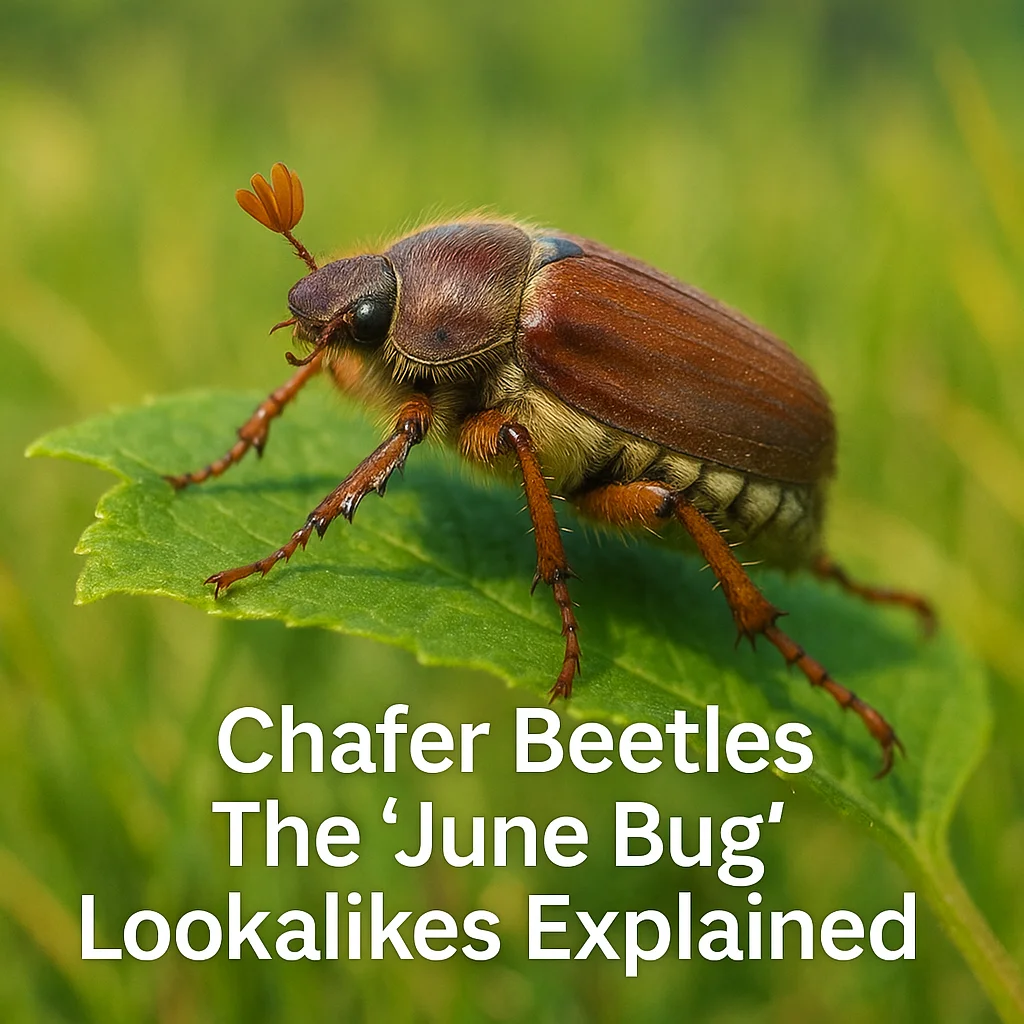
- Common names: Chafer beetle, June bug lookalike, Rose chafer
- Scientific name: Varies (includes several genera such as Amphimallon, Phyllopertha)
- Insect/Invertebrate: Insects; they possess an exoskeleton and jointed legs
- Order/Family: Coleoptera, Scarabaeidae
- Typical size range: 1-2 cm in length
- Key colors/patterns: Metallic greens, browns, and sometimes blues
- Activity: Mainly crepuscular and nocturnal
- Typical habitats: Grasslands, meadows, gardens, and woodlands
- Where in the world it occurs: Primarily Europe, North America, and parts of Asia
- Seasonality: Most active from late spring to early summer
🔍 Identification
Chafer beetles can be recognized by their sturdy, oval-shaped body and a smooth, shiny exterior often bearing a metallic sheen. They have lamellate antennae that can fan out to detect pheromones. The wing covers, known as elytra, are often distinctively marked or colored. Their legs are adapted for digging and provide efficient crawling abilities.
- Top ID Tips:
- Look for a robust, oval-shaped body.
- Note the metallic sheen on their exoskeleton.
- Check the lamellate antennae.
- Observe the wing covers or elytra for distinctive colors.
- Strong, spade-like legs for burrowing.
- Tends to move clumsily when flying.
- Often found near plants or flowers during dusk.
- Large, robust head with visible mandibles.
🧠 Basic Body Structure
The chafer beetle, like all insects, consists of three main body parts: the head, thorax, and abdomen. They possess six legs attached to the thorax and an exoskeleton that provides protection and support. As invertebrates, chafer beetles molt to grow, shedding their exoskeleton multiple times throughout their life cycle. Wings are present, with hardened forewings (elytra) protecting the more delicate hind wings used for flight.
🌍 Habitat & Distribution
Chafer beetles frequently inhabit grasslands, woodlands, and gardens where they can readily find food and mates. They thrive in temperate climates and are prevalent in areas with abundant plant life. These beetles are often found burrowing in soil or under decomposing logs and leaves. Habitat variations, such as the presence of certain plant species, can influence their local abundance.
📅 Seasonal Appearance & Activity
Chafer beetles are most visible during the late spring and early summer months when adults emerge for mating. Their activity is predominantly crepuscular, peaking at dusk and sometimes extending into the night. Weather influences like warm temperatures and humidity can heighten their activity levels, while cold or wet conditions deter them.
- Best Time to Spot It:
- Late spring evenings
- Warm, humid conditions
- Near garden lights or illuminated areas
- In gardens with dense plant coverage
🥚 Reproduction & Egg-Laying
Chafer beetles engage in a mating process that typically involves pheromone signals to attract mates. Once paired, females lay eggs in the soil, often at the base of grasses or under the cover of decomposing plant matter. Egg counts can vary significantly, influenced by environmental factors and species specifics.
🌀 Metamorphosis & Life Cycle
Chafer beetles undergo complete metamorphosis beginning with eggs hatching into larvae (grubs). These grubs feed on plant roots and organic matter in the soil for several months. After reaching a certain size, they form a pupal casing where transformation into adult form occurs. Depending on species and environmental conditions, this process can take one to three years.
🍽️ Diet & Feeding Behavior
Larval chafer beetles primarily consume plant roots, contributing to soil aeration but occasionally damaging crops and grasses. Adult beetles feed on leaves, flowers, and fruits, using their robust mandibles for chewing. While some species are considered garden pests, they also play a role in pollination.
🦉 Predators & Defense
Chafer beetles face predation from birds, small mammals, amphibians, and some entomopathogenic fungi. To evade predators, chafer beetles can employ camouflage and burrowing. Their hard exoskeleton offers some protection, although it makes them clumsier in flight. Chemical defenses are less common but present in certain species.
- Defense Highlights:
- Camouflage among leaves and soil
- Burrowing into the ground
- Hard, protective exoskeleton
- Clumsy flight to deter interception
👥 Social Behavior & Swarms
Chafer beetles are primarily solitary, coming together briefly during mating seasons. Observations of swarming behavior are generally linked to mating aggregation, where males and females are drawn to specific locations by pheromones or environmental cues, such as light or temperature variations.
🧭 Senses & Communication
Chafer beetles have developed senses for detecting changes in their environment. Their antennae serve as key organs for pheromone detection and navigation. Visual acuity is limited, making them more reliant on smell. During mating, communication is largely pheromonal, with scent trails used to coordinate group activity.
🌱 Role in the Ecosystem
Chafer beetles contribute to ecosystems as decomposers and pollinators. By breaking down plant material and aerating the soil, they enhance nutrient cycling. Despite being plant feeders, they also pollinate flowers thereby supporting plant reproduction. While often seen as agricultural pests, they play a crucial role in maintaining diverse, balanced ecosystems.
📉 Population & Conservation Notes
Chafer beetle populations can vary widely across regions, with some species experiencing declines due to habitat loss and pesticide use. Conservation efforts focus on habitat restoration and integrated pest management to balance their agricultural impact with ecosystem benefits. Organic gardening practices and reduced pesticide usage can help support chafer beetle populations.
- How to Help (Low-Impact):
- Plant native vegetation
- Avoid chemical pesticides
- Maintain garden diversity
- Leave dead leaves undisturbed
⚠️ Human Interaction & Safety
Chafer beetles are generally harmless to humans and do not bite or sting. If handling is necessary, it is best to do so gently and to wash hands afterward to avoid soil residue or any potential allergic reactions. Observing beetles in their natural habitat, rather than collecting, is recommended to preserve their ecological role.
📌 Summary
- Chafer beetles are often mistaken for June bugs.
- They prefer grasslands and gardens and vary in color from metallic green to brown.
- Activity peaks in late spring and early summer, mainly at dusk.
- Complete metamorphosis includes an egg, larva, pupa, and adult stages.
- Larvae feed on plant roots, while adults consume leaves and flowers.
- Natural predators include birds and mammals, their defenses include camouflage.
- They play roles as pollinators and decomposers despite being seen as pests.
- Efforts to help include planting natives and reducing pesticide use.
- Generally safe around humans, with minimal risk of harm.