🕷️ Pellet Vs Roller Dung Beetles Two Strategies Compared
🧾 Quick Facts
Pellet and Roller Dung Beetles are fascinating invertebrates known for their unique methods of handling dung, a vital ecological function that supports nutrient recycling. These beetles are known for their rafting behavior on dung, with a few key distinctions in their strategies.
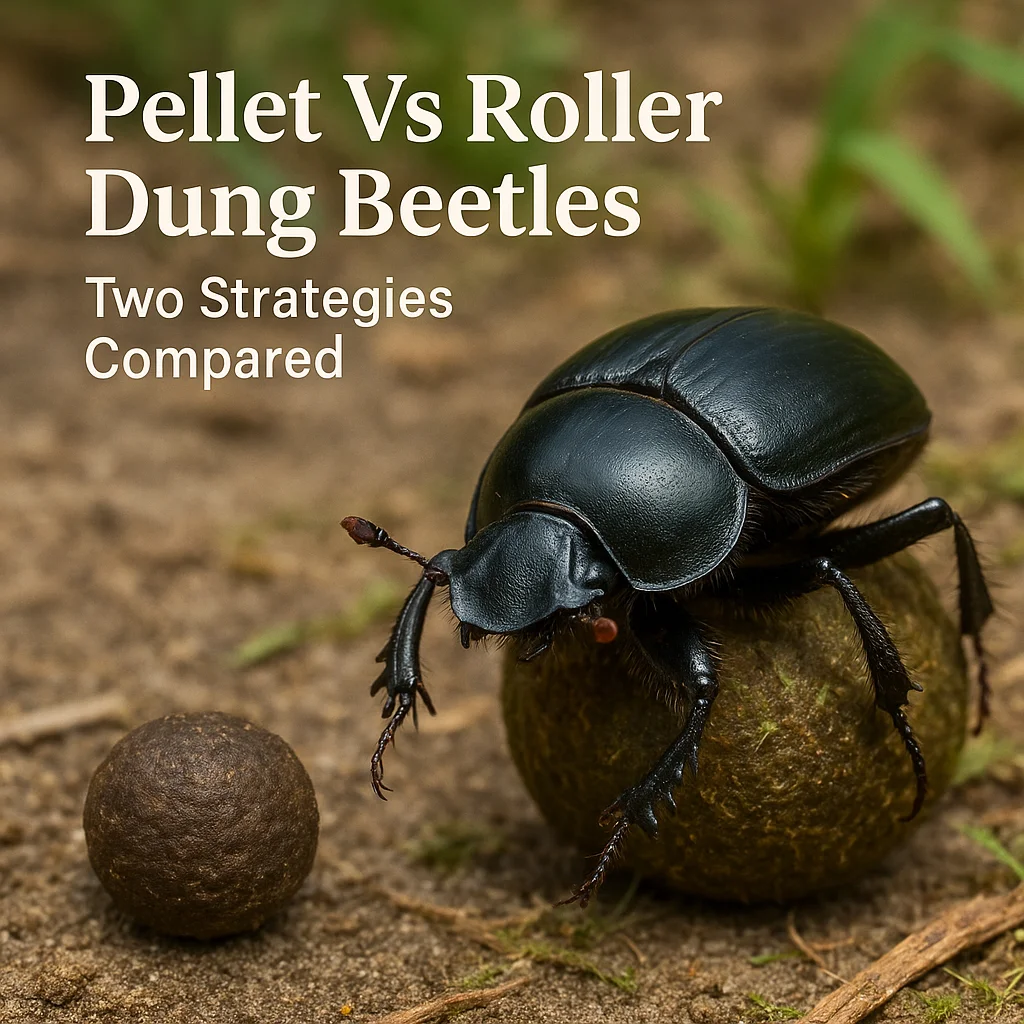
- Common Names: Dung beetles, Tumblebugs
- Scientific Name: Varies within families Scarabaeidae and Geotrupidae
- Insect: Yes, as they are invertebrates
- Order / Family: Coleoptera / Varies
- Typical Size Range: 0.2 to 1.5 inches (5 to 40 mm)
- Key Colors/Patterns: Black, brown, iridescent blues and greens
- Activity: Mostly nocturnal
- Typical Habitats: Grasslands, forests, deserts
- Where in the World: Found on all continents except Antarctica
- Seasonality: More visible in warmer months
🔍 Identification
To identify dung beetles, pay careful attention to their robust body shape and distinctive behavior around animal droppings. Roller dung beetles are often seen rolling dung balls away, while pellet beetles typically bury dung on the spot.
- Body Shape and Silhouette: Compact, rounded bodies
- Antennae Type: Clubbed with a lamellate structure
- Wing Features: Hard elytra covering soft hind wings
- Leg Traits and Movement Style: Strong forelegs for digging and rolling
- Distinguishing Look-Alikes: Often confused with Scarabaeid beetles; key is dung-handling behavior
- Top ID Tips:
- Look for beetles on or near dung or carrion
- Observe behavior: roll versus burying
- Examine the size and shape of dung particles handled
- The quiet rolling of dung balls often indicates rollers
- Pellet beetles may appear in groups around single sites
- Check for a sturdy, armor-like exoskeleton
🧠 Basic Body Structure
Dung beetles exhibit the standard insect body structure divided into three main parts: the head, thorax, and abdomen. Possessing six robust legs adapted for digging and rolling, these beetles have a tough exoskeleton that provides protection while allowing mobility. They undergo molting several times during development to accommodate growth.
As invertebrates, dung beetles lack a vertebral column but possess a hard exoskeleton, offering structure and defense against predators. This body plan is quintessential for their survival in varied environments.
🌍 Habitat & Distribution
These beetles are adaptable and can thrive in diverse environments, from lush rainforests to arid deserts. Generally, they prefer grasslands, which provide ample resources in the form of animal dung. In colder climates, sightings are less frequent given the slower rate of decay and dung availability.
Generally distributed globally, their highest diversity is often observed in tropical and subtropical regions, though they can be found in areas as diverse as savannahs, temperate forests, and shrublands. Habitat degradation and climate change can impact their distribution and abundance locally.
📅 Seasonal Appearance & Activity
Dung beetles become more active during warmer months when access to dung—a critical resource—is plentiful. Most species are more visible at night, utilizing cooler temperatures and less predation risk to carry out their activities.
- Best Time to Spot It:
- During warm, humid weather
- Spring through late summer
- Post-rainfall when water softens dung
- Mostly at night under clear skies or full moon
🥚 Reproduction & Egg-Laying
Mating behavior in dung beetles is somewhat ritualistic, often involving pheromone trails or competitive displays. Post-copulation, females will typically bury either the entire dung ball or sections of it with fertilized eggs inside.
Eggs are often laid within the buried dung or nearby soil, allowing larvae to feed immediately upon hatching. The number of eggs can vary significantly depending on species, available resources, and environmental conditions.
🌀 Metamorphosis & Life Cycle
Dung beetles undergo complete metamorphosis, progressing through egg, larva, pupa, and adult stages. Each stage presents distinctive environmental adaptations and dietary needs, primarily relying on dung.
In the larval stage, beetles reside in chambers fashioned by their parents within the dung or soil. These grubs consume the surrounding dung material as they grow. The larval phase lasts from a few weeks to several months, influenced by temperature and food availability. Pupation then occurs, culminating in the emergence of an adult beetle ready to begin its quest for dung.
🍽️ Diet & Feeding Behavior
Dung beetles are primarily decomposers, their diet predominantly consisting of herbivore dung. They use their sturdy jaws to break apart and mold the dung, either for immediate consumption or transport.
Their role is crucial in nutrient cycling, promoting soil fertility and aiding in the reduction of parasitic populations. Feeding mechanisms involve robust mandibular structures for masticating solid waste into suitable consistency for their needs.
🦉 Predators & Defense
Dung beetles face predation from a variety of species including birds, reptiles, and some mammals that feed on insects. They deploy several defense mechanisms to survive: their tough exoskeleton offers physical protection; burrowing behavior helps in evading predators; and some can feign death when threatened.
- Defense Highlights:
- Strong exoskeleton resists predation
- Burrowing to escape predators
- Quick dives into dung piles for safety
- Mimicry to blend with the surroundings
👥 Social Behavior & Swarms
While known for generally solitary behavior, some dung beetles demonstrate fascinating cooperation during breeding or dung-rolling activities. Rollers, especially, may pair up to effectively transport balls. Increased social behavior can be noted in environments with surplus resources.
Swarming is rare but can occur when environments undergo rapid changes, such as dung appearing en masse in a locale, prompting large congregations.
🧭 Senses & Communication
Dung beetles are equipped with complex sensory systems, utilizing olfactory receptors primarily for detecting dung; this keen sense of smell is crucial for locating the primary food source. Communication among them often involves chemical signals or pheromones.
In some species, visual cues under daylight facilitate interactions, while more complex phenomena such as dung orientation and rolling can involve precise sensory input to navigate effectively.
🌱 Role in the Ecosystem
Dung beetles play a pivotal role in ecosystems through nutrient recycling, aiding decompostition and natural fertilization processes. They help in controlling parasitic populations by breaking down animal waste, which can otherwise harbor eggs and larvae.
Their actions enhance soil structure and fertility, promoting plant growth. While beneficial to agriculture, when brought into non-native ecosystems without balance, they can inadvertently disrupt local insect populations.
📉 Population & Conservation Notes
While many dung beetle populations are common and robust, local abundance can vary with habitat loss, pesticide use, and climate change presenting key threats. Conservation efforts are important to maintain their ecological roles, particularly in agriculture.
- How to Help (Low-Impact):
- Plant native flora to support diverse ecosystems
- Avoid unnecessary pesticide use
- Create wildlife gardens with leaf litter or compost
- Support conservation initiatives in agricultural policy
⚠️ Human Interaction & Safety
Dung beetles pose no direct threats to humans; they neither bite nor sting. Their role in waste decomposition actually benefits human health by reducing livestock parasites. Observe these creatures respectfully and ethically without capturing or harming them, as they are vital for maintaining ecological balance.
For minor outdoor encounters, washing hands after garden work is wise; in rare cases of allergic reaction, seeking professional advice is recommended.
📌 Summary
- Recognizable by their dung-handling behavior
- Adaptable to various habitats, mostly grasslands and forests
- Most active during warmer months, often nocturnal
- Undergo complete metamorphosis from egg to adult
- Primarily decomposers with a critical role in nutrient cycling
- Protected by their exoskeleton and agility
- Serve essential ecological functions, impacting both natural and agricultural systems
- Beneficial to ecosystems and generally harmonious with humans