🕷️ Carpenterworms And Wood-boring Moths Signs On Trees
🧾 Quick Facts
Carpenterworms and wood-boring moths represent a fascinating group of insects primarily known for their larval stages that bore into trees and wood. While they feature a diverse range of species, their impacts on both natural ecosystems and human activity can be significant.
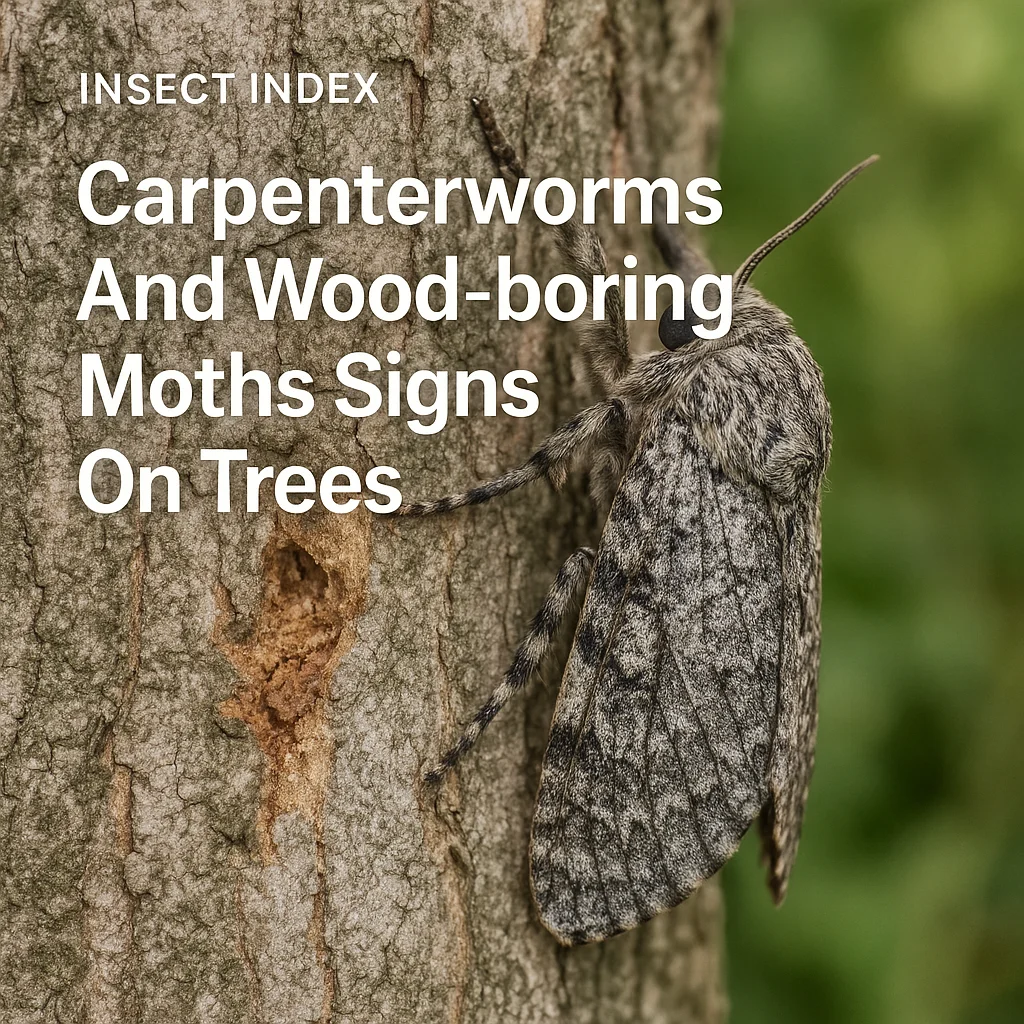
- Common names: Carpenterworm, Wood-boring moth
- Scientific name: Varies by species
- Insect: Yes, these are invertebrates
- Order / family: Lepidoptera, Cossidae
- Typical size range: Adults can range from 25 to 50 mm in wingspan
- Key colors/patterns: Often drab or camouflaged, ranging from gray to brown
- Activity: Nocturnal
- Typical habitats: Forests, gardens, urban areas
- Where in the world it occurs: Found in temperate and subtropical regions globally
- Seasonality: Adults most visible in spring and summer
🔍 Identification
Recognizing carpenterworms and wood-boring moths involves observing various physical attributes and behaviors. They are typically robust moths with muted colorations that blend into their surroundings.
- Body shape and silhouette: Stout with furry bodies
- Antennae type: Filiform or feathery in males
- Wing features: Long wings with subtle markings and often held tent-like over the body
- Leg traits and movement style: Short legs adapted for clinging to surfaces
- Distinguishing look-alikes: Often confused with other moths like the clearwing moths due to similar size, though clearwing moths have transparent sections on their wings
- Top ID Tips
- Look for subtle, camouflaged colors
- Note the nocturnal activity patterns
- Examine wing texture and pattern closely
- Observe antennae shape, especially in males
- Compare size with nearby objects for scale
- Check for robust body structure beneath wings
🧠 Basic Body Structure
Carpenterworms and wood-boring moths are characterized by a three-part body plan typical of insects: head, thorax, and abdomen. They possess six legs and are covered by an exoskeleton that supports and protects their body. As in all moths, lifelong metamorphosis is crucial, transitioning from egg to larva, pupa, and finally adult. These insects are invertebrates, meaning they lack a vertebral column yet exhibit complex behaviors and physiological adaptations.
🌍 Habitat & Distribution
These species are primarily found in forested areas, where their larvae bore into tree trunks. However, urban environments such as gardens and parks provide habitats where ornamental and fruit trees exist. They prefer warm climates but can adapt to various environments if suitable host trees are available. Sightings can fluctuate with changes in available habitats or tree health.
📅 Seasonal Appearance & Activity
Adult carpenterworms and wood-boring moths are typically visible during the warmer months when trees are actively growing and provide suitable hosts for egg-laying. Most species are nocturnal and can be drawn to lights at night, making evening observations more fruitful.
- Best Time to Spot It
- Spring evenings
- Early summer nights
- Warm, clear nights
- Low wind conditions
🥚 Reproduction & Egg-Laying
Reproductive behaviors in carpenterworms and wood-boring moths often involve chemical and visual cues during courtship. Females typically lay eggs singly or in small clusters on tree bark or crevices where larval galleries will develop. Egg counts can vary greatly depending on the species and environmental conditions.
🌀 Metamorphosis & Life Cycle
Carpenterworms undergo complete metamorphosis, with their life cycle embracing four distinct stages. Initially, eggs hatch into larvae, which bore into tree wood to feed and grow. They can spend a year or more in this stage, exploiting tree nutrients. Following their larval phase, they enter the pupal stage within the wood, preparing for emergence as adults. Adult moths then partake in reproductive activities to continue the cycle.
🍽️ Diet & Feeding Behavior
During the larval stage, carpenterworms and wood-boring moths primarily consume the inner bark and wood of trees, playing a role in the decomposition of dead or weakened trees. They utilize chewing mouthparts to excavate extensive galleries within trees. Adults typically do not feed, focusing on reproduction. This herbivorous behavior influences both forest health and human agricultural activities.
🦉 Predators & Defense
Birds, particularly woodpeckers, frequently prey on larvae by extracting them from their galleries. Predatory insects, spiders, and parasitoid wasps also pose threats. To evade predation, many species leverage their cryptic coloration for camouflage, blending seamlessly with bark patterns.
- Defense Highlights
- Light and dark wing patterns for camouflage
- Deep burrowing to evade predators
- Thick exoskeletons in larvae for protection
- Ability to remain inactive and hidden
👥 Social Behavior & Swarms
Carpenterworms and wood-boring moths are typically solitary creatures, with no social structures like some other insects. Their interactions mainly occur in the context of mating. Some minor aggregations might happen around optimal egg-laying sites, but true swarming behavior is not a characteristic of these moths.
🧭 Senses & Communication
Primarily, these moths rely on smell via pheromones to find mates, especially since most are nocturnal and visual cues are limited. Male moths possess elaborate antennae to detect female pheromones over considerable distances. Vibrations, light sensitivity, and tactile cues also play roles in their survival strategies, although not all communication methods are thoroughly documented.
🌱 Role in the Ecosystem
Carpenterworms and wood-boring moths contribute to their ecosystems by aiding in the decay and recycling of wood, facilitating nutrient cycling in habitats. They also serve as prey for various birds and other predators. While often seen as pests due to their potential for damaging healthy trees, they are integral to forest ecology, balancing natural cycles.
📉 Population & Conservation Notes
Though not widely endangered, local populations can be influenced by habitat loss, pesticides, and climate changes. Conservation strategies focus on maintaining healthy woodlands and reducing pesticide use in critical habitats.
- How to Help (Low-Impact)
- Maintain diverse plantings in gardens
- Limit pesticide usage around known habitats
- Promote awareness of their ecological role
- Support conservation efforts for forest preservation
⚠️ Human Interaction & Safety
While the larval stage can lead to tree damage, leading to economic concerns, these moths pose no direct threat to humans. They do not bite or sting, and physical harms from the insects are not documented. If an infestation is noted in trees, professional consultation is recommended to manage the issue while respecting natural processes.
📌 Summary
- Primarily identified by their nocturnal habits and camouflaged colors
- Found in forests and urban areas with host trees
- Adults visible mainly during spring and summer
- Complete metamorphosis lifecycle with lengthy larval wood-boring phase
- Larvae feed extensively on woody material
- Commonly preyed upon by woodpeckers and parasitoid wasps
- Serve essential roles in wood decomposition and nutrient cycling
- Local population dynamics can be influenced by environmental changes
- Respectful observation without collection benefits their ecosystem role