🕷️ Cutworm Moths What They Are And Why Gardeners Notice Them
🧾 Quick Facts
Cutworm moths, an informal grouping of moth species, are primarily noticed by gardeners due to the damage their larvae cause to young plants. Although cutworms refer broadly to larvae across several genera, they are most commonly associated with the family Noctuidae.
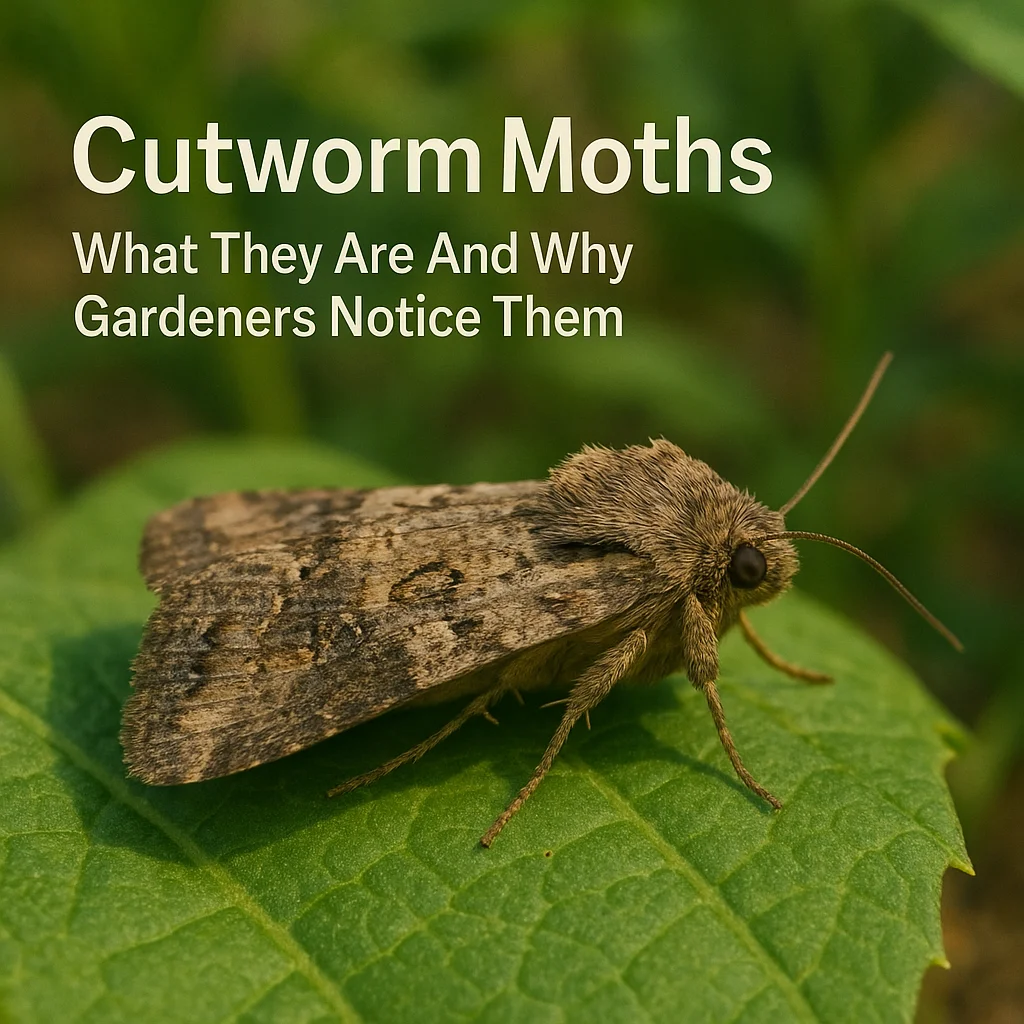
- Common names: Cutworm moth, armyworm
- Scientific name: Varies (mostly Noctuidae family)
- Insect or not: Yes, they are invertebrates
- Order / family: Lepidoptera / Noctuidae
- Typical size range: 1.0 to 1.5 inches (adults)
- Key colors/patterns: Brown, gray, or green with subtle mottling
- Activity: Primarily nocturnal
- Typical habitats: Gardens, agricultural fields, meadows
- Where in the world it occurs: Most temperate regions worldwide
- Seasonality: Active from spring through late summer
🔍 Identification
Cutworm moths can be recognized by their stout, broad body and muted wing patterns. Their antennae are typically straight and filament-like. The wings, when folded, cover the body like a roof, showcasing earth-toned colors and mottling, which helps with camouflage. Legs are tucked under the body during rest, and they tend to fly in short bursts.
- Stout, broad body shape
- Filiform antennae (slender and thread-like)
- Subtle wing mottling with browns and grays
- Resting with wings folded over body like a tent
- Often confused with other moths of Noctuidae family
- Whole specimen in frame for full-body viewing
- Often seen resting on plant stems or walls
- Distinguished by chewing damage in gardens
🧠 Basic Body Structure
As insects, cutworm moths possess the basic structure of head, thorax, and abdomen. They have six legs attached to the thorax, each aiding in their movement across plants and other substrates. The exoskeleton provides protection and support and is molted during growth. They are invertebrates, which means they lack a backbone, relying instead on their exoskeletons.
🌍 Habitat & Distribution
Cutworm moths prefer environments that provide ample plant cover and food, such as gardens, agricultural areas, meadows, and grasslands. Microhabitats include plant stems, soil surfaces, and leaf litter. They are distributed throughout most temperate regions, including North America, Europe, and parts of Asia. Changes in habitat, such as increased urbanization, can reduce sightings as natural environments are lost.
📅 Seasonal Appearance & Activity
Gardeners are most likely to see cutworm moths in the late spring through summer months. They are primarily nocturnal and are most active on warm, calm nights. Weather patterns such as increased humidity and light rains can increase their activity levels.
- Best spotted from late spring to late summer
- Nocturnal activity, seen at night
- Warm, calm, and slightly humid conditions increase sightings
- Less visible during extreme weather conditions
- Gardens and crop fields enhance viewing opportunities
🥚 Reproduction & Egg-Laying
Cutworm moths engage in flight-based courtship, often relying on pheromones for mate attraction. Eggs are laid on the soil surface or on the lower parts of host plants, where larvae will have immediate access to food. Egg batch sizes vary and are often numerous to enhance survival prospects under threat of predation.
🌀 Metamorphosis & Life Cycle
Cutworm moths undergo complete metamorphosis, consisting of four stages: egg, larva (caterpillar), pupa, and adult moth. Eggs hatch into caterpillars that are voracious feeders, primarily damaging young plants. The larval stage is where they are most noticed by gardeners. Caterpillars eventually burrow into the soil to pupate, emerging after several weeks or months as adult moths. The adult stage is mostly focused on reproduction and dispersal.
🍽️ Diet & Feeding Behavior
As caterpillars, cutworms are herbivores and use chewing mouthparts to consume plant material, focusing on stems, leaves, and occasionally roots. Adults primarily feed on nectar, which they can access with their proboscis, aiding in the pollination of some plants.
During the larval stage, cutworms play a significant role in herbivory, impacting plant growth. As adults, their role shifts to occasional pollination.
🦉 Predators & Defense
Natural enemies of cutworm moths include birds, small mammals, amphibians, spiders, and various parasitoid wasps. Defense strategies among cutworms include camouflage and a swift, direct flight to escape predators. Some species can also burrow quickly into soil as a defensive tactic against threats.
- Excellent camouflage on plant stems
- Quick flight response to danger
- Boring into soil for protection
- No chemical defenses commonly recorded
👥 Social Behavior & Swarms
Cutworm moths are generally solitary, coming together only for mating purposes. They do not typically form swarms or migrations, as their lifecycle and feeding habits do not necessitate mass movement.
🧭 Senses & Communication
Cutworm moths rely significantly on pheromones for communication, especially in mate attraction. While their vision is adapted for low-light conditions, they utilize smell to detect food and potential mates. Mechanical sensitivity (touch) assists in navigating the environment and detecting threats.
🌱 Role in the Ecosystem
Ecologically, cutworm moths are important both as prey for other animals and as pollinators when adults. While larval feeding is detrimental to crops, it also controls plant overgrowth. They contribute to nutrient cycling by breaking down plant material and enriching soil when they pupate.
Interactions with natural enemies help control cutworm populations, providing a balance within ecosystems. While they can have negative impacts on human agriculture by damaging crops, they offer pollination benefits and form an essential part of food webs.
📉 Population & Conservation Notes
Cutworm moths are often considered common in suitable habitats but are affected by extensive pesticide use, habitat loss, and changes in agricultural practices. Data is limited on specific species population numbers, and local abundance can vary significantly.
- Encourage native plant growth in gardens
- Minimize pesticide use to encourage natural predators
- Maintain soil health to support larval habitats
- Leave plant debris to provide shelter
⚠️ Human Interaction & Safety
Cutworm moths do not bite or sting humans, and interactions are typically harmless. For gardeners concerned about plant damage, integrated pest management is recommended. Observers should respect wildlife and avoid collecting specimens, allowing for natural behaviors to continue unimpacted.
📌 Summary
- ID by broad body and wing characteristics
- Found in gardens and fields across temperate regions
- Most active from spring to late summer
- Complete metamorphosis with noticeable larval damage
- Herbivorous diet in larval stage; nectar-feeding as adults
- Preyed upon by a variety of natural enemies
- Solitary except during mating
- Play vital roles in ecosystems as prey and pollinators
- Human impacts through agricultural damage and pest control