🕷️ Giant Silk Moth Cocoons How They're Built And Where To Find Them
🧾 Quick Facts
Giant silk moth cocoons are remarkable structures spun by caterpillars of various species within the Saturniidae family. Here are some quick facts to understand their significance and diversity:
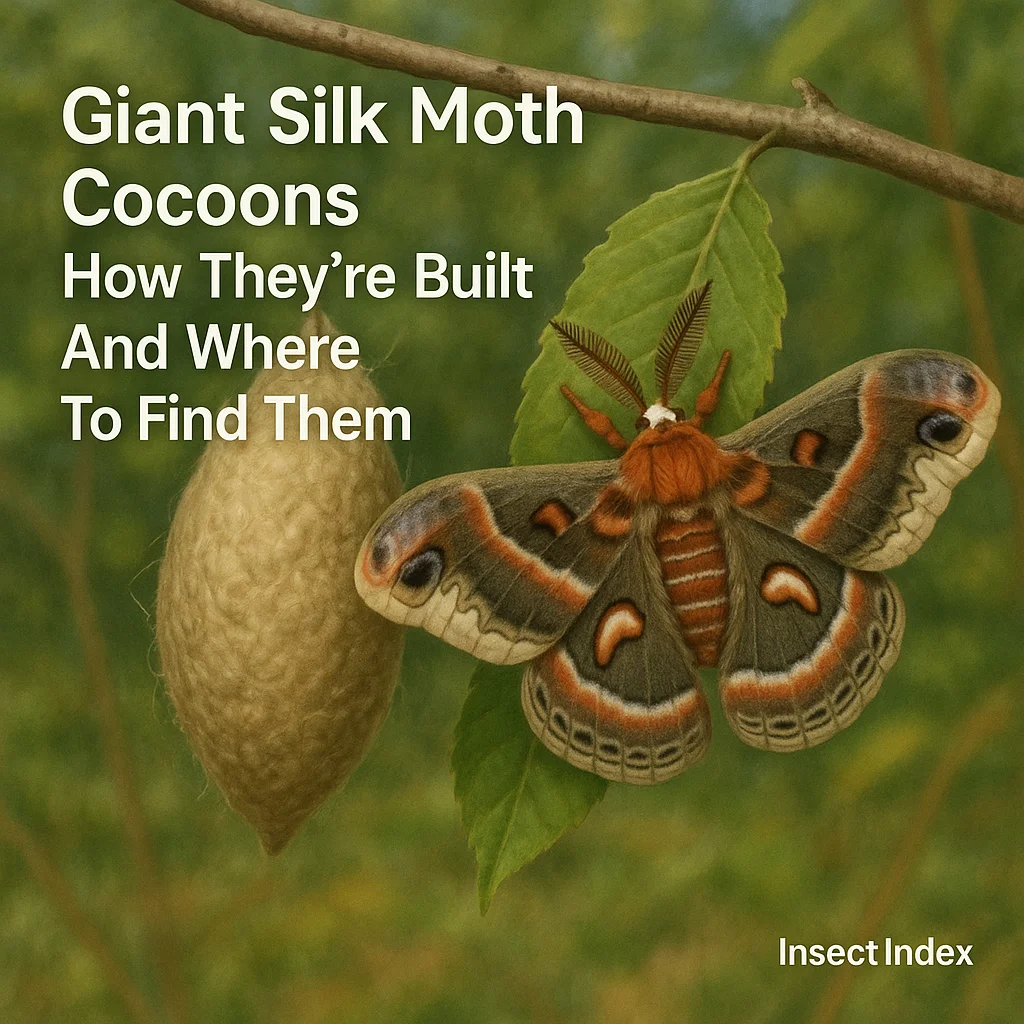
- Common Names: Giant Silk Moth, Emperor Moth, Luna Moth
- Scientific Name: Varies with species
- Insect or Not? Yes, it's an invertebrate insect
- Order / Family: Lepidoptera / Saturniidae
- Typical Size Range: Adults can have wingspans up to 15 cm (6 inches)
- Key Colors/Patterns: Bright colors, unique eyespots, intricate wing patterns
- Activity: Mostly nocturnal
- Typical Habitats: Forests, woodlands, gardens, near light sources
- Where in the World: Found across North America, parts of Central and South America, and Asia
- Seasonality: Seen mainly in late spring to early summer
🔍 Identification
Giant silk moths are known for their impressive size and dramatic appearance. Identifying them in their natural habitat involves recognizing certain distinct traits:
- Body Shape and Silhouette: Large, broad-winged with robust bodies
- Antennae: Feathery in males, aiding in detection of female pheromones
- Wing Features: Bold patterns, often with eye-like spots for defense
- Leg Traits and Movement Style: Stout legs adapted for clinging to bark and branches
- Distinguishing Look-Alikes: Can be confused with hawk moths, but larger and fuzzier
Top ID Tips:
- Look for large size and distinct wing patterns
- Check for fuzzy body and antennae structure
- Observe for presence near light sources at night
- Distinguish by eyespots on wings, serving as defense
- Note unique coloration - typically bright or pastel hues
- Observe resting posture - wings spread flat against substrate
🧠 Basic Body Structure
Giant silk moths, like all insects, are composed of three main body parts: the head, thorax, and abdomen. They have six legs and are covered in an exoskeleton, providing both protection and structure. During growth, they molt this exoskeleton as they progress through life stages. As invertebrates, they lack a vertebral column, distinguishing them from vertebrate animals. Their wings, prominent and vividly colored, facilitate their nocturnal flights and are essential for attracting mates and avoiding predators through mimicry and camouflage.
🌍 Habitat & Distribution
Giant silk moths thrive in environments where their caterpillars can access host plants. Common habitats include deciduous and mixed forests, urban gardens, and sometimes marshy areas. Within these broad ecosystems, they prefer microhabitats like the undersides of leaves, tree bark, and even man-made structures where cocoons can be safely hung. Their geographic range stretches across North America, including southern Canada and the United States, as well as parts of Central and South America, and Asia, with variations in species by region. The alteration of natural habitats can influence their visibility and abundance.
📅 Seasonal Appearance & Activity
The best time to observe giant silk moths coincides with their adult emergence, which typically occurs from late spring to early summer. These moths are nocturnal, often drawn to artificial lights at night, which can be an excellent time for observation. Their activity can be influenced by warm weather and clear nights, with reduced activity during colder, damp conditions.
Best Time to Spot It:
- Late spring to early summer evenings
- During warm, clear nights
- Near artificial lights
- In deciduous and mixed forests
🥚 Reproduction & Egg-Laying
Mating among giant silk moths often involves pheromone attraction, with females releasing scents to draw males from afar. The courtship is brief, given the moths' short adult lifespan. Females lay eggs on the leaves of suitable host plants, which vary depending on the specific moth species. Egg counts can range significantly, with some moths laying hundreds in batches, while others are more conservative with their output. These eggs ensure the multiplication of their species, with larvae emerging ready to devour their host plant's foliage.
🌀 Metamorphosis & Life Cycle
Giant silk moths undergo complete metamorphosis, moving through four distinct stages: egg, larvae (caterpillar), pupa (cocoon), and adult moth. Caterpillars hatch from eggs and immediately begin feeding on host plant leaves, developing rapidly in size. They pass through several instars, molting between each, before forming silk cocoons for the pupation phase. This pupa stage can last several weeks to months, where transformation occurs within the protective silk cocoon. Once metamorphosis is complete, adult moths emerge, their primary focus to reproduce and ensure the continuation of their generation.
🍽️ Diet & Feeding Behavior
As caterpillars, giant silk moths are voracious herbivores, with specific plant preferences dictated by the species. They possess chewing mouthparts, which allow them to efficiently process large volumes of foliage. Adult moths, however, typically do not feed and are primarily driven by reproduction. The larvae play a pivotal ecological role during their growth, influencing the plant communities of their habitat.
🦉 Predators & Defense
Giant silk moths and their caterpillars face a variety of natural predators, including birds, bats, small mammals, and parasitoid wasps. To counteract these threats, they have developed several defense strategies. Caterpillars may camouflage amidst foliage or employ startle displays, showing striking colors or patterns when threatened. Adults wield mimicry tools, with their large eyespots deceiving would-be predators into mistaking them for larger creatures. Additionally, some species produce chemicals that are distasteful or toxic to potential threats.
Defense Highlights:
- Camouflage: Caterpillars blend with foliage
- Startle Displays: Flashing eyespots deterring predators
- Toxic Chemicals: Distasteful to predators
- Mimicry: Eyespots and patterns simulate large predators
👥 Social Behavior & Swarms
Giant silk moths are largely solitary creatures, with interactions primarily occurring during mating periods. The males may travel significant distances following pheromone trails to locate females. On occasion, environmental factors such as light pollution can draw multiple individuals together at night; however, these instances are not indicative of swarming behavior typical of social insects like bees or ants. Rather, such gatherings are random and driven by the insects' navigation towards lights.
🧭 Senses & Communication
The prominent sense for giant silk moths is olfaction; males possess highly developed antennae to detect female pheromones across vast distances. While their vision is suited for nocturnal activity, allowing them to navigate in low light, it's their sense of smell that governs mating behaviors. Communication within this species primarily occurs through pheromone signaling, critical for reproduction and survival, with little reliance on sound or vibrational communication seen in other insect taxa.
🌱 Role in the Ecosystem
Giant silk moths contribute to their ecosystems in several meaningful ways. As caterpillars, they act as herbivores, influencing plant dynamics and contributing to the cycle of nutrient flows within their habitats. They provide a food source for a variety of predators, thus playing an integral role within food webs. Adult moths, albeit short-lived, sometimes contribute to pollination. Indirectly, they affect plant and animal populations through these interactions, with a few species holding specific mutualistic or antagonistic relationships with host plants and other insects.
📉 Population & Conservation Notes
The population status of giant silk moths can vary between regions and species. While some are reportedly common in well-suited habitats, others face existential threats due to habitat loss, pesticide use, climate change, and light pollution. Many have experienced population declines locally and globally, prompting conservation efforts.
How to Help (Low-Impact):
- Plant native species to provide host plants
- Reduce pesticide use in gardens
- Limit light pollution during nocturnal hours
- Preserve natural leaf litter and underbrush habitats
⚠️ Human Interaction & Safety
Giant silk moths pose minimal risk to humans and do not possess stingers or harmful bites. Observation should be conducted respectfully, avoiding disturbance or collection, which can negatively impact local populations. For those sensitive to allergens, it's advised to maintain a slight distance. Should irritation occur from handling, basic first-aid involves cleaning the affected area and observing for any reaction. In severe cases, especially with individuals who have allergies, seeking professional medical advice is recommended.
📌 Summary
- Identifiable by large wings and vivid patterns
- Habitats include forests and gardens
- Most visible in late spring and early summer evenings
- Undergo complete metamorphosis with transformative pupal stage
- Caterpillars feed voraciously while adults don't feed
- Predators include birds and parasitoid wasps
- Important herbivore and prey species within ecosystems
- Threatened by habitat loss and human activities
- Minimal human risk; observe respectfully and responsibly