🕷️ Glasswing Butterfly (Greta oto): transparent wings
🧾 Quick Facts
The Glasswing Butterfly, scientifically known as Greta oto, is a fascinating species best recognized for its unique transparent wings. Part of the diverse Lepidoptera order, the Glasswing Butterfly is found mainly in Central America, gracing the tropical regions with its ethereal presence.
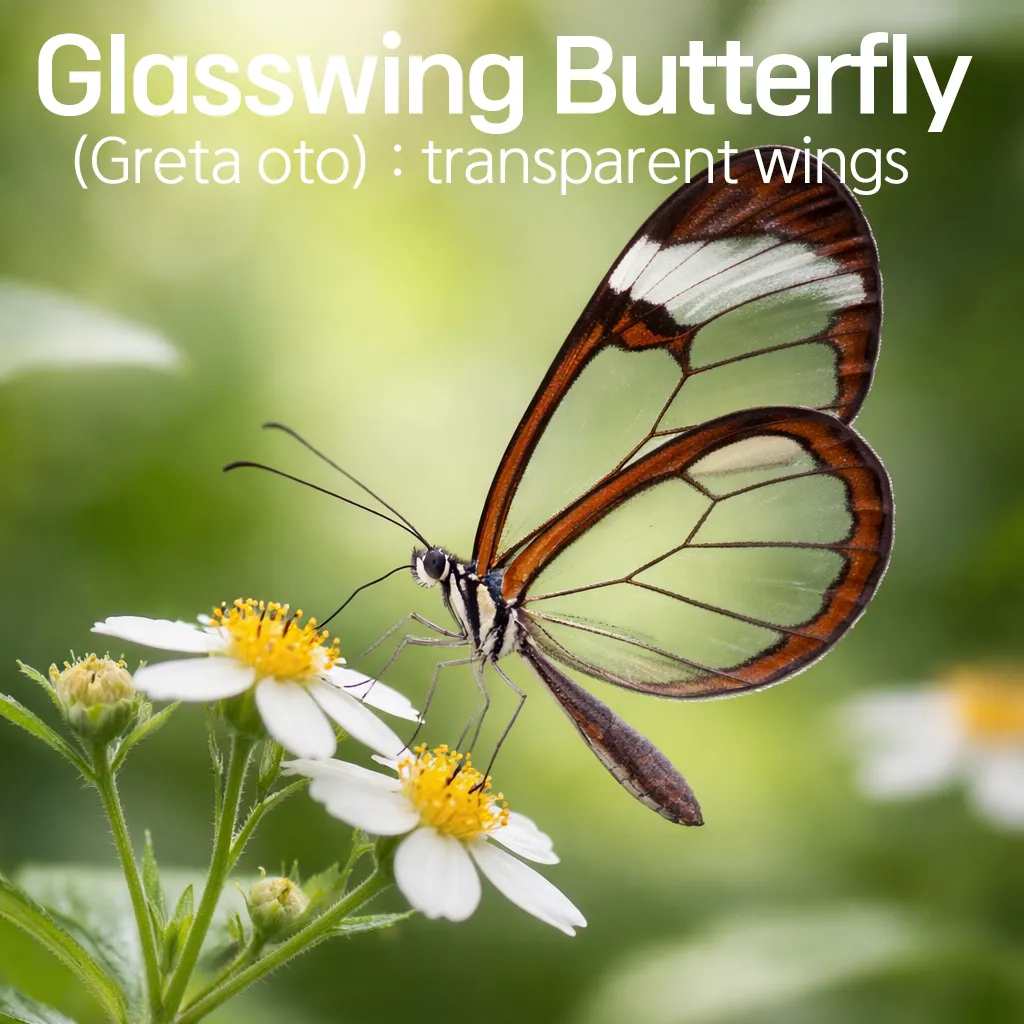
- Common names: Glasswing Butterfly
- Scientific name: Greta oto
- Insect or not: Yes, it is an insect.
- Order / family: Lepidoptera / Nymphalidae
- Typical size range: Wingspan of 5.6 to 6.1 cm
- Key colors/patterns: Transparent wings with opaque borders
- Activity: Diurnal (active during the day)
- Typical habitats: Rainforests and tropical areas
- Where in the world it occurs: Central and South America
- Seasonality: Visible throughout the year depending on climate conditions
🔍 Identification
The Glasswing Butterfly is easily identifiable in the field due to its distinctive transparent wings, which set it apart from other butterflies. The wings appear as if made of delicate glass, rimmed with brown and sometimes accented with orange or red hues. The slender body and softly rounded wing tips give it a graceful silhouette.
- Body shape: Slender and elongated
- Antennae type: Filiform, typical of most butterflies
- Wing features: Transparent with brown borders
- Leg traits: Thin, facilitating easy movement on flowers
- Common look-alikes: Other clearwing butterflies, distinguishable by size and wing border pattern
- Look for transparent wings with brown edges
- Typical size is around 5.6 to 6.1 cm
- Active during daylight hours
- Often found near flowers in tropical forests
- Subtle body colors to match natural surroundings
🧠 Basic Body Structure
Like all insects, the Glasswing Butterfly has a body composed of three main parts: the head, thorax, and abdomen. It possesses six legs attached to the thorax and is covered in an exoskeleton, which provides structural support and protection. Insects, including butterflies, are invertebrates, which means they do not have a backbone. As an invertebrate, the Glasswing relies on its exoskeleton for support and on molting for growing.
🌍 Habitat & Distribution
The Glasswing Butterfly thrives in tropical forests, particularly favoring the humid and lush environments of Central and South America. It is commonly found from Mexico to Panama, thriving in both pristine and slightly disturbed forest habitats. While it prefers the lower canopy and understory, habitat destruction may force it into other areas sparingly. Adaptation to certain microhabitats, such as the undersides of leaves for resting, helps the Glasswing avoid predators and harsh weather conditions.
📅 Seasonal Appearance & Activity
The Glasswing Butterfly is mainly active during the day, owing to its diurnal nature. Its visibility is influenced greatly by the tropical climate, making it possible to observe this enchanting butterfly throughout the year, although sightings may increase during the wet seasons when plant growth is luxuriant.
- Year-round activity with peak during wet seasons
- Most active during daylight hours
- Increased activity after rainfall, when nectar is abundant
- Spotted in warm or humid weather conditions
🥚 Reproduction & Egg-Laying
Glasswing Butterflies undergo intricate mating rituals where males display territorial behavior to attract females. Eggs are typically laid on host plants that cater to the future caterpillar's needs. The selection of suitable plants ensures that emerging larvae have direct access to nourishment. Egg clutches vary, and the exact number can depend on environmental conditions and resource availability.
🌀 Metamorphosis & Life Cycle
The Glasswing Butterfly experiences a complete metamorphosis consisting of four stages: egg, larva, pupa, and adult. The eggs hatch into larvae (caterpillars), which feed voraciously on host plants. These caterpillars eventually pupate, forming a chrysalis that offers protection during the transformational pupal stage. Depending on environmental factors, the cycle duration can vary. If resources are plentiful, development may be faster.
During metamorphosis, the caterpillar consumes foliage, primarily feeding on toxic plants, which later impart some level of protection from predators through retained toxins. Upon emergence, the adult Glasswing Butterfly primarily consumes nectar, playing a role in pollination.
🍽️ Diet & Feeding Behavior
In their larval stage, Glasswing Butterflies' caterpillars feed on toxic plants of the family Solanaceae. These plants provide defense mechanisms to the caterpillars by imparting chemicals that become part of their system. As adults, the butterflies transition to feeding on nectar from various flowering plants, using their specialized long proboscis to sip the liquid. This feeding behavior helps them serve as important pollinators within their ecosystem.
🦉 Predators & Defense
Glasswing Butterflies face threats from birds, reptiles, and larger insects. However, their primary defense mechanism is their transparent wings, which offer effective camouflage within their natural environment. The chemical imbibing from larval feeding provides a secondary defense against predators who may find them distasteful or toxic.
- Transparent wings offer camouflage
- Chemicals from host plants make them distasteful
- Flight speed and agility assist in evasion
- Natural patterns blend with foliage
👥 Social Behavior & Swarms
The Glasswing Butterfly is primarily solitary, though interactions occur during mating and occasionally when food sources are abundant. They do not form swarms, but at times, several individuals can be seen congregating in areas rich with nectar. These gatherings are usually transient and influenced by resource availability.
🧭 Senses & Communication
Relying heavily on visual cues for mating and navigation, the Glasswing Butterfly has well-developed vision that aids in identifying both food sources and potential mates. While pheromones play a role in attraction, other communication forms like sound or vibration aren't documented significantly in this species. Their quick, agile flight assists in avoiding predators and boosts their survival within dynamic rainforest environments.
🌱 Role in the Ecosystem
The Glasswing Butterfly is a vital pollinator within its ecosystem, facilitating cross-pollination through its nectar-feeding activities. This mutualistic relationship benefits plants by aiding their reproductive success while providing nourishment for the butterfly. Moreover, the butterfly contributes as prey for various predators, playing its role in the complex food web of tropical ecosystems.
📉 Population & Conservation Notes
While often reported as common in suitable habitats, the Glasswing Butterfly can be susceptible to threats like habitat destruction and climate change. Conservation efforts focus on preserving tropical forests and their diversity. There's limited data on global populations, but promoting native plant growth and reducing pesticides can support local populations.
- Plant native flora to support butterfly feeding
- Avoid pesticide use in garden areas
- Conserve habitats by supporting reforestation projects
- Participate in butterfly counts to help gather population data
⚠️ Human Interaction & Safety
The Glasswing Butterfly is harmless to humans and does not sting or bite. When observing these delicate creatures, it is important to admire them from a distance to avoid disrupting their natural behavior and habitat. As with all wildlife, collecting specimens from the wild should be discouraged to ensure population stability and respect for their ecological roles.
📌 Summary
- Recognizable by its transparent wings with brown borders
- Found in tropical regions of Central and South America
- Active year-round, especially in wet seasons
- Complete metamorphosis: egg, larva, pupa, adult
- Feeds on toxic plants as larvae, nectar as adults
- Camouflage and chemical defenses against predators
- Important pollinator and food source in ecosystems
- Populations affected by habitat loss and climate change
- Human interaction should be respectful and minimal