🕷️ Monarch host plants: milkweed types & tips
🧾 Quick Facts
Milkweeds are essential host plants for the Monarch butterfly. Here are some quick facts about these fascinating plants and their relationship with one of the most well-known butterflies in the world.
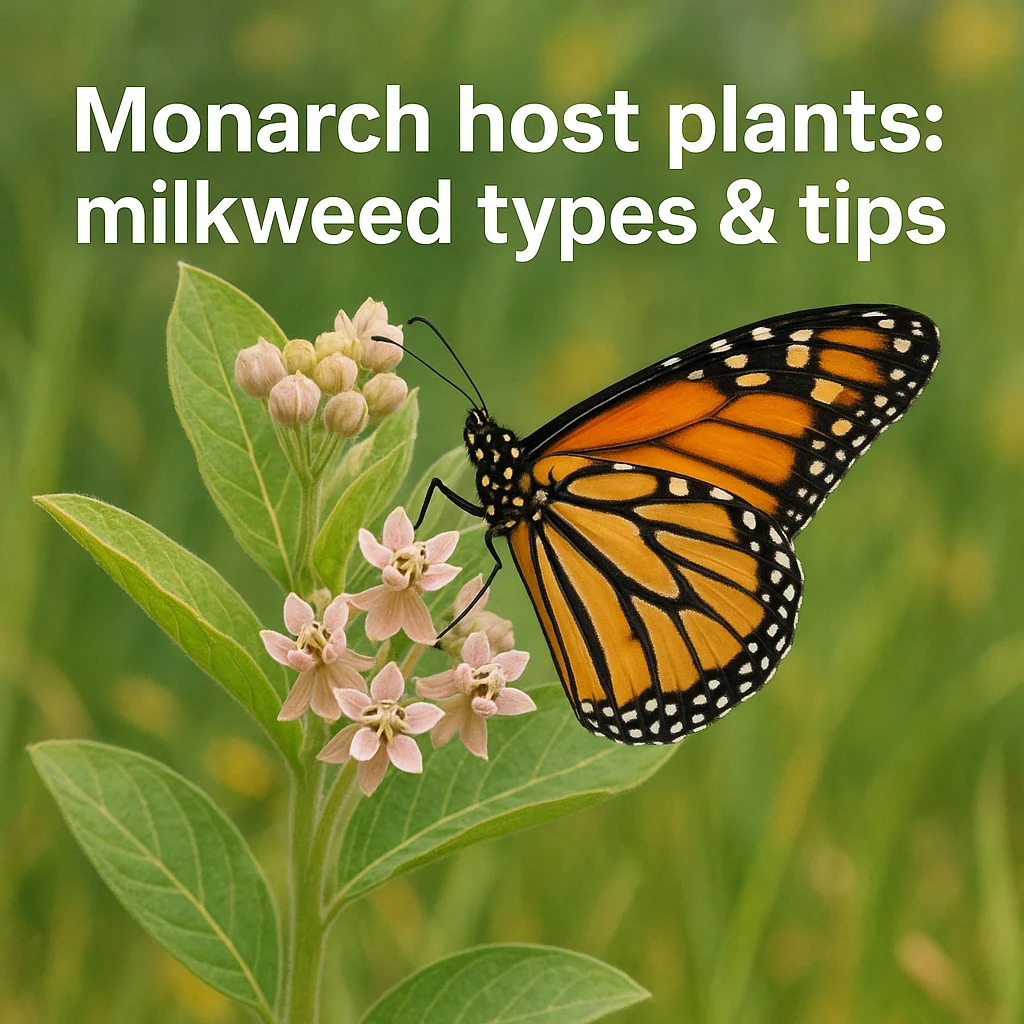
- Common names: Milkweed
- Scientific name: Asclepias spp. (varies by species)
- Insect or not: Milkweed is a plant, not an insect, but it supports invertebrates like Monarchs.
- Order / family: Gentianales / Apocynaceae
- Typical size range: Varies from 0.5 to 1.5 meters depending on species
- Key colors/patterns: Green leaves, often with large clusters of pink, orange, or white flowers
- Activity: Supports butterflies (especially Monarchs) during the day
- Typical habitats: Grasslands, meadows, roadsides
- Where in the world it occurs: Primarily in North America, though some species are found elsewhere
- Seasonality: Best visible during spring and summer when flowering
🔍 Identification
Milkweeds can be easily identified by their milky sap and unique flower structure. They are crucial for Monarch butterflies, which rely on these plants as host and nectar sources.
Body shape and silhouette: Upright and branching; broad, flat leaves.
Antennae type: Not applicable; however, Monarch caterpillars found on milkweed do have distinctive filaments on their bodies.
Wing features: N/A
Leg traits and movement style: N/A for plants; butterflies and caterpillars move easily among leaves and flowers.
Distinguishing look-alikes and common confusion: Some garden plants and toxic wildflowers might look similar but lack the characteristic milk-white sap.
- Look for milky sap - clue for milkweed identity.
- Flowers form in clusters and have a unique corona/hood structure.
- Leaves are often opposite and broad with a prominent central vein.
- Select species by flower color: Asclepias tuberosa (orange), Asclepias incarnata (pink), etc.
- Monarch caterpillars present; striped black, yellow, and white.
- Pods open to release silky seeds.
- Notice the absence of woody stems; mostly herbaceous.
🧠 Basic Body Structure
Milkweeds are vascular plants characterized by their leaves, stems, roots, and reproductive structures - flowers and seeds. They are invertebrates in a symbiotic relationship with Monarch butterflies, which are also invertebrates, relying on each other for life processes.
🌍 Habitat & Distribution
Milkweeds prefer sunny open spaces. They thrive in grasslands, meadows, and road verges with well-drained soil. These plants can also be found in urban gardens where they are deliberately planted to support Monarch populations. While they are native to North America, specific species have been introduced to other regions.
📅 Seasonal Appearance & Activity
The visibility of milkweeds correlates with their flowering period, generally from late spring through summer. The plants fully rejuvenate in the warmth of late spring, supporting Monarchs at crucial lifecycle stages.
- Best to spot in late spring to early summer when flowering peaks.
- Daytime activity for visiting pollinators.
- Higher visibility post-rainfall when flowers are in bloom.
- Presence of Monarch caterpillars is more common in these periods.
🥚 Reproduction & Egg-Laying
Monarch butterflies are intimately connected with milkweed plants for reproduction. Adult female Monarchs will lay eggs directly on the underside of milkweed leaves. This provides newly hatched caterpillars immediate access to their sole food source.
A single milkweed plant may host dozens of eggs, and the fibrous nature of the leaves effectively supports growth and consumption over several weeks. Egg-laying strategies are regionally variable, often influenced by the presence of milkweed species and climatic conditions.
🌀 Metamorphosis & Life Cycle
Monarchs undergo complete metamorphosis. The cycle begins with an egg, which hatches into a larva (caterpillar), then pupates, and emerges as an adult butterfly.
Egg: Laid on the underside of milkweed leaves, hatching occurs within four days.
Larva: (Caterpillar) Consumes milkweed exclusively, featuring rapid growth over two weeks before pupation.
Pupa: (Chrysalis) A stationary stage lasting about ten days, culminating in adult emergence.
Adult: Feeds on nectar, breeding and migrating; adults live for several weeks to months depending on migration paths and environmental pressures.
🍽️ Diet & Feeding Behavior
The Monarch caterpillars eat exclusively milkweed leaves, containing compounds that confer a bitter taste aiding in defense. Adults predominantly feed on nectar from various flowers including milkweed.
The caterpillar's chewing mouthparts contrast with the adult’s proboscis suited for nectar-sipping.
Monarchs play roles as both herbivores and pollinators, crucial to their ecological niche and milkweed propagation.
🦉 Predators & Defense
Natural predators of Monarch caterpillars include birds, wasps, and predatory insects, yet the bitter toxin acquired from milkweed deters many. The distinct coloring of both larvae and adults signal unpalatability.
- Camouflage of Monarch eggs on milkweed leaves.
- Mimicry: Resembling toxic species.
- Chemical defenses from cardenolides in milkweed.
- Startle displays via bright coloration.
👥 Social Behavior & Swarms
The relationship between Monarch butterflies and milkweed plants is largely solitary except during migration and breeding when population densities increase. Monarchs congregate in specific areas drawn by flowering milkweed.
Migration is triggered by seasonal changes, and milkweed presence significantly influences Monarch distribution.
🧭 Senses & Communication
Monarch butterflies utilize chemoreception to locate milkweed and mates. Vision is essential for flower detection, while pheromones aid in communication during mating.
The milkweed hosts caterpillars demonstrating changes in vibrational and chemical signals as plant damage occurs.
🌱 Role in the Ecosystem
Milkweed serves as a keystone species within its ecosystem. Mutualistic relationships with Monarchs promote pollination, while it supports a range of insects, providing essential nutrients to herbivores.
Milkweed offers an ecological service by sustaining Monarch diets, enhancing pollination and seed dispersal, deemed essential for surrounding plant biodiversity.
📉 Population & Conservation Notes
While milkweeds continue to populate North America, their encounter frequencies vary due to urbanization, farming, and pesticide use. Declining milkweed availability directly affects Monarch butterfly populations.
- How to Help (Low-Impact):
- Plant native milkweed species in gardens.
- Avoid using pesticides in butterfly habitats.
- Leave fall leaf litter to protect overwintering sites.
- Support conservation organizations studying Monarchs and milkweed.
⚠️ Human Interaction & Safety
Milkweeds contain a milky latex that can be irritating to skin and harmful if ingested. Caution is advised in handling, especially since cooking often neutralizes toxicity.
Monarch butterflies and caterpillars pose no danger to humans, though their protective bitter taste deters accidental ingestion by pets.
Observation should be non-intrusive, respecting Monarchs by minimizing habitat disturbance.
📌 Summary
- Milkweed hosts Monarch butterflies throughout life stages.
- Identifiable by milky sap, unique flowers, and seed pods.
- Best seen in spring-summer; critical to Monarch lifecycle.
- Essential food source for Monarch caterpillars.
- Defenses include chemical toxicity; coloration deters predators.
- Role as pollinator critical to ecological balance.
- Threats include habitat loss; planting milkweed aids conservation.
- Interaction safe; avoid ingestion due to milkweed toxins.