🕷️ Blues And Coppers Lycaenidae Small Butterflies Big Variety
🧾 Quick Facts
The Lycaenidae family, commonly known as the "Blues and Coppers," is a group of small butterflies that exhibit an impressive variety in color and patterns. These butterflies are a part of the order Lepidoptera, thriving in diverse habitats across the world.
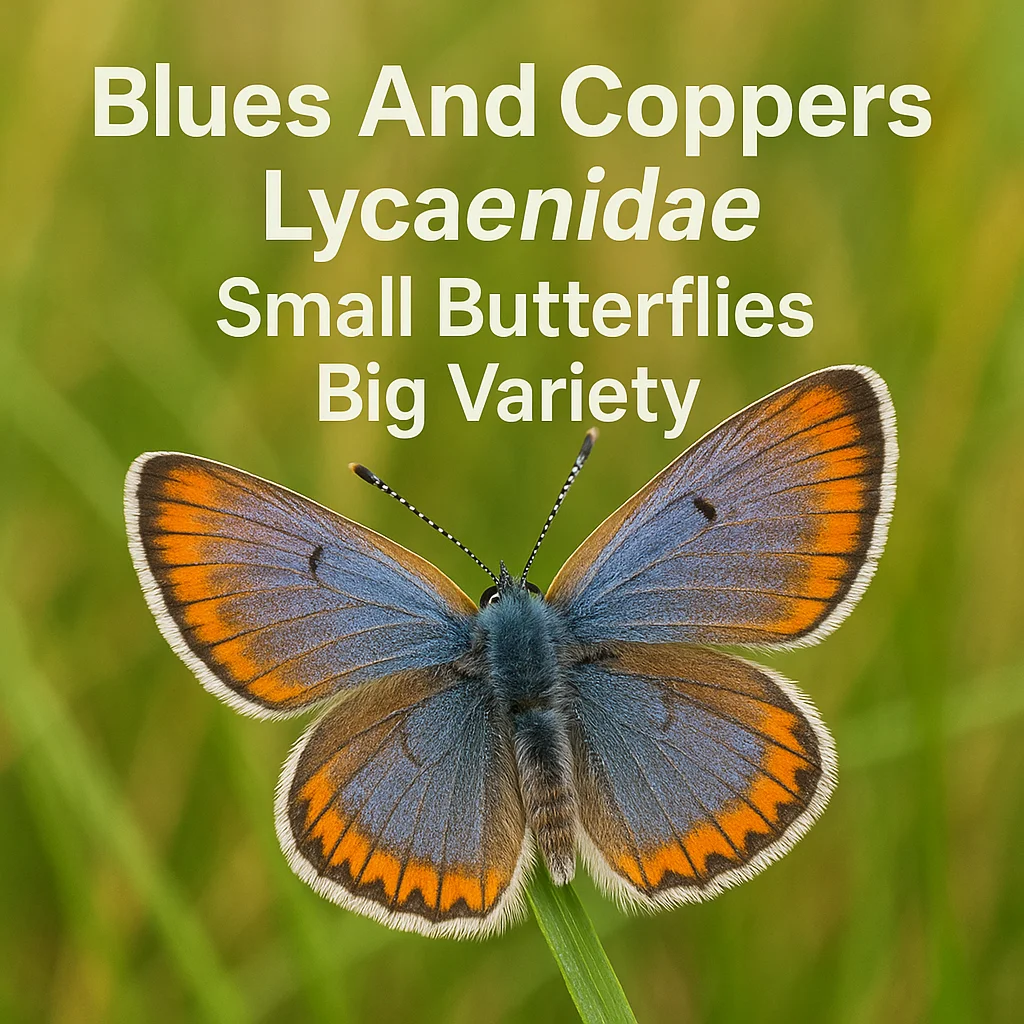
- Common names: Blues, Coppers, Hairstreaks, Gossamer-wings
- Scientific name: Varies (Lycaenidae family)
- Insect: Yes, they are invertebrates
- Order / Family: Lepidoptera / Lycaenidae
- Typical size range (adult): 1 - 1.5 inches (2.5 - 4 cm) wingspan
- Key colors/patterns: Blue, copper, iridescent hues, intricate patterns
- Activity: Diurnal
- Typical habitats: Grasslands, meadows, forests, gardens
- Where in the world: Worldwide, with a higher diversity in tropical regions
- Seasonality: Primarily spring and summer in temperate regions
🔍 Identification
Recognizing the Blues and Coppers can be a delightful challenge due to their small size and diverse appearances. They typically have slender bodies and broad wings. The antennae are often clubbed at the end, a characteristic of butterflies.
The wings of these butterflies are their most striking feature, often adorned with colorful patterns that shimmer under the sunlight. Their legs are petite and enable subtle and gentle landing on flowers and leaves.
- Top ID Tips:
- Look for small size and vibrant colors
- Spot the clubbed antennae typical of butterflies
- Check for delicate, slender bodies
- Observe the shimmery and intricate wing patterns
- Catch them fluttering during the day in open sunlight
- Search in gardens and meadows rich in flowering plants
- Note the frequent blue or coppery hues
- Identify subtle variations in species by wing pattern details
🧠 Basic Body Structure
Blues and Coppers, like all insects, have a three-part body structure: head, thorax, and abdomen. They possess six legs attached to the thorax and are equipped with delicate wings. These butterflies undergo molting during their life cycle as they grow.
Being invertebrates, they lack a backbone and instead have an exoskeleton that provides support and protection. The exoskeleton must be shed and replaced, a process known as ecdysis or molting, to enable growth.
🌍 Habitat & Distribution
The Blues and Coppers are adaptable creatures that inhabit a range of environments. They are found in grasslands, meadows, open woodlands, and even urban gardens where flowering plants are abundant.
Microhabitats such as flowers, leaves, and shrubs are crucial for their survival, providing both food sources and egg-laying sites. These butterflies are widespread, found across all continents except Antarctica, with high diversity in tropical climates.
Changes in habitat, such as urbanization and agricultural development, can affect their distribution and visibility in the wild.
📅 Seasonal Appearance & Activity
These butterflies are most visible during the warmer months, typically spring and summer in temperate zones. They are diurnal insects, active during daylight hours when they can be seen moving from flower to flower.
Weather conditions like sunshine and mild temperatures encourage their activity, while rain and cold can reduce sightings.
- Best Time to Spot It:
- Late spring through late summer
- Mid-morning to early afternoon when the sun is bright
- On warm, dry days without heavy winds
- In regions with abundant flowering plants
🥚 Reproduction & Egg-Laying
Courtship among the Blues and Coppers often involves visual signals and delicate aerial displays. Some species may engage in territorial behavior to secure mating opportunities.
Females typically lay eggs on host plants, which serve as food for the emerging larvae. The number of eggs can vary significantly among species, from a few to several hundred.
🌀 Metamorphosis & Life Cycle
The Blues and Coppers undergo complete metamorphosis, which includes four stages: egg, larva (caterpillar), pupa (chrysalis), and adult.
Eggs are laid on host plants where larvae hatch and begin feeding on plant tissues. The caterpillar stage involves several molts as they grow. Pupation occurs in safe, concealed locations where the chrysalis develops over days to weeks before emerging as the adult butterfly.
🍽️ Diet & Feeding Behavior
The diet of Blues and Coppers varies by life stage. Caterpillars primarily consume host plant leaves, benefiting from the nutrients necessary for growth. Adults, on the other hand, feed on nectar from flowers using their proboscis, a straw-like feeding tool.
These butterflies play an essential role as pollinators, transferring pollen between flowers as they feed, contributing to the ecosystem's floral diversity.
🦉 Predators & Defense
Natural predators of the Blues and Coppers include birds, spiders, and small mammals. To defend themselves, these butterflies employ several strategies. Their colorful patterns can confuse predators, and quick flight offers a means of escape.
- Defense Highlights:
- Camouflage with wing patterns that mimic the surroundings
- Quick and erratic flight patterns to evade attacks
- Some species have tails that mimic antennae to distract predators
- Standing still to blend into their environment when threatened
👥 Social Behavior & Swarms
The Blues and Coppers are generally solitary creatures, though they may be found in groups when abundant resources are available. Their interactions often revolve around mating and feeding, with minimal social structure compared to more communal insects.
Occasionally, certain species may form migratory swarms driven by climate changes or food availability, though this behavior is not prevalent across all species.
🧭 Senses & Communication
Blues and Coppers rely heavily on their acute vision for detecting flowers and mates. Their sense of smell, through chemoreceptors located on their antennae, helps them locate key food sources and mates.
While they are not known for complex communication, they can employ a range of visual signals and pheromones during reproductive activities.
🌱 Role in the Ecosystem
These butterflies are ecological assets, primarily functioning as pollinators. Their interactions with flowering plants assist in plant reproduction, contributing to biodiversity.
Additionally, they serve as prey for numerous wildlife species, thus playing a vital part in maintaining ecological balance. Their presence can indicate healthy ecosystems, marking their significance as bioindicators.
📉 Population & Conservation Notes
The population status of the Blues and Coppers varies. Some are common and thrive in suitable habitats, while others face declines due to habitat loss, pesticides, and climate change. Conservation efforts focus on preserving natural habitats and promoting biodiversity-friendly practices.
- How to Help (Low-Impact):
- Plant native flowering species in gardens
- Avoid the use of chemical pesticides
- Support conservation initiatives for butterflies
- Leave natural debris like leaf litter for habitat
⚠️ Human Interaction & Safety
The Blues and Coppers are harmless to humans and do not bite or sting. They can be safely admired in their natural habitats. For those interested in observing them, it is crucial to do so respectfully and without disturbing their environment.
If bitten or stung by insects in general, washing the area and avoiding scratching is advised, and professional help should be sought if a severe reaction occurs.
📌 Summary
- Small butterflies with stunning blue and copper patterns
- Found in diverse environments with a global distribution
- Visible in warm months; diurnal activity centered on sunshine
- Undergo complete metamorphosis with four life stages
- Primary diet includes plant material and nectar
- Predators include birds and spiders; defense through camouflage and quick flight
- Vital pollinators in ecosystems and part of the food web
- Conservation efforts needed to protect habitats