🕷️ Case moths: lifecycle and habitats
🧾 Quick Facts
Case moths, part of an intriguing group known for their protective silk and debris cases, intrigue both naturalists and entomologists alike. These moths display a captivating lifecycle and intriguing habitat preferences.
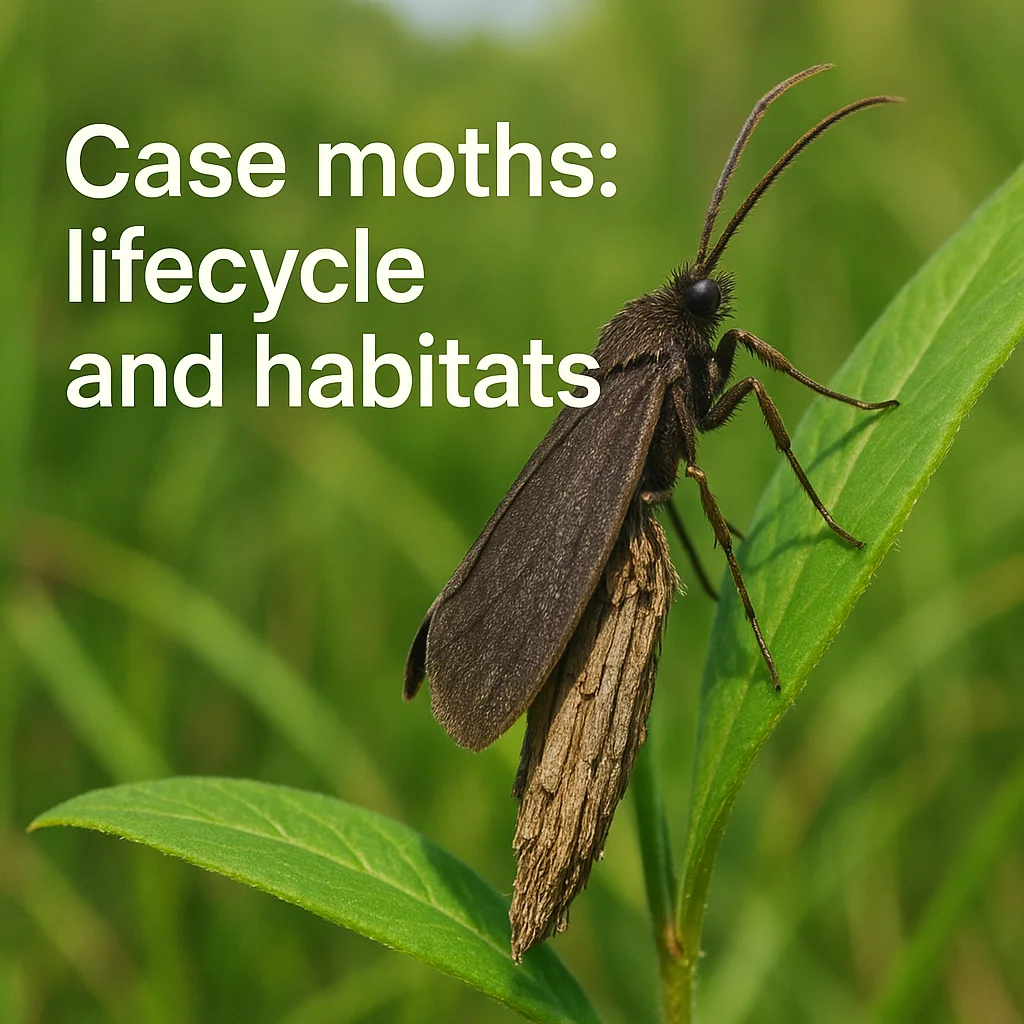
- Common Names: Case moths, Bagworms
- Scientific Name: Varies by species
- Insect or Not: Yes, they are insects
- Order/Family: Lepidoptera, Psychidae
- Typical Size Range: Adults: 1-4 cm in wingspan
- Key Colors/Patterns: Generally dull-colored, ranging from browns to greys
- Activity: Mostly nocturnal
- Typical Habitats: Forests, gardens, woodlands
- Where in the World: Various regions including North America, Europe, Asia, Africa, Australia
- Seasonality: Adults most visible in late spring to summer
🔍 Identification
Case moths can be recognized by their unique larval habit of constructing protective cases. Adults often go unnoticed due to their cryptic brownish coloration, aiding them in blending with their surroundings.
- Body Shape and Silhouette: Slender with tent-like wings
- Antennae Type: Filiform (thread-like)
- Wing Features: Narrow, often with muted patterns
- Leg Traits and Movement Style: Smooth, agile movement; caterpillars use silk threads to move
- Distinguishing Look-alikes: Often confused with caddisflies due to similar larval cases
- Larvae build distinctive portable cases
- Adults are dull-colored, mostly inactive during the day
- Look for cases attached to plants, walls, or tree bark
- Females generally remain in their cases for their lifetime
- Males are the winged adults spotted in flight
- Cases can vary in materials, adjusted based on environmental factors
🧠 Basic Body Structure
As insects, case moths feature a body divided into three primary parts: the head, thorax, and abdomen. They possess six legs and a protective outer layer known as an exoskeleton, which they periodically shed in a process called molting. Adult case moths may have wings, although this varies between males and females, with many females remaining wingless.
Case moths are invertebrates, meaning they lack a backbone and rely on their exoskeleton for structural support.
🌍 Habitat & Distribution
Case moths thrive in diverse environments ranging from forests and woodlands to urban gardens and parks. They prefer areas where host plants are abundant, as these provide food and materials for their larval cases. Microhabitats often include the underside of leaves, crevices in tree bark, or even man-made structures such as fences and walls.
Geographically, case moths have a widespread distribution, occurring in temperate to tropical regions globally. Due to their dependence on specific host plants, changes in vegetation or habitat conditions can influence sightings and population density.
📅 Seasonal Appearance & Activity
Case moths exhibit distinct seasonal behaviors depending on the climate. In temperate regions, adults are most prevalent during late spring and summer months. Their nocturnal habits mean they are generally active during the night, seeking mates and laying eggs under the cover of darkness. Weather conditions such as humidity and temperature can also impact their activity levels.
- Best spotted during warmer months
- Look for them on humid, calm nights
- Typically less active during cold fronts
- Peak activity usually around summer solstice
🥚 Reproduction & Egg-Laying
Case moths engage in fascinating mating behaviors, with winged males seeking out the stationary females who remain in their cases. Female case moths often emit pheromones to attract males, signaling their presence and readiness to mate.
Eggs are typically laid within the protection of the female's case, offering a secure environment. Clutch sizes can vary significantly, depending on species and environmental conditions.
🌀 Metamorphosis & Life Cycle
Case moths undergo complete metamorphosis, consisting of the egg, larva, pupa, and adult stages. During the larval stage, they construct protective silk cases, incorporating environmental materials for camouflage. This stage is crucial for feeding and growth, where larvae consume a variety of plant materials.
The pupal stage occurs within the constructed case, providing shelter as the insect undergoes transformation. The duration of each lifecycle stage can vary based on environmental factors, with many species having adaptations for surviving adverse conditions.
🍽️ Diet & Feeding Behavior
Case moth larvae are predominantly herbivores, feeding on plant leaves, stems, and occasionally flowers. They use chewing mouthparts to process their food efficiently. As adults, some species may not feed at all, focusing their short lifespan on reproduction.
In their ecosystem, case moths can influence plant health and act as food sources for predators.
🦉 Predators & Defense
Natural enemies of case moths include birds, reptiles, amphibians, spiders, and parasitoid wasps. These moths
employ several defense strategies, primarily relying on their cases for protection against predators. The cases
often serve as an effective
Further defense mechanisms might include retreating deeper into their cases when threatened or using the built-up debris and silk to ward off attackers.
- Cases blend with surrounding debris
- Retreat to case under threat
- Some species emit unpalatable chemicals
- Sudden movements can deter predators
👥 Social Behavior & Swarms
Case moths are generally solitary creatures, with limited social interactions beyond mating and territory disputes for resources. Mating typically occurs through brief encounters, emphasizing individual survival rather than group cooperation.
No swarms or large-scale migrations are observed in case moths, as their lifecycle and behavior do not necessitate such movements.
🧭 Senses & Communication
Case moths primarily rely on their sense of smell, utilizing pheromones for communication during the mating season. Visual capabilities are modest, but adequate for navigating their environment at night. They might also respond to tactile cues when interacting with surfaces while foraging or constructing their cases.
Communication mostly involves pheromone signalling, particularly from females to attract male partners.
🌱 Role in the Ecosystem
In their natural habitats, case moths serve as both consumers and prey. As herbivores, they impact plant dynamics, while also providing nourishment for their predators.
Case moths also help in decomposing organic material, contributing to nutrient cycling within their ecosystems. Their interactions with host plants can sometimes be mutualistic, though in some crops they may be considered a pest.
📉 Population & Conservation Notes
While case moths are generally reported as common in regions with suitable habitats, localized abundance varies. Factors such as habitat destruction, pesticide use, and climate change can impact their populations significantly.
- Plant native flora to support local insect communities
- Avoid broad-spectrum pesticide usage
- Preserve natural leaf litter to maintain microhabitats
- Participate in citizen science projects to help track moth populations
⚠️ Human Interaction & Safety
Case moths are harmless to humans and do not pose a sting or bite risk. Observing them respectfully while minimizing impact on their habitats is encouraged to preserve their natural behaviors.
If irritation occurs from accidental contact, it's advisable to wash the area with soap and water and avoid scratching. Seek professional advice if a severe reaction is suspected.
📌 Summary
- Case moths are often identified by their protective silk cases
- Widely distributed across suitable environments
- Nocturnal with peak activity during summer evenings
- Undergo complete metamorphosis with solitary adult habits
- Pivotal role in ecosystems as herbivores and prey
- Populations vary, impacted by climate and habitat changes
- Safe for human interaction, with no concerning defenses
- Conservation efforts should focus on habitat preservation and pesticide reduction