🕷️ Emerald moths: green camouflage
🧾 Quick Facts
Emerald moths are a captivating group of moths known for their striking green coloration, providing them with exceptional camouflage against foliage. They are part of a larger group known as Geometridae, which is known for having remarkable mimicry and camouflage techniques.
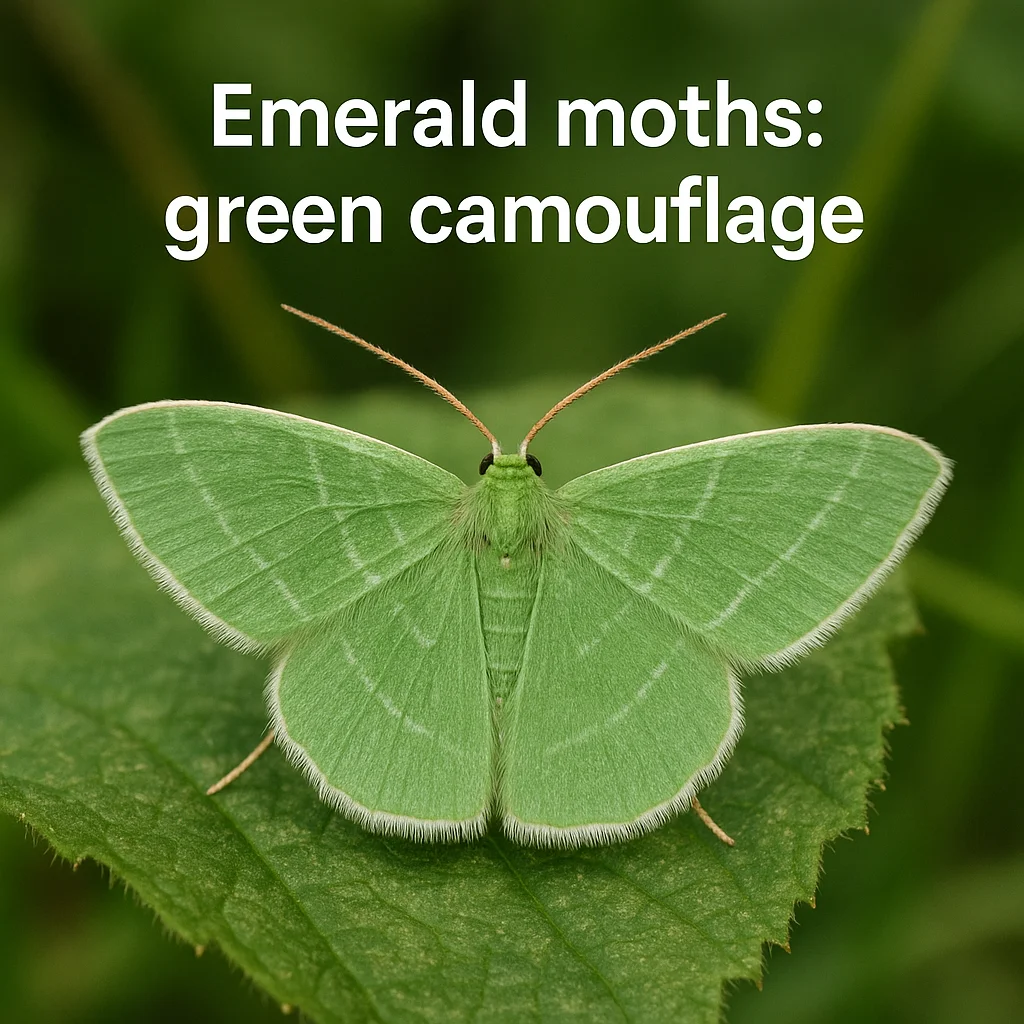
- Common names: Emerald moths
- Scientific name: Varies (e.g., Hemithea aestivaria, Geometra papilionaria)
- Insect or not: Yes, an invertebrate
- Order / family: Lepidoptera / Geometridae
- Typical size range: 20–40 mm wingspan
- Key colors/patterns: Bright green with delicate patterns or lines, which can fade with age
- Activity: Primarily nocturnal
- Typical habitats: Forests, woodlands, gardens
- Worldwide distribution: Europe, North America, and parts of Asia
- Seasonality: Visible in late spring through summer
🔍 Identification
Emerald moths can be recognized by their distinctive green body and leaf-like appearance. Their forewings are often slightly more pointed compared to their hindwings, which assists in camouflaging with foliage.
These moths usually have delicate antennae that are slightly feathery in males, enhancing sensory capabilities. Their legs are typically slender, allowing subtle movements among leaves without alerting predators.
While they can often be confused with other green moths, the emerald moth’s unique color and wing patterns can serve as distinguishing features. Some species may have speckled patterns or a slight shimmering effect on their wings.
- Top ID Tips:
- Look for bright green wings with subtle white or darker lines
- Check the wing shape: slightly more pointed forewings
- Full-body view with entire insect visible helps in confirming ID
- Feathery antennae in males are a good clue
- Observe the delicate legs used for gentle movement
- Consider habitat: found in leafy, shaded areas
🧠 Basic Body Structure
As insects, emerald moths comprise three main body segments: the head, thorax, and abdomen. The head houses the sensory organs, including compound eyes and antennae for detecting environmental cues. The thorax supports two pairs of wings and six legs, crucial for flight and mobility. The abdomen contains vital organs and systems necessary for reproduction and digestion, covered by a protective exoskeleton that requires molting to grow.
Emerald moths are invertebrates, meaning they lack a backbone and rely on their exoskeleton for structural support.
🌍 Habitat & Distribution
Emerald moths thrive in a variety of environments, preferably those rich in vegetation. They are commonly found in forests, woodlands, and even urban gardens, where greenery abounds. Many species are adept at blending into their surroundings, making them difficult to detect.
These moths are well-distributed across broad regions, including Europe, North America, and parts of Asia, adapting to temperate climates. Sightings can vary with changes in habitat conditions, such as deforestation or climate shifts, affecting their presence and abundance.
📅 Seasonal Appearance & Activity
Most emerald moths are active during late spring and summer, primarily under the cover of night. During these months, they are seen frequenting well-vegetated areas. Warm, humid nights after rainfall may increase their activity, as moisture and warmth create ideal conditions for foraging and mating.
- Best Time to Spot It:
- Late spring to summer
- Warm, humid nights
- After rainfall
- In leafy, undisturbed areas
- During dusk and nighttime
🥚 Reproduction & Egg-Laying
Mating behaviors in emerald moths are relatively subtle. Males often use pheromones to locate potential mates, with courtship sometimes involving gentle wing displays. After mating, females lay eggs on the undersides of leaves, choosing host plants that caterpillars will later feed upon.
The number of eggs laid can vary with environmental conditions and species, but typically ranges from a few dozen to several hundred. Egg-laying strategies ensure maximum survival potential, with eggs often being deposited over several nights to reduce predation risks.
🌀 Metamorphosis & Life Cycle
Emerald moths undergo complete metamorphosis, progressing through distinct stages: egg, larva, pupa, and adult.
The larvae, or caterpillars, are herbivorous and feed voraciously on plant leaves, primarily remaining on or near their host plant. This stage can last several weeks, with substantial growth requiring periodic molting.
Once fully grown, larvae enter the pupation stage, forming a protective cocoon within which they transform into adults. This stage is critical for developing their iconic green coloration and can last from one to several weeks, depending on climatic conditions.
🍽️ Diet & Feeding Behavior
Throughout their life stages, emerald moths exhibit varied feeding behaviors. Caterpillars employ chewing mouthparts to devour leaves voraciously, mainly relying on the foliage of host plants for nutrition. This herbivorous diet is critical for their growth and development.
Adult emerald moths, however, might not feed heavily or at all. If they do, it is primarily to replenish energy reserves by sipping nectar, aiding pollination as they move between flowers.
🦉 Predators & Defense
Natural predators of emerald moths include birds, bats, and small mammals, alongside spiders and parasitoid wasps that target their larvae.
To defend themselves, emerald moths employ multiple strategies. Their green coloration provides excellent camouflage among foliage, reducing visibility to predators. Some species employ startling displays or mimic other, less palatable species to confuse predators.
- Defense Highlights:
- Green camouflage blends well with leaves
- Startle displays may confuse predators
- Mimicry of less palatable species deters attacks
- Cryptic resting postures enhance concealment
👥 Social Behavior & Swarms
Emerald moths are typically solitary insects, only congregating during mating periods, prompted by environmental cues such as temperature and humidity. Each moth generally remains within a personal territory unless seeking mates.
There are instances of swarm-like behavior if food sources are abundant or during mating peaks, although these periods are brief and often localized.
🧭 Senses & Communication
Emerald moths rely heavily on their senses to navigate their environment and communicate. Their compound eyes provide adequate vision, while antennae and fine hairs detect pheromones and environmental vibrations.
Pheromones play a crucial role in communication, particularly during mating. Males can detect female pheromones over considerable distances, guiding them to potential mates. This chemical communication is critical for maintaining population dynamics.
🌱 Role in the Ecosystem
Emerald moths contribute significantly to ecosystems as pollinators, especially when adults sip nectar from flowers. Their caterpillars play pivotal roles as herbivores, helping control plant growth and serving as critical food sources for predators, thus maintaining ecological balance.
Additionally, emerald moths can inform about habitat health. Their presence and abundance can indicate vegetation density and ecosystem stability, providing important ecological insights.
📉 Population & Conservation Notes
While emerald moths are common across various regions, their population dynamics can vary with habitat changes. Factors such as deforestation, pesticide use, and climate change have affected some populations, although others remain stable.
- How to Help (Low-Impact):
- Plant native vegetation that serves as host plants
- Avoid or minimize pesticide use
- Support conservation efforts in forestry and urban planning
- Maintain gardens to provide nectar and resting sites
⚠️ Human Interaction & Safety
Emerald moths do not pose any significant danger to humans. They are harmless creatures, with neither the caterpillars nor adults possessing biting or stinging capabilities. However, it is always advisable to observe them respectfully without attempting to collect or handle them.
If skin irritation occurs from contact, general guidelines suggest gently washing the area and seeking professional advice if irritation persists.
📌 Summary
- Recognizable by their bright green wings with distinct lines
- Found in leafy areas of Europe, North America, and Asia
- Most active during late spring and summer in warm conditions
- Complete metamorphosis involves egg, larva, pupa, and adult stages
- Larvae feed on leaves; adults may sip nectar
- Predators include birds, bats, and spiders
- Critical ecosystem roles as pollinators and herbivores
- Population status varies with habitat changes
- Interaction with humans is safe and non-threatening