🕷️ How Butterflies Overwinter Migration Vs Diapause
🧾 Quick Facts
Butterflies have fascinating strategies for surviving the winter months. They might migrate long distances to escape the cold or enter a dormant state known as diapause. Here are some quick facts about butterflies and their overwintering strategies.
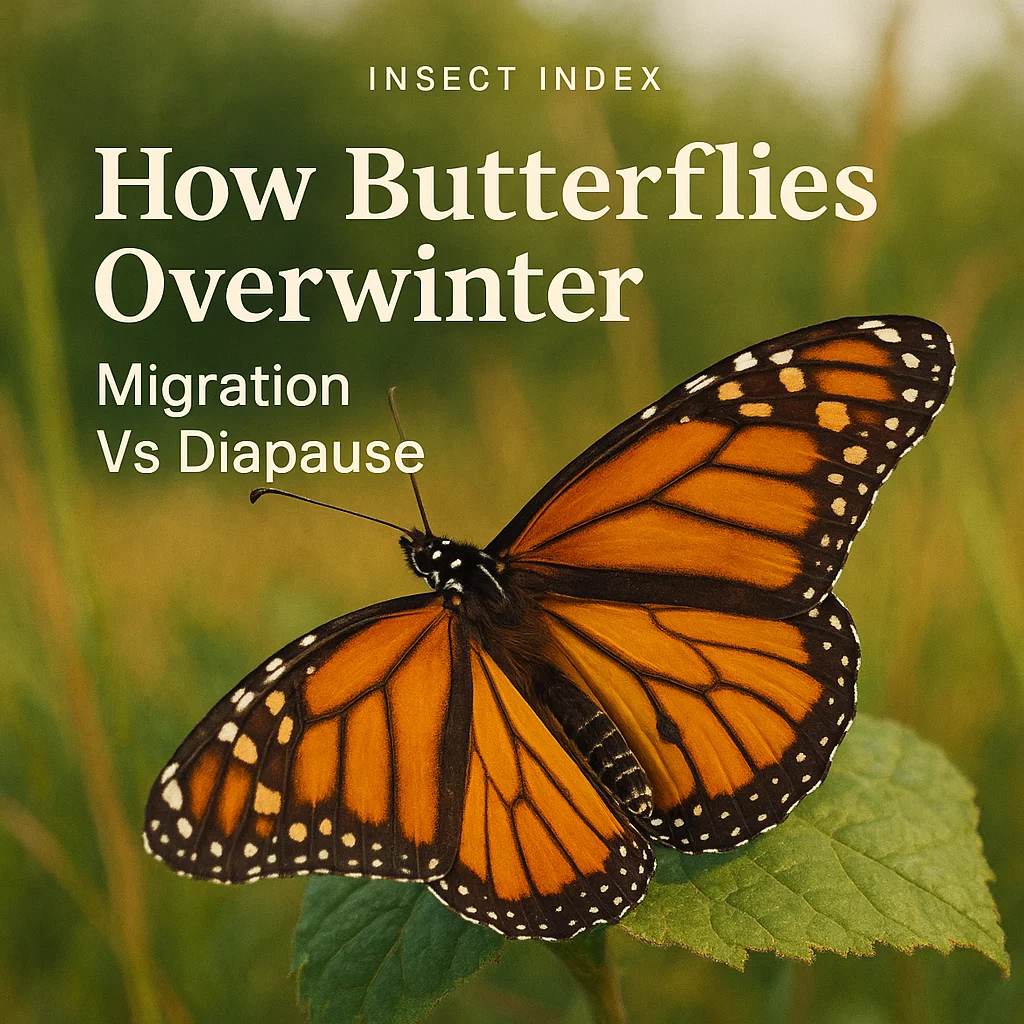
- Common Names: Butterflies, Flutterbys
- Scientific Name: Varies by species
- Insect or Not: Insect; invertebrate
- Order / Family: Lepidoptera
- Typical Size Range (Adult): 1 cm to 30 cm wingspan
- Key Colors/Patterns: Varied; bright colors and intricate patterns
- Activity: Diurnal
- Typical Habitats: Gardens, meadows, forests
- Where in the World: Worldwide, except Antarctica
- Seasonality: Spring to late summer visible
🔍 Identification
Butterflies are easily recognized by their colorful wings and fluttering flight. Their antennae are club-shaped, distinguishing them from moths. The wings' patterns and colors vary immensely across species, often acting as camouflage or warnings to predators.
- Body shape and silhouette: Slim, with large, colorful wings
- Antennae Type: Club-shaped
- Wing Features: Two pairs, often vividly colored
- Leg Traits: Long legs that aid landing; walk smoothly
- Distinguishing Look-Alikes: Moths; observe antennae for differences
- Look for club-shaped antennae
- Note bright, intricate wing patterns
- Observe daytime activity
- Compare wing shape with moths
- Check for fluttering flight
- Notice resting posture: wings up
🧠 Basic Body Structure
Butterflies possess a typical insect structure with a head, thorax, and abdomen. They have six legs connected to the thorax and an exoskeleton that protects their bodies. They undergo molting to grow, shedding their outer skin. Their butterfly status is affirmed by two pairs of wings.
Butterflies are invertebrates, meaning they do not have a vertebral column.
🌍 Habitat & Distribution
Butterflies thrive in diverse environments globally but prefer areas with abundant flowers for nectar. They are commonly found in gardens, meadows, and tropical forests. Microhabitats include flower petals, under leaves, and shrubs. On a geographical scale, butterflies occupy all continents except Antarctica, favoring temperate and tropical climates.
Changes in habitat, such as urbanization and deforestation, significantly influence butterfly sightings. Availability of host plants is critical for their persistence in an area.
📅 Seasonal Appearance & Activity
Butterflies are most visible during warm weather months, typically from spring to late summer, depending on location. They are diurnal, seeking nectar in full sun. Their activity is influenced by temperature and rain; cooler weather often decreases movement.
- Spring and summer are peak activity times
- Best seen in full sunlight conditions
- Temperature above 15°C increases activity
- Less active in rain or heavy overcast
🥚 Reproduction & Egg-Laying
Butterfly mating involves delicate courtship dances, pheromones, and competition among males. Females lay eggs on host plants where newly hatched larvae will have immediate food. Egg counts vary by species, with some laying a few and others hundreds. Eggs are typically laid under leaves for concealment.
🌀 Metamorphosis & Life Cycle
Butterflies undergo complete metamorphosis, transitioning through four stages: egg, larva (caterpillar), pupa (chrysalis), and adult.
Eggs are often attached to host plants and hatch into larvae that feed voraciously on leaves, shedding their skin as they grow. This stage can last from weeks to months, depending on species and climate.
The larva then forms a pupa, within which metamorphosis occurs over several weeks. The final stage is the emergence of a winged adult that feeds on nectar and reproduces, living for several weeks to months.
🍽️ Diet & Feeding Behavior
Butterfly larvae primarily consume plant leaves, while adult butterflies feed on flower nectar, using their specialized proboscis for sipping. Some also consume mineral-rich moisture from mud or decaying matter, an activity known as "puddling."
As adults, they act as pollinators, contributing significantly to ecosystem health and biodiversity.
🦉 Predators & Defense
Butterflies face various natural predators, including birds, spiders, and lizards. Defense strategies include cryptic wing patterns for camouflage, and some species possess toxins that make them unpalatable, warning predators with bright colors.
- Camouflage with wing patterns
- Toxins in certain species serve as deterrents
- Fast flight to escape predators
- Sit-and-hide strategies in dense foliage
👥 Social Behavior & Swarms
Generally solitary, butterflies do not form social colonies. However, they may assemble in swarms for migration, responding to environmental triggers like temperature changes and food availability. Migrations, such as those of Monarchs, are vital survival strategies, enabling them to exploit resources over vast distances.
🧭 Senses & Communication
Butterflies possess keen vision, with compound eyes enabling a broad field of view and color perception, including UV light. They communicate and attract mates using pheromones, while vibrations and antennae help them navigate and sense danger or mates nearby.
🌱 Role in the Ecosystem
Butterflies play a crucial role as pollinators, helping in the reproduction of many flowering plants. They contribute to the biodiversity and genetic variation of plant species. Their presence as prey to various animals is fundamental to many food webs, indicating a healthy ecosystem.
📉 Population & Conservation Notes
While some butterfly species are widespread and common, others face significant threats due to habitat loss, pesticide use, and climate change. Conservation efforts focus on preserving natural habitats and planting native plants to support butterfly populations.
- Plant native flowering plants
- Avoid pesticide use to maintain insect-friendly gardens
- Leave leaf litter to provide shelter
- Create butterfly-friendly spaces with diverse plant life
⚠️ Human Interaction & Safety
Butterflies are harmless and do not bite or sting humans. Observing them respectfully entails enjoying their beauty without touching or capturing them. Encouraging habitats through gardening can provide educational and environmental benefits without interfering with natural behaviors.
If interested in aiding conservation, focus on habitat enrichment and avoid wild specimen collection.
📌 Summary
- Butterflies are recognized by colorful wing patterns and club-shaped antennae.
- They inhabit gardens, meadows, and forests globally except Antarctica.
- Most visible in warmer months, especially in sunlight.
- Reproduce using host plants; undergo complete metamorphosis.
- As adults, they feed on nectar; caterpillars prefer foliage.
- Have natural predators like birds but use camouflage and toxins for defense.
- Essential pollinators, integral to ecosystems.
- Face conservation challenges due to habitat loss and climate change.
- Harmless to humans; best enjoyed through observation and conservation efforts.