🪲 Sphinx moths (Sphingidae): fast flyers explained
🧾 Quick Facts
The Sphinx moths, belonging to the family Sphingidae, are known for their rapid and agile flight capabilities. Here are some quick facts to familiarize yourself with these captivating insects:
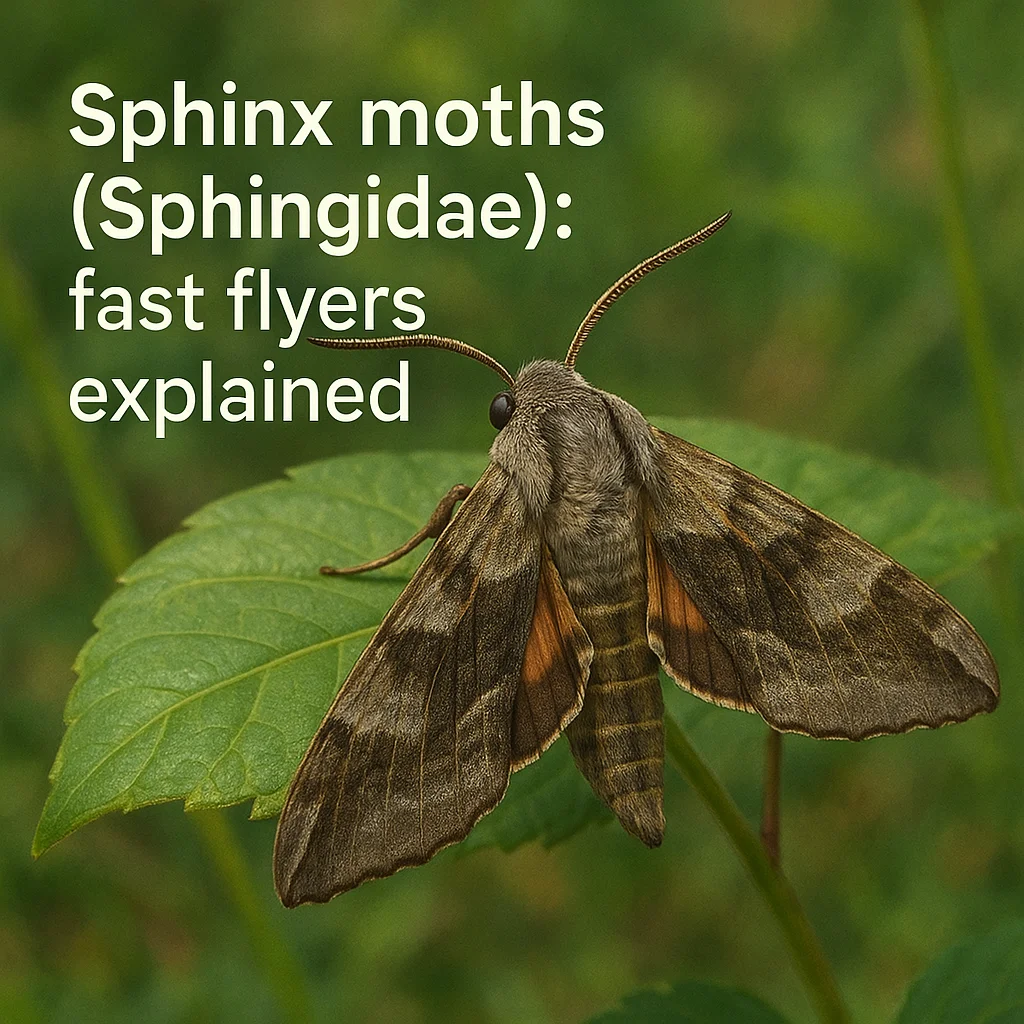
- Common names: Sphinx moths, Hawk moths
- Scientific name: Sphingidae (family)
- Insect or not: Yes, they are insects, which are invertebrates with six legs and a segmented body
- Order / family: Lepidoptera / Sphingidae
- Typical size range: 2 to 6 inches wingspan
- Key colors/patterns: Browns, grays, and sometimes vibrant greens with distinct wing markings
- Activity: Mostly nocturnal, but some species are active during dusk and dawn
- Typical habitats: Forests, gardens, grasslands, and urban areas
- Where in the world it occurs: Found on all continents except Antarctica
- Seasonality: Most active in spring and summer months
🔍 Identification
Recognizing sphinx moths in the field involves observing their body shape, wings, and flight pattern. They have a streamlined, robust body and often hold their wings in a swept-back position when at rest.
Their long, clubbed antennae are key identification features, and they are known for their rapid flight movements reminiscent of hummingbirds, which they can sometimes be confused with.
- Robust, tapering body
- Long, clubbed antennae
- Swept-back wings at rest
- Rapid, agile flight similar to hummingbirds
- Thickened thorax compared to abdomen
- Often confused with hummingbirds or butterflies
- Distinctive hovering while feeding on flowers
- Wing patterns often involve eye spots or banding
🧠 Basic Body Structure
Sphinx moths, like most moths and butterflies, have a body divided into three main parts: the head, thorax, and abdomen. As insects, they have six legs, an exoskeleton, and two pairs of wings.
Their robust thorax houses strong muscles for flight, while the abdomen is elongated. As invertebrates, they have no internal bones, relying on their exoskeleton for structural support.
🌍 Habitat & Distribution
Sphinx moths are adaptable and inhabit a variety of environments, from dense forests to open fields, and even urban gardens. Their preferred habitats often include areas with abundant flowering plants, which provide nectar as a food source.
These moths are distributed across the world, with the greatest diversity in tropical and subtropical regions. Habitat destruction and climate change can affect their distribution and population density.
📅 Seasonal Appearance & Activity
Sphinx moths are primarily seen during warm months. In temperate regions, they are most active from late spring through early fall. Tropical species may be present year-round.
As nocturnal creatures, they are most easily spotted at twilight or night, especially near light sources or blooming flowers.
- Spring to early fall in temperate zones
- Year-round in tropical regions
- Most active at night
- Spotted during warm, clear evenings
- Attracted to artificial lights
🥚 Reproduction & Egg-Laying
Sphinx moths engage in fascinating mating rituals that often involve pheromone signaling. The female typically lays eggs on host plants, ensuring the larvae have immediate access to food once hatched.
The number of eggs can vary widely among species, but females often choose multiple sites to increase the chances of larval survival.
🌀 Metamorphosis & Life Cycle
Sphinx moths undergo complete metamorphosis, progressing through four stages: egg, larva (caterpillar), pupa, and adult.
After eggs hatch, caterpillars feed voraciously on host plants before pupating in soil or leaf litter. The pupal stage can last several weeks to months, depending on environmental conditions. Upon emergence, adults focus on reproduction and nectar feeding.
🍽️ Diet & Feeding Behavior
The dietary habits of sphinx moths vary between life stages. Caterpillars primarily consume plant leaves, often of specific host species. Adult moths feed on nectar using a long, coiled proboscis, making them important pollinators.
Their feeding behavior supports plant reproduction and contributes to biodiversity in their ecosystems.
🦉 Predators & Defense
Sphinx moths face threats from a variety of predators, including birds, reptiles, and spiders. Their primary defense strategies include camouflage, rapid escape, and mimicry—where some species imitate the appearance of other animals or objects to avoid detection.
- Camouflage against foliage
- Rapid, agile flight
- Mimicry of other animals
- Possible detachment of scales to escape
- Startle displays show eye spots on wings
👥 Social Behavior & Swarms
Sphinx moths are generally solitary, except during mating. They do not form colonies or swarms, but multiple individuals may gather in areas where resources are abundant.
Encounters are typically limited to mating and feeding sites, where they may compete for resources.
🧭 Senses & Communication
The sensory capabilities of sphinx moths are well-developed, with acute vision and olfactory senses. They rely heavily on pheromones for mate attraction.
Communication among these moths involves pheromone trails and possibly visual signals, although their exact methods remain a subject of study.
🌱 Role in the Ecosystem
Sphinx moths play a critical role in ecosystems as pollinators, facilitating plant reproduction and biodiversity. Some caterpillars are known to be significant herbivores that influence plant community dynamics.
These moths are integral to the food web, serving as prey for a variety of animals and contributing to the balance of natural ecosystems. While generally beneficial, overpopulation can sometimes lead to agricultural challenges.
📉 Population & Conservation Notes
While many sphinx moths are common and adaptable, certain species face threats from habitat destruction, pesticide use, and climate change. Individual abundance can vary by region.
- Plant native flowers to attract moths
- Reduce pesticide usage in gardens
- Support conservation of key habitats
- Encourage natural, leaf littered areas
- Advocate for night-sky darkness to protect nocturnal insects
⚠️ Human Interaction & Safety
Sphinx moths are generally harmless to humans and do not bite or sting. Observing them up close requires patience and respect for their natural behavior and habitat.
For more intense reactions to their presence, such as severe allergies, it is advised to seek professional medical advice.
📌 Summary
- Recognizable by robust, tapering bodies and rapid, agile flight
- Found globally with the highest diversity in tropical regions
- Most active during warm months, especially at twilight
- Undergo complete metamorphosis with important pollination roles
- Caterpillars favor certain host plants like tomatoes and tobacco
- Natural predators include birds and reptiles; defenses include mimicry
- Single or paired in life; don't engage in social swarming
- Important ecological pollinators and prey items in their habitats
- Best observed after dusk in gardens or near light sources
- Support efforts to conserve habitats and reduce chemical disruption