🕷️ Birdwing Butterflies (Ornithoptera): iconic tropical giants
🧾 Quick Facts
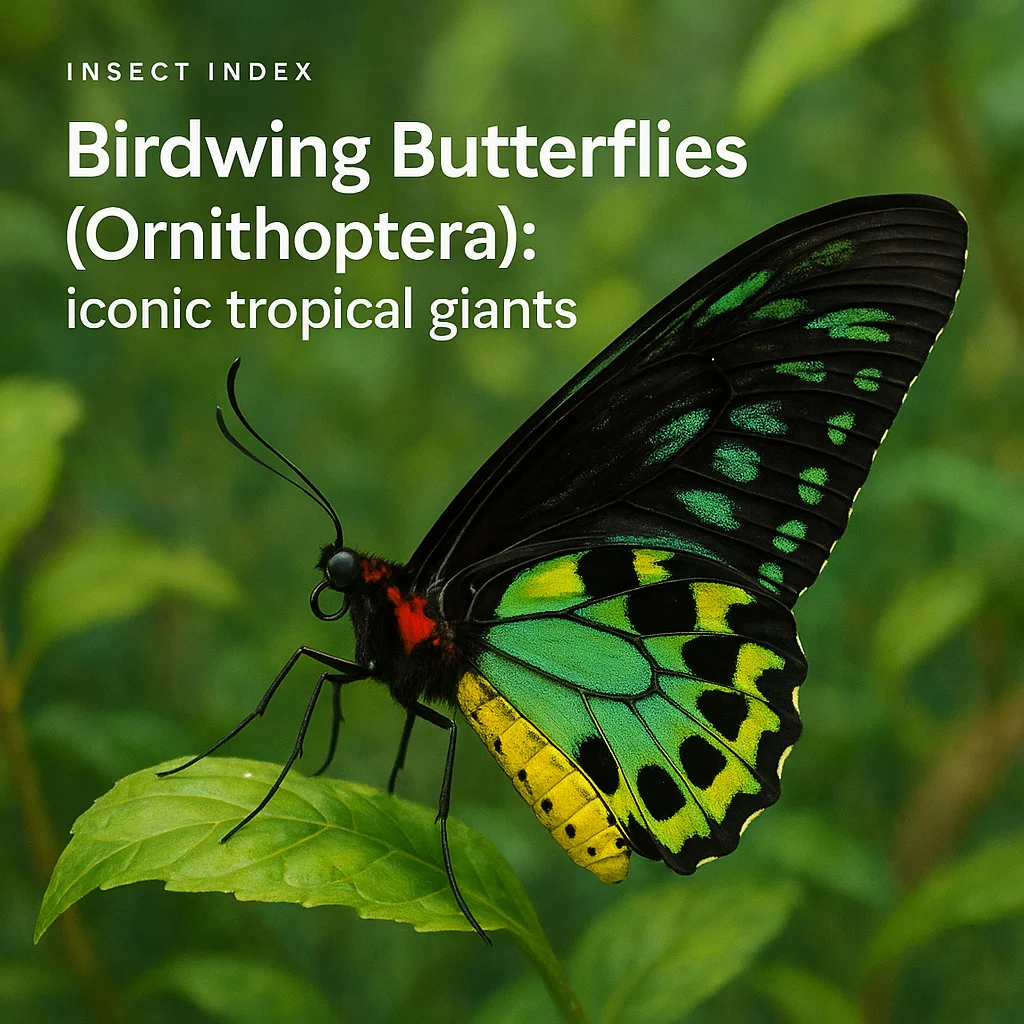
Birdwing butterflies, belonging to the genus Ornithoptera, are among the largest and most strikingly beautiful butterflies in the world. Native to the tropical rainforests of Southeast Asia, they are celebrated for their vibrant colors and commanding presence, making them a popular subject for butterfly enthusiasts and conservationists alike.
- Common Names: Birdwing butterflies
- Scientific Name: Ornithoptera (multiple species within this genus)
- Insect or Not: Insect, an invertebrate
- Order / Family: Lepidoptera / Papilionidae
- Typical Size Range: Wingspans ranging from 15 to 28 cm (6 to 11 inches)
- Key Colors/Patterns: Vivid greens, yellows, and blacks; patterns vary by species
- Activity: Diurnal (active during the day)
- Typical Habitats: Tropical rainforests, gardens, and forest edges
- Where in the World: Australia, Papua New Guinea, Indonesia, and the Solomon Islands
- Seasonality: Year-round in tropical regions, with peak activity during specific seasons
🔍 Identification
Birdwing butterflies are easily identifiable due to their large size and distinct wing patterns. Their bodies are robust, with females generally larger and duller in color than the vividly colored males. The wings are broad and typically feature unique color patterns that vary by species, making them distinguishable from other butterflies.
- Top ID Tips:
- Large wingspan, often exceeding 20 cm (8 inches)
- Bright colors, often green, yellow, and black
- Males more vibrant in coloration; females larger
- Long, thin antennae
- Slow, deliberate flight pattern
- Usually found in or near rainforest habitats
- Distinctive fluttering movement when feeding on flowers
🧠 Basic Body Structure
Birdwing butterflies, like all insects, have a body divided into three main parts: the head, thorax, and abdomen. They possess six legs, which they use primarily for perching and walking on flowers or leaves. As invertebrates, birdwings lack a backbone and have an exoskeleton that provides structural support and protection. This exoskeleton is shed periodically through a process called molting, especially during their juvenile stages.
Wings are a prominent feature of the birdwing, giving them their name and allowing them a graceful, powerful flight through dense canopies and open glades alike.
🌍 Habitat & Distribution
Birdwing butterflies favor tropical rainforests, where they can find an abundance of flowering plants vital for nectar feeding. These environments also offer suitable host plants for their larvae, typically species of the Aristolochiaceae family. While they are also known to inhabit wooded gardens and edges of tropical forests, their presence is heavily reliant on undisturbed forest habitats.
These butterflies are predominantly found across several regions, including northern and eastern Australia, Papua New Guinea, the islands of Indonesia, and the Solomon Islands. The rich biodiversity of these regions supports their lifecycle needs; however, habitat destruction can lead to declines in their populations in certain areas.
📅 Seasonal Appearance & Activity
In the consistent climate of tropical regions, birdwing butterflies can be seen throughout the year, although their activity might peak during specific seasons when flowers are in full bloom. As diurnal creatures, they are active during daylight, particularly in the early morning and late afternoon when temperatures are moderate and humidity levels are favorable.
- Best Time to Spot It:
- Early morning and late afternoon
- Following periods of rain when humidity is high
- Year-round in tropical climates
- Specific flowering seasons in their habitats
🥚 Reproduction & Egg-Laying
Birdwing butterflies engage in elaborate courtship rituals that often involve specific flight patterns and displays by males to attract females. Mating success often involves territorial males proving their vigor through these displays. Females lay their eggs on host plants, particularly species of the Aristolochia, which provide food for the emerging larvae.
The number of eggs laid can vary significantly depending on the species and environmental conditions. Typically, females lay their eggs singly or in small batches to optimize the survival chances of their larvae.
🌀 Metamorphosis & Life Cycle
Birdwing butterflies undergo complete metamorphosis, comprising four distinct stages: egg, larva (caterpillar), pupa (chrysalis), and adult. Each stage plays a critical role in the development and survival of the butterfly.
After hatching from the eggs, the larvae feed voraciously on the leaves of their host plants, growing rapidly and undergoing several molts. Once they reach a sufficient size, they enter the pupal stage, enclosed within a chrysalis. This transformative phase lasts several weeks, during which the full adult morphology develops.
The adult stage follows, with the primary purpose of reproduction. Adult birdwings have short lifespans, primarily focused on mating and initiating the next generation.
🍽️ Diet & Feeding Behavior
As larvae, birdwing caterpillars primarily feed on the leaves of Aristolochia plants, which contain toxic compounds that make the caterpillars unpalatable to many predators. In their adult form, birdwing butterflies have a diet of nectar from a variety of flowering plants. They use a long proboscis to access nectar deep within blossoms, playing a role in pollination.
The adult feeding process involves hovering gracefully from flower to flower, extracting essential nutrients required for energy-intensive activities such as flight and reproduction.
🦉 Predators & Defense
Birdwing butterflies face several natural predators, including birds, lizards, and even some mammals that inhabit their tropical environments. However, they employ various defense mechanisms to protect themselves from predation.
- Defense Highlights:
- Toxicity acquired from host plants as larvae
- Camouflage within the forest environment
- Mimicry and deceptive wing patterns
- Strong, agile flight to evade capture
👥 Social Behavior & Swarms
Birdwing butterflies are generally solitary by nature, interacting primarily during mating periods. They do not form swarms but may be seen flying in proximity in rich floral areas due to the availability of resources. Encounters between males can lead to displays of territorial behavior. While significant migrations are not a characteristic of birdwing butterflies, localized movements can occur in response to environmental changes.
🧭 Senses & Communication
Birdwing butterflies possess acute visual capabilities, essential for locating mates and food sources. Their compound eyes allow them to detect a wide range of colors and movements. Chemical cues play a crucial part in their communication, with pheromones being used to signal reproductive readiness.
Though not commonly known for sound communication, wing movements can produce sounds during flight, aiding in mate attraction or territorial defense.
🌱 Role in the Ecosystem
Birdwing butterflies contribute significantly to the ecological health of their habitats. As pollinators, they facilitate the reproduction of various plant species, supporting broader biodiversity. Their larvae, by feeding on host plants, help control vegetation growth, and their presence forms an integral part of local food webs. Relationships with specific plants like Aristolochia showcase their role in mutualistic partnerships, where the plant benefits from reduced herbivory from other insects.
📉 Population & Conservation Notes
The status of birdwing butterflies varies across their range. While some species remain relatively common in undisturbed habitats, others face threats from deforestation, climate change, and pesticide use, leading to declining numbers. Conservation efforts focus on habitat protection, legal protections against collection, and breeding programs to help bolster at-risk populations.
- How to Help (Low-Impact):
- Plant native nectaring flowers and host plants
- Reduce or eliminate pesticide use
- Support conservation organizations
- Engage in responsible eco-tourism
⚠️ Human Interaction & Safety
Birdwing butterflies do not pose a danger to humans; they do not bite or sting. As with all wildlife, observing them respectfully is essential. Efforts to capture or collect birdwings are discouraged due to their conservation status and ecological importance. Simply enjoying their beauty in their natural habitat is the best approach to interaction.
📌 Summary
- Birdwing butterflies are large, colorful insects native to tropical rainforests.
- They can be identified by their bright green, yellow, and black patterned wings.
- These butterflies are seen in daylight, particularly in tropical climates.
- They undergo complete metamorphosis from egg to adult, with specific plant associations.
- Adults feed primarily on flower nectar, contributing to pollination.
- They face natural threats from predators but have developed robust defense strategies.
- Birdwing butterflies play vital ecological roles as pollinators and part of the food chain.
- Conservation efforts are pivotal in maintaining their populations, focusing on habitat preservation.
- Handling and collecting are discouraged to protect these beautiful creatures.