🕷️ Damselflies In Streams Why Some Avoid Ponds
🧾 Quick Facts
The fascinating world of damselflies, often found in streams but sometimes avoiding ponds, is full of intriguing details. Here are some quick facts:
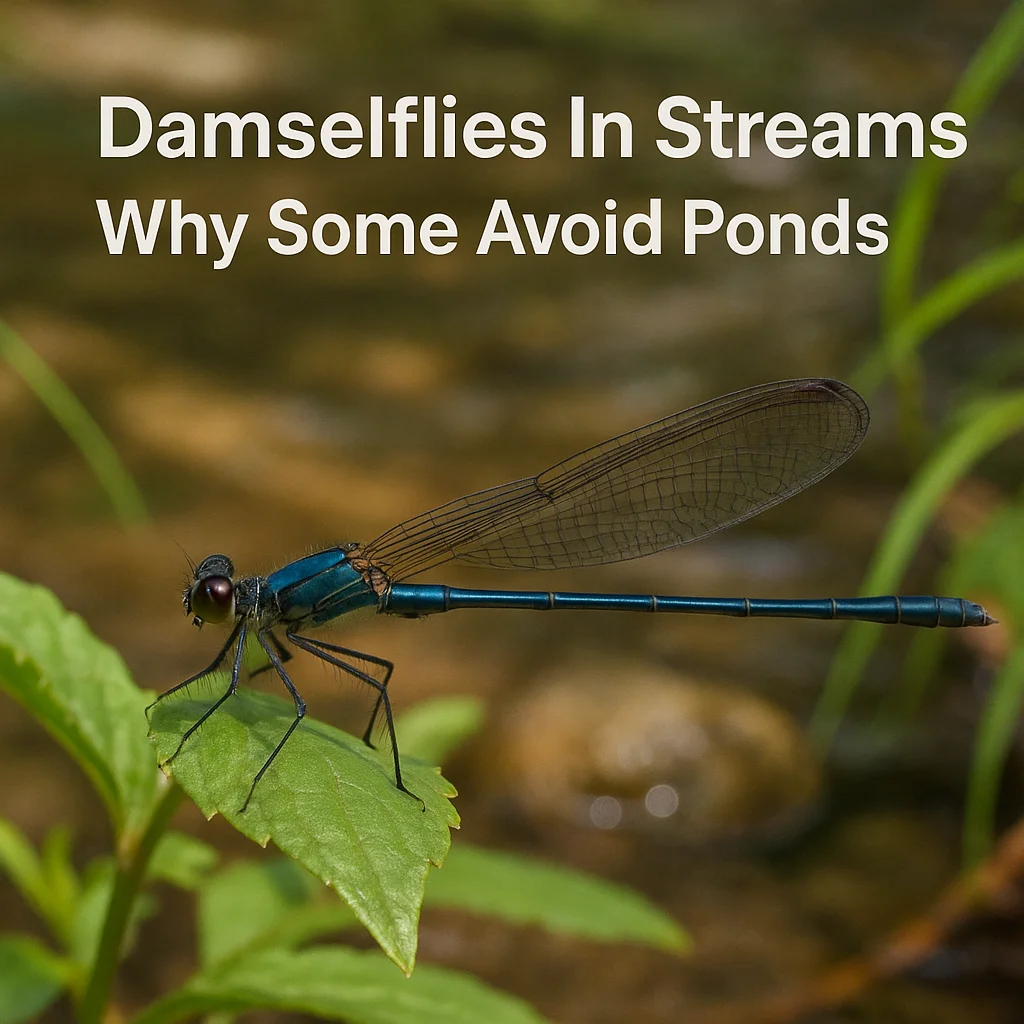
- Common names: Narrow-winged damselflies, Pond damselflies (varies)
- Scientific name: Varies
- Insect: Yes, it is an invertebrate
- Order / Family: Odonata / Zygoptera
- Typical size range: 3 to 5 cm in length (adult)
- Key colors/patterns: Metallic blues, greens, and sometimes red or yellow
- Activity: Primarily diurnal
- Typical habitats: Streams, rivers, sometimes pond edges
- Where in the world: Found on all continents except Antarctica
- Seasonality: Most visible in warm months of spring and summer
🔍 Identification
Identifying damselflies requires attention to their elegant features and behaviors:
Damselflies have a slender, elongated body. Their folded wings rest close to the body when at rest, distinguishing them from dragonflies whose wings remain open. Antennae are short and not prominently visible. Their wings are narrow with a similar shape in both fore and hind wings, often tinted or clear.
Damselflies possess long, slender legs adapted for perching rather than capturing prey. Their movement is characterized by a delicate flight pattern, often hovering or fluttering near water surfaces.
They are occasionally confused with dragonflies, but the key differences lie in their body shape and flight posture.
- Slender body in comparison to dragonflies
- Wings fold parallel to body at rest
- Narrow wings with similar shape, unlike broad dragonfly wings
- Sit closer to water surfaces
- More frequent near slow-moving water
- Gentle, graceful flight pattern
- Persistent hovering near vegetation
- Short, less visible antennae
🧠 Basic Body Structure
As insects, damselflies are characterized by a body divided into three main segments: the head, thorax, and abdomen. They are equipped with six legs, perfect for gripping onto plants and surfaces near water.
The exoskeleton provides protection and supports the body, while they undergo a molting process to grow and shed this outer shell as needed. Wings, crucial for their mobility, are transparent and functional shortly after the nymph stage.
Damselflies are invertebrates, meaning they do not have a backbone, unlike vertebrate animals, which gives them flexibility and lighter mass advantageous for flight.
🌍 Habitat & Distribution
Damselflies favor environments around freshwater sources such as streams and rivers. They select habitats with abundant vegetation, providing protection and resources like food and breeding sites.
In terms of microhabitats, these insects can be found near water edges and in low, leafy vegetation where they perch. The geographical range includes temperate and tropical regions worldwide, excluding the harsh conditions of Antarctica.
Changes in water availability and pollution levels can significantly influence their distribution; they thrive in less disturbed aquatic habitats.
📅 Seasonal Appearance & Activity
Damselflies are most visible during the warmer months, typically from late spring through summer. Their diurnal activity peaks on sunny days, as warmth enhances their flight and hunting efficiency. They are less active in cooler, rainy, or windy weather.
- Late spring through late summer
- Mid-morning to late afternoon
- Most active on warm, sunny days
- Decreased sightings during rainy weather
- Prefer calm, sheltered environments
🥚 Reproduction & Egg-Laying
Damselflies engage in intricate mating dances with males displaying vibrant colors to attract females. Most species are territorial, defending prime laying spots against rivals.
Eggs are typically laid on or within aquatic plants, submerged vegetation, or floating debris in streams. The number of eggs varies by species, but can range from a few dozen to hundreds per female.
🌀 Metamorphosis & Life Cycle
Damselflies undergo incomplete metamorphosis comprising three main stages: egg, nymph, and adult. Eggs hatch into aquatic nymphs which are agile hunters in water.
Nymphs, primarily found in streams, prey on other small aquatic organisms. After several molts over months to years, they emerge as adults. Adult lifespan is relatively short, focused on reproduction and dispersal.
🍽️ Diet & Feeding Behavior
Nymphs, the primary feeding stage, are predatory with chewing mouthparts adapted for hunting small aquatic insects and larvae. Adults feed on smaller prey using their legs to grasp insects mid-air, usually focusing on mosquitos, flies, and other tiny insects.
They play a critical role as predators, helping control insect populations in their ecosystems.
🦉 Predators & Defense
Damselflies face threats from birds, frogs, spiders, and fish. Their main defense mechanisms include camouflage and swift escape flights. Some species possess light-reflecting colors that can deter predators.
- Excellent camouflage against vegetation
- Quick, agile flight to escape threats
- Color patterns that confuse predators
- Ability to perch inconspicuously
👥 Social Behavior & Swarms
Damselflies are primarily solitary but may congregate in large numbers during mating and egg-laying periods. Males often claim territories and defend them vigorously against intruders to secure mating rights.
Swarming behavior can occur when environmental conditions are optimal for feeding and reproduction, providing a higher chance of successful mating encounters.
🧭 Senses & Communication
Damselflies possess acute vision through their compound eyes, critical for detecting prey and mates. They are also sensitive to odors and vibrations, although sight is their dominant sense.
Communication includes visual displays during mating and possibly chemical cues for territory marking.
🌱 Role in the Ecosystem
Damselflies contribute significantly to ecosystem health by controlling pest insect populations. They also serve as prey for higher trophic levels, integrating themselves into complex food webs.
The presence of damselflies indicates healthy water systems as they are sensitive to pollution, making them important bioindicators of ecological balance.
📉 Population & Conservation Notes
While many damselfly species are common, their abundance can be unevenly distributed due to habitat changes and pollution. Some species are considered vulnerable due to habitat loss and water contamination.
- Preserve and protect wetland areas
- Support conservation efforts for clean waterways
- Avoid using pesticides near aquatic habitats
- Plant native vegetation to support natural movements
⚠️ Human Interaction & Safety
Damselflies are harmless to humans. They lack stingers and exhibit no aggressive behavior towards people. These insects should be observed respectfully, ensuring that their habitats are undisturbed and they are not collected.
If interacting with damselflies, it's advisable to wash hands after contact and avoid attempting to capture or handle them directly to preserve their health and natural behaviors.
📌 Summary
- Distinctive slender body and wing structure
- Common in streams with clear, slow-moving water
- Active primarily during warm months and sunny days
- Incomplete metamorphosis with significant nymph phase
- Predatory diet controls insect populations
- Natural threats include birds and fish
- Serve as bioindicators for ecosystem health
- No threat to humans; observe in their natural habitat