🕷️ Damselfly habitat guide: ponds vs rivers
🧾 Quick Facts
Damselflies are fascinating insects known for their slender bodies and vibrant colors. They are commonly found in various aquatic habitats around the world. Here's a quick glance at their characteristics and lifestyle:
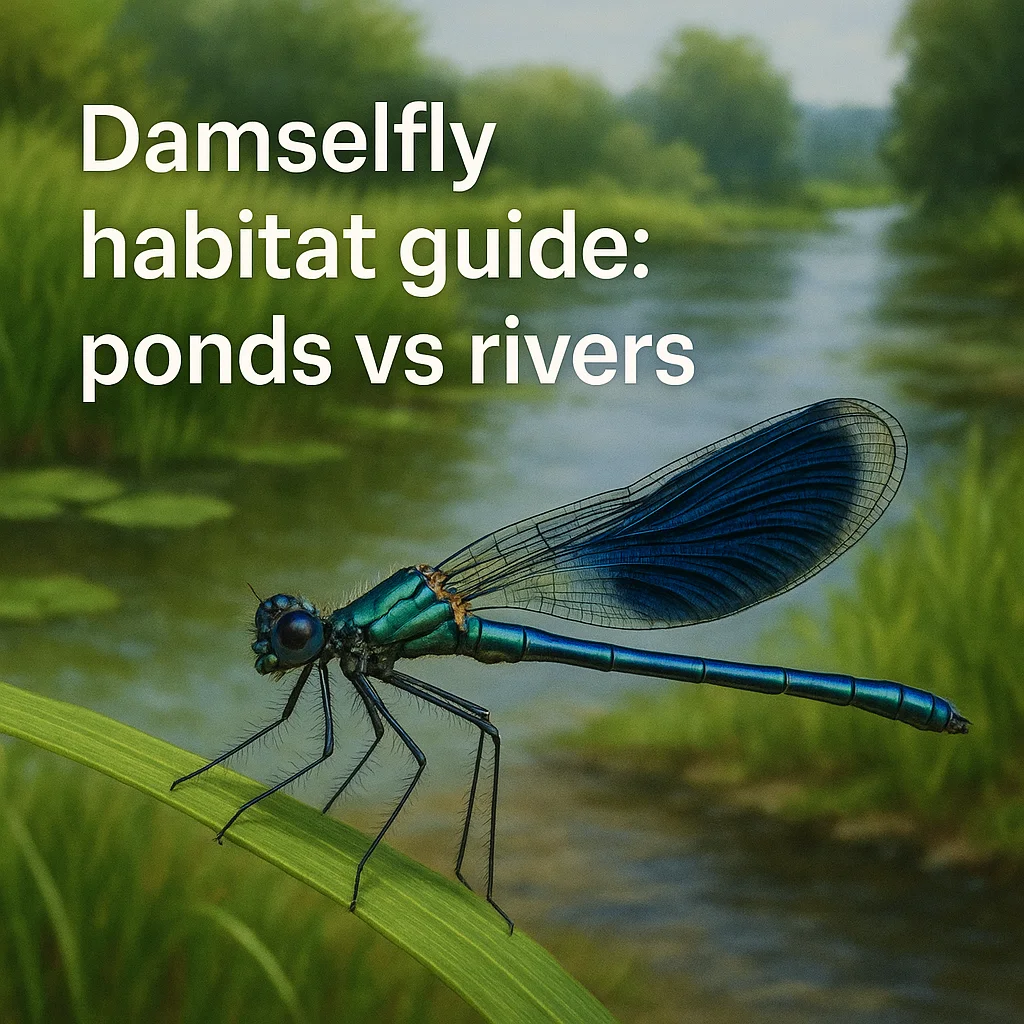
- Common names: Damselfly
- Scientific name: Varies by species
- Insect or not: Yes, invertebrate
- Order / family: Odonata / Zygoptera
- Typical size range: 2.5 - 7.5 cm
- Key colors/patterns: Brilliant blues, greens, reds, and sometimes iridescent hues
- Activity: Diurnal (active during the day)
- Typical habitats: Ponds, rivers, lakes, wetlands
- Where in the world it occurs: Worldwide, with high diversity in tropical regions
- Seasonality: Spring through autumn, varies by region
🔍 Identification
Damselflies can be recognized in the field by their slender bodies and often dazzling coloration. Unlike dragonflies, they tend to perch with wings held together above the body.
- Body shape and silhouette: Long, slender abdomen; delicate build
- Antennae type: Very short and bristle-like; not prominent
- Wing features: Clear or lightly tinted; equal-sized pairs, held upright
- Leg traits and movement style: Lightweight legs; agile flyers but may move cautiously along perches
- Distinguishing look-alikes and common confusion: Often confused with dragonflies; differentiate by wing position and body thickness
Top ID Tips:
- Look for thin bodies and upright wings at rest
- Observe color bands on body segments
- Identify by river or pond proximity
- Spot slow, hovering flight patterns
- Check for lack of coloration on wings
- Notice the gentle dipping and rising flight movements
🧠 Basic Body Structure
As typical insects, damselflies have a body divided into three main parts: the head, thorax, and abdomen. They possess three pairs of legs and a rigid exoskeleton that protects their delicate tissues. Being invertebrates, they lack a backbone, but their bodies are structured through repeated molting events. Damselflies have two pairs of wings that are equally sized, facilitating their nimble flying ability.
🌍 Habitat & Distribution
Damselflies thrive in and around water bodies and prefer calm environments like ponds, streams, rivers, and wetlands. They are most abundant in tropical regions but can be found across all continents except Antarctica, adapting to diverse climates. Habitat changes, such as pollution or alteration of water flow, influence their distribution and can greatly affect local populations.
📅 Seasonal Appearance & Activity
The best chance to spot damselflies is during warm months, typically from spring to autumn. Being diurnal, they are active and visible throughout the day, with heightened activity during warmer, sunny weather. Humidity and rain can deter their appearance but do not significantly harm their survival.
Best Time to Spot It:
- Late morning to early afternoon under full sun
- Warm spring and summer days
- Calm, wind-free afternoons
- Beside shallow, still waters
🥚 Reproduction & Egg-Laying
Mating among damselflies involves a complex courtship dance, often seen as an elegant aerial display. Eggs are laid in water or on submerged vegetation to ensure moisture for the developing embryos. Depending on the species, egg clutches can vary from dozens to hundreds, with survival strategies adjusting to local environmental conditions.
🌀 Metamorphosis & Life Cycle
Damselflies undergo incomplete metamorphosis, consisting of an egg, nymph, and adult stage. The nymph, living in water, is a voracious predator of small aquatic organisms. It molts several times over a few months to a year, depending on the climate. Upon reaching maturity, the nymph crawls onto a plant to undergo its final molt into a winged adult.
🍽️ Diet & Feeding Behavior
Throughout their life stages, damselflies are primarily predators. Nymphs use extendable mouthparts to capture prey like mosquito larvae and tiny aquatic insects. Adults fly above water or along the banks, snatching midges, mosquitoes, and even small flies with their legs, using chewing mouthparts to digest their meals.
🦉 Predators & Defense
Damselflies face various natural threats, including birds, amphibians, larger insects, and spiders. They utilize several defense strategies, such as adept flight, cryptic coloration for camouflage, and utilizing vegetation for hideouts when threatened.
- Defense Highlights:
- Speeds up flight escape
- Blending colors with environment
- Sudden diving maneuvers
- Hide within dense vegetation
👥 Social Behavior & Swarms
Typically solitary, damselflies are territorial, with males fiercely defending their preferred breeding spots along water margins. Aggregation may happen around ripe feeding sites or suitable mating territories but does not form large swarms akin to some other insect groups.
🧭 Senses & Communication
Damselflies depend heavily on sight, with expansive compound eyes that enable them to detect movement and distinguish prey from predators. While not known for intricate communication methods, they do display visual signals through behavior and coloration, especially during courtship and rivalry interactions.
🌱 Role in the Ecosystem
Ecologically, damselflies play essential roles as both predators and prey within aquatic ecosystems. They help control insect populations and thus, reduce potential pest densities. In turn, they provide nourishment to various birds and amphibians, maintaining the health and balance of their habitats.
📉 Population & Conservation Notes
While some damselfly species are abundant in suitable habitats, others face threats from habitat degradation, pesticide use, and climate change. Conservation efforts focus on habitat preservation and pollution management to protect these elegant insects.
- How to Help (Low-Impact):
- Plant native vegetation to support local ecosystems
- Reduce pesticide usage near water bodies
- Support wetland conservation projects
- Create a small pond to attract damselflies
⚠️ Human Interaction & Safety
While damselflies are harmless to humans and do not bite or sting, their presence is beneficial in controlling minor pest populations near human settlements. Respect for observing these insects in their natural habitats is encouraged, without attempting to collect or interfere with their natural behaviors.
📌 Summary
- Slender, vibrant and colorful with upright wings
- Found in ponds, rivers, and wetlands worldwide
- Most active during warm, sunny days in spring and summer
- Lifecycles include egg, nymph, and winged adult stages
- Primarily predatory at all life stages
- Preyed upon by birds, amphibians, and insects
- Important ecological predators and prey, aiding ecosystem balance
- Conservation needed for threatened species and habitats