🕷️ Damselfly larvae: aquatic life overview
🧾 Quick Facts
Damselfly larvae, also known as nymphs, are the aquatic immature stages of damselflies, belonging to the order Odonata. These larvae are important ecological players in freshwater ecosystems, and their study can provide insights into aquatic life dynamics.
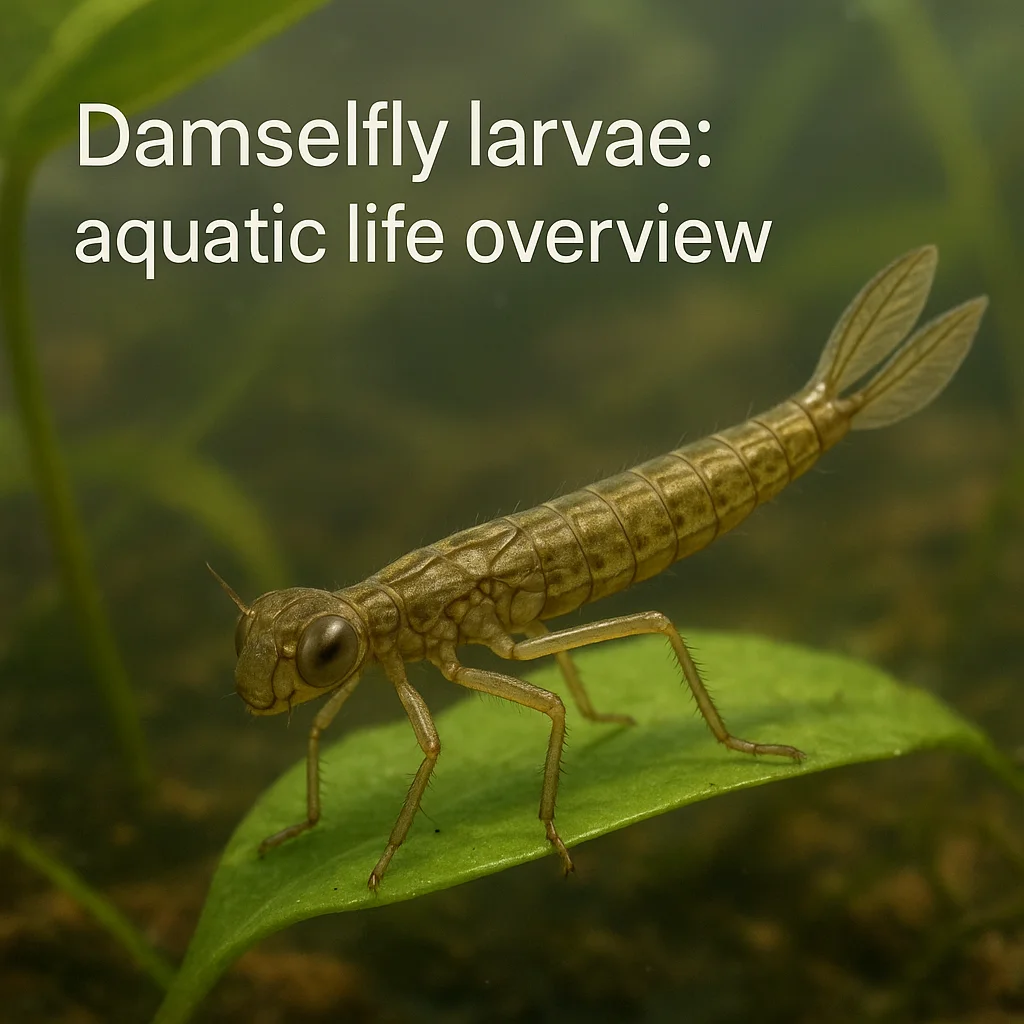
- Common names: Damselfly nymph
- Scientific name: Varies by species
- Insect or not: Yes, it is an invertebrate
- Order / family: Odonata / varies
- Typical size range (adult): 2-4 cm
- Key colors/patterns: Brown, green, sometimes mottled
- Activity: Mostly diurnal
- Typical habitats: Freshwater bodies such as ponds, lakes, and streams
- Where in the world it occurs: Found globally in suitable freshwater habitats
- Seasonality: Adults most visible in warm months
🔍 Identification
Damselfly larvae can be identified by their elongated bodies and three fin-like gills protruding from the end of their abdomen. They usually lack the large, elaborate wings seen in adults. The larvae have large eyes and an extendable lower jaw for capturing prey.
- Body shape and silhouette: Slender, elongated with three fan-like gills at end
- Antennae type: Short and bristle-like
- Wing features: Wings not present in nymph stage
- Leg traits and movement style: Six visible legs, adept swimmers using body undulations.
- Distinguishing look-alikes and common confusion: May be confused with other aquatic insect larvae but are distinctive due to their elongated gills and hunting appendages.
- Top ID Tips:
- Three prominent gills at abdomen tip
- Large, well-developed eyes
- Smooth, elongated body
- Adults are colorful, with two pairs of folded wings
- Short, bristle-like antennae
- Voracious predators with extendable jaws
🧠 Basic Body Structure
The damselfly larva features the typical insect body plan, divided into head, thorax, and abdomen. They possess six legs for gripping onto substrates underwater. Their exoskeleton provides protection, and they undergo several molts as they grow. These larvae are invertebrates, meaning they lack a vertebral column or spine.
🌍 Habitat & Distribution
Damselfly larvae thrive in a variety of freshwater habitats, including ponds, lakes, ditches, and slow-moving streams. They are commonly found in temperate and tropical regions, but their presence is subject to the availability of clean water. Changes in water quality and habitats significantly impact their distribution.
📅 Seasonal Appearance & Activity
Larvae are generally active throughout the year in tropical regions, but in temperate areas, they are most active during the warmer months. They are primarily diurnal, with their activity levels being influenced by water temperature and availability.
- Best Time to Spot It:
- Spring and summer in temperate regions
- Diurnal activity peak
- Mild to warm weather conditions
- Post-rainfall is ideal
🥚 Reproduction & Egg-Laying
Damselfly mating involves a unique wheel formation where the male grasps the female by the neck. Eggs are typically laid in aquatic plants or directly onto the water surface. The number of eggs varies substantially with different species and environmental conditions.
🌀 Metamorphosis & Life Cycle
Damselfly larvae undergo incomplete metamorphosis, progressing through the egg, nymph, and adult stages. As nymphs, they are voracious predators, feeding on other aquatic insects. The development period varies, often taking several weeks to months, depending on the environmental conditions.
🍽️ Diet & Feeding Behavior
At the larval stage, damselflies are predators, using their extendable lower jaws to catch prey, including small insects, tadpoles, and other aquatic organisms. They play a critical role in controlling aquatic insect populations.
🦉 Predators & Defense
Damselfly larvae face predation from fish, amphibians, birds, and larger insect larvae. To defend themselves, they rely on camouflage among aquatic vegetation and their rapid escape bursts afforded by body undulations.
- Defense Highlights:
- Camouflage within aquatic plants
- Rapid swimming for evasion
- Armor-like exoskeleton
- Bites as a last-resort defense
👥 Social Behavior & Swarms
Damselfly larvae are solitary creatures, focusing on hunting and feeding. They do not form swarms or colonies, but dense larval populations can occur in ideal habitats.
🧭 Senses & Communication
Larvae possess keen eyesight for detecting prey and are highly sensitive to water vibrations. They do not engage in complex communication but may exhibit behaviors like aggression to establish dominance over feeding areas.
🌱 Role in the Ecosystem
Damselfly larvae are essential for maintaining the balance in aquatic ecosystems. As predators, they help control the populations of other insect larvae and thus impact the food web. They also serve as a food source for a variety of animals, including fish and birds.
📉 Population & Conservation Notes
Damselfly populations are generally stable, but local abundances may vary due to habitat quality and water pollution. They are sensitive to changes in pesticide use and water pollution, making them useful bioindicators of environmental health.
- How to Help (Low-Impact):
- Maintain water quality by minimizing pollution
- Preserve natural water bodies
- Avoid unnecessary pesticide use
- Support conservation efforts
⚠️ Human Interaction & Safety
Damselfly larvae are harmless to humans and do not bite or sting unless provoked. Should you have any unusual reactions, it's best to wash the area and seek professional advice if symptoms persist. Observing damselflies respectfully without disturbing their habitats is encouraged.
📌 Summary
- Damselfly larvae are important aquatic predators.
- Common in freshwaters globally, with local variation.
- Active mostly in warmer months and during the day.
- Undergo incomplete metamorphosis, from nymph to adult.
- Feed on small aquatic animals, helping balance ecosystems.
- Preyed upon by fish, birds, and amphibians.
- No significant threat to humans, should be observed in their natural habitat.