🕷️ Damselfly predators and defenses
🧾 Quick Facts
Damselflies are elegant and delicate winged insects commonly found near water bodies. They are often mistaken for dragonflies but possess a distinct set of characteristics that set them apart.
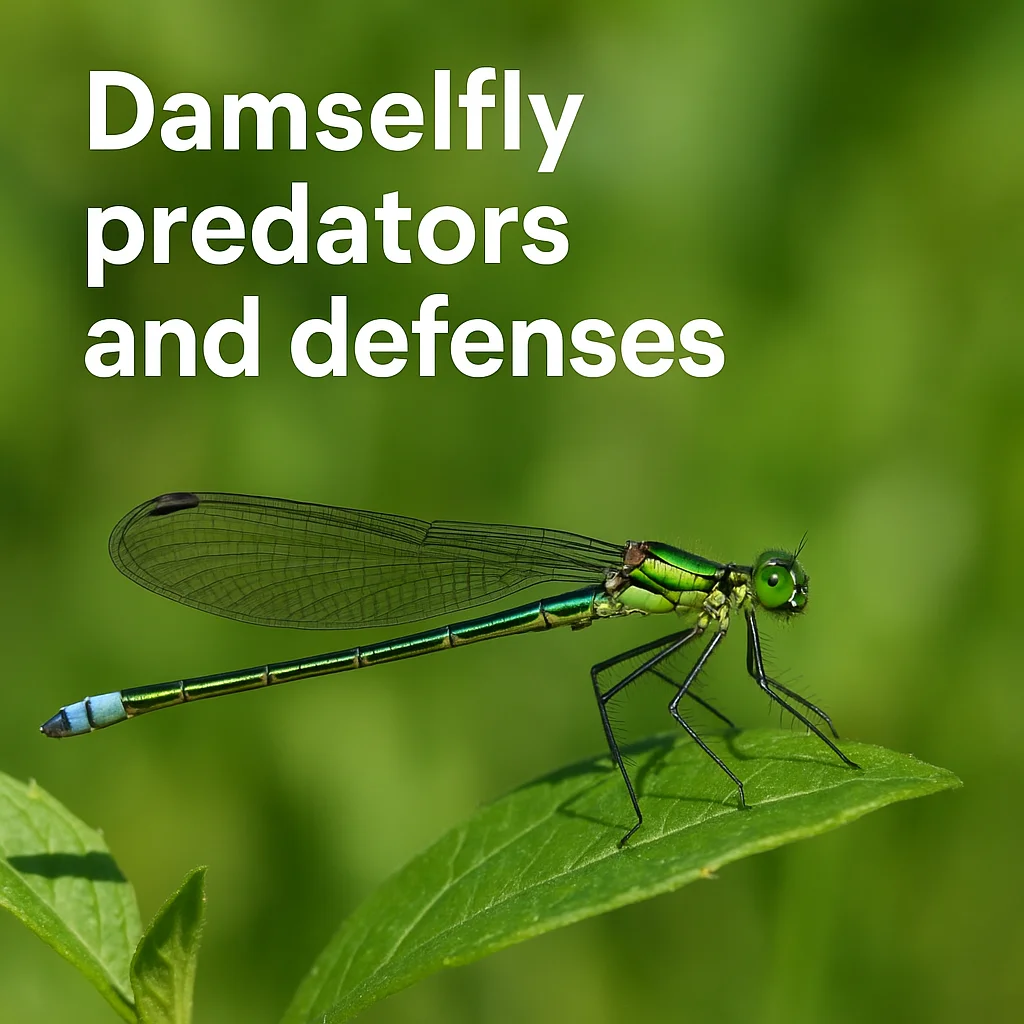
- Common Names: Damselfly, Narrow-winged Damselfly
- Scientific Name: Varies by species
- Insect: Yes, an invertebrate
- Order: Odonata, Suborder: Zygoptera
- Typical Size Range: 2.5 to 5 centimeters in length
- Key Colors/Patterns: Bright blues, greens, reds; often metallic; slender body
- Activity: Primarily diurnal
- Typical Habitats: Freshwater habitats like ponds, streams, and wetlands
- Where in the World: Found on all continents except Antarctica
- Seasonality: Most active in spring and summer
🔍 Identification
Recognizing a damselfly in the field requires understanding its unique body structure and movement. These insects are known for their slender bodies and the way they perch with wings folded along their bodies.
- Body Shape and Silhouette: Thin and elongated with a three-part segmentation: head, thorax, and abdomen
- Antennae: Short and bristle-like, often unnoticed without closer examination
- Wing Features: Two pairs of narrow, membranous wings held close to the body when at rest
- Leg Traits and Movement Style: Long legs suited for perching, agile in movement with a graceful flight
- Distinguishing Look-alikes: Differ from dragonflies by size, body shape, and wing position at rest
- Top ID Tips
- Slender, elongated body
- Wings held closed over the body when perched
- Bright, metallic coloration
- Typically near freshwater
- Flightless, short antennae
- More fragile appearance than dragonflies
- Found worldwide except Antarctica
- Active during the daytime
🧠 Basic Body Structure
Damselflies, as insects, have a structured body divided into three main parts: the head, thorax, and abdomen. They have six jointed legs, characteristic of insects, and are invertebrates, meaning they lack a backbone. Their exoskeleton provides structural support and protection. Their wings, two pairs in total, are used proficiently for flying. As they mature, they undergo several molts to allow for growth.
🌍 Habitat & Distribution
Damselflies thrive in moist habitats, predominantly found near water such as ponds, lakes, streams, marshes, and slow-flowing rivers. They occupy banks and vegetation but occasionally venture into open meadows or grasslands. These environments provide the necessary conditions for breeding and feeding. While they are distributed globally, barring Antarctica, shifts in climate and habitat loss can affect their visibility in certain regions.
📅 Seasonal Appearance & Activity
Damselflies are mostly visible and active during the warmer months, primarily late spring through summer. They thrive in sunny conditions; thus, they are usually active during daylight hours. Weather conditions such as temperature and precipitation influence their activity, where prolonged cold periods can reduce sightings.
- Best Time to Spot It
- Late spring to early summer
- Sunny days
- Near water bodies
- During daylight hours
- Warmer climates
🥚 Reproduction & Egg-Laying
Damselflies display interesting mating behaviors, often involving aerial displays and physical coupling termed “in tandem” formation. Males may establish territories to find mates. Egg-laying predominantly occurs in aquatic plants or directly in the water, ensuring the larvae have a nutrition-rich start. The number of eggs laid can vary widely depending on the species, known to lay hundreds in a single period.
🌀 Metamorphosis & Life Cycle
Damselflies undergo incomplete metamorphosis, passing through three main stages: egg, nymph, and adult. The egg stage lasts a few weeks; after hatching, the nymph lives underwater, feeding on microorganisms and smaller aquatic life for several months to a couple of years. The final transition from nymph to adult involves crawling out of water and molting for the last time, after which they emerge as winged adults. This stage can last for weeks to a couple of months.
🍽️ Diet & Feeding Behavior
At different life stages, damselflies primarily feed on smaller insects. As nymphs, they prey on aquatic organisms such as mosquito larvae and small crustaceans. Once they metamorphose into adults, they hunt flying insects like flies, mosquitoes, and smaller butterflies using their strong jaws suited for chewing.
🦉 Predators & Defense
Damselflies are vulnerable to a variety of predators, including birds, frogs, larger insects, and even fish. Their defense mechanisms depend significantly on camouflage and swift movements. Some species display bright warning colors or engage in startle behavior by flashing their wings. Some damselflies blend with their environments, making them difficult to spot for predators.
- Defense Highlights
- Camouflage in vegetation
- Swift flight and elusive maneuvers
- Bright warning colors
- Staying close to cover
- Quick escape responses
👥 Social Behavior & Swarms
Damselflies are largely solitary, interacting primarily during mating periods. They do not typically form swarms, but during favorable conditions and high concentrations of food, large numbers may gather in certain areas. Territorial behavior is more pronounced among males during mating seasons.
🧭 Senses & Communication
Damselflies rely heavily on their visual acuity, possessing large compound eyes offering a wide field of view for hunting and navigation. While not extensively documented, pheromonal communication may play a role during mating. Their subtle yet agile maneuvers suggest a refined sense of touch and vibration.
🌱 Role in the Ecosystem
Damselflies play pivotal roles in their ecosystems, acting as both predators and prey. They help control mosquito populations and are critical in maintaining balanced aquatic ecosystems. Moreover, they serve as food for birds and larger insects. Symbiotic relationships, particularly in aquatic habitats, underscore their ecological significance.
📉 Population & Conservation Notes
While damselflies are generally common in favorable habitats, specific regional populations face threats from habitat destruction, pollution, and climate change. Local abundance may vary, with data on global populations rather limited.
- How to Help (Low-Impact)
- Preserve natural water bodies
- Plant native vegetation
- Avoid pesticides and chemicals
- Maintain a habitat-friendly garden
- Support conservation initiatives
⚠️ Human Interaction & Safety
Damselflies are harmless to humans as they neither sting nor bite. Interactions are generally limited to observation. Encouraging respectful observation supports their populations while minimizing unnecessary collection or habitat disturbance.
📌 Summary
- Found near freshwater environments worldwide
- Recognized by slender bodies and closed wings
- Active primarily during warmer months and daytime
- Undergo incomplete metamorphosis from nymph to adult
- Predators include birds, frogs, and larger insects
- Feed on smaller insects, playing crucial roles in pest control
- Important ecological contributors as both predators and prey
- Conservation focuses on habitat preservation and pollution control