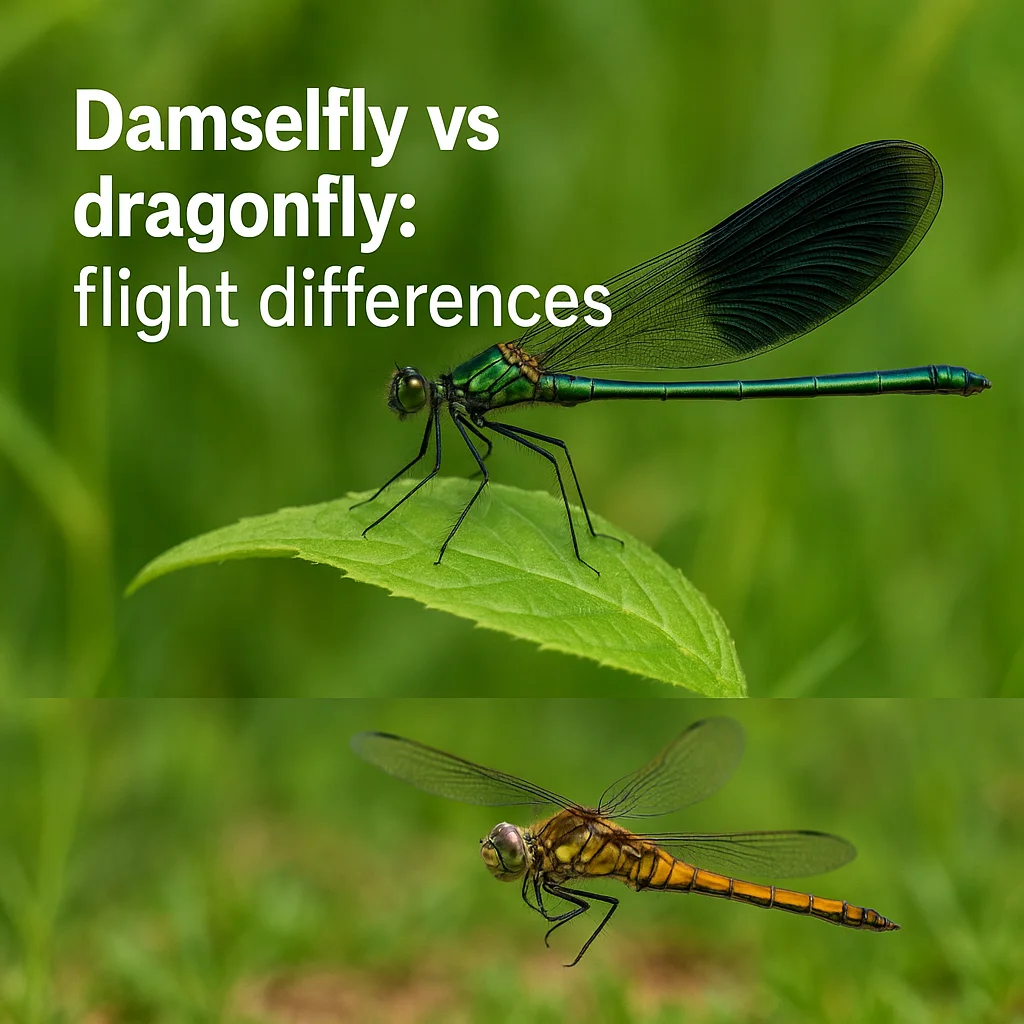
🕷️ Damselfly vs Dragonfly: Flight Differences
Damselflies and dragonflies, belonging to the order Odonata, are often confused due to their similar appearances, but they have distinct differences, especially in their flight patterns. This educational profile explores these differences, providing insights into their biology, ecology, and interaction with humans.
🧾 Quick Facts
While damselflies and dragonflies share many traits, several characteristics set them apart. These quick facts highlight the unique and common features of these fascinating insects.
- Common names: Damselfly, Dragonfly
- Scientific name: Varies by species (e.g., Zygoptera for damselflies, Anisoptera for dragonflies)
- Insect or not: Insects; both are invertebrates
- Order/Family: Order Odonata; families vary
- Typical size range: Damselflies: 2-5 cm; Dragonflies: 4-10 cm
- Key colors/patterns: Blues, greens, reds, metallic; often with clear or patterned wings
- Activity: Diurnal (active during the day)
- Typical habitats: Wetlands, ponds, streams, lakes, gardens
- Where in the world it occurs: Global, mostly in temperate and tropical regions
- Seasonality: Varies with climate; often seen in warmer months
🔍 Identification
Recognizing damselflies and dragonflies in the wild can be an exciting challenge. Paying attention to body shape, wing positioning, and behavior can help differentiate between these two groups.
- Body shape and silhouette: Damselflies have slender bodies, while dragonflies are robust.
- Antennae type: Short, hair-like antennae for both groups.
- Wing features: Damselflies fold wings along the body at rest; dragonflies have wings spread out.
- Leg traits and movement style: Both use legs primarily for grasping prey; dragonflies are stronger fliers.
- Distinguishing look-alikes and common confusion: Bright colors and large eyes are shared, but watch wing positioning at rest.
- Long, slender bodies (damselflies)
- Wings folded over body at rest (damselflies)
- Larger, bulkier body (dragonflies)
- Wings held out flat when resting (dragonflies)
- Eye placement: separated (damselflies), touching (dragonflies)
- More agile flight pattern in dragonflies
- Spring and summer are ideal seasons in temperate zones.
- Most active on sunny, warm days.
- Diurnal, so daytime spotting is best.
- In tropical areas, may be seen year-round.
- Camouflage helps avoid detection.
- Quick and erratic flying patterns deter predators.
- Some species exhibit mimicry, resembling less palatable organisms.
- Sophisticated visual acuity aids in predator avoidance.
- Support native vegetation around water bodies.
- Reduce pesticide and chemical use near aquatic habitats.
- Maintain ponds and wetlands in urban planning.
- Participate in community clean-up efforts.
- Damselflies and dragonflies are easily differentiated by body and wing posture.
- Both thrive in aquatic and semi-aquatic environments.
- Their activities are most visible during warm, sunny weather.
- In complete metamorphosis with aquatic nymph stages.
- Important predators in controlling pest populations.
- Vulnerable to environmental changes from human activity.
- Non-aggressive and harmless to humans.
- Contribute significantly to ecosystem dynamics.
🧠 Basic Body Structure
Both damselflies and dragonflies have the classic insect body structure with three main parts: head, thorax, and abdomen. They feature six legs, compound eyes, and an exoskeleton that requires molting as they grow.
These insects are invertebrates, meaning they do not have a backbone. Their exoskeleton provides structure and protection, but it requires periodic shedding during development.
🌍 Habitat & Distribution
Damselflies and dragonflies thrive in environments rich in water, such as wetlands, ponds, and lakes. They can also be found near slow-moving streams and rivers, as well as in damp meadows and swamps. These habitats provide vital resources for feeding and reproduction.
Globally, they inhabit temperate and tropical regions. However, habitat changes such as pollution, pesticide use, and water drainage can drastically affect their populations and sightings.
📅 Seasonal Appearance & Activity
These insects are predominantly observed during warmer months. In temperate climates, they're most visible from late spring through early autumn, being diurnal and preferring sunny weather.
🥚 Reproduction & Egg-Laying
Flight differences play a role in mating rituals, where males often display aerial acrobatics. Territorial battles can occur among males to secure the best breeding spots. After mating, females lay eggs in various aquatic habitats, such as submerged vegetation or directly into water.
Egg counts and laying strategies vary widely, with some species depositing eggs individually, while others lay them in batches. Notably, the precise details can differ between species and regions.
🌀 Metamorphosis & Life Cycle
Both damselflies and dragonflies undergo incomplete metamorphosis: egg, nymph, and adult. The nymphs, which are aquatic, go through several molts before emerging as winged adults.
Nymphs are often voracious predators, feeding on aquatic invertebrates. Their development can last several months to years, depending on environmental conditions. Once metamorphosis is complete, they emerge from water to become adult fliers.
🍽️ Diet & Feeding Behavior
In all life stages, damselflies and dragonflies are predators. As nymphs, they consume small aquatic organisms. Adults use their adept flying abilities to catch prey mid-air, primarily feeding on smaller insects such as mosquitoes and flies. They utilize chewing mouthparts, enabling them to efficiently handle their mobile prey.
🦉 Predators & Defense
Numerous predators hunt damselflies and dragonflies, including birds, amphibians, and larger insects. Their primary defenses include agile flight, avoiding slower, less maneuverable predators. They also rely on cryptic coloration for camouflage.
👥 Social Behavior & Swarms
These insects are generally solitary but can be seen in groups where abundant food or breeding sites are available. They do not form true swarms or colonies. Encountering clusters during migration or at emerging hot spots for prey is not uncommon.
🧭 Senses & Communication
Damselflies and dragonflies have exceptional vision, utilizing compound eyes possessing thousands of ommatidia for broad and detailed views. Communication is limited, with interactions largely focused on mating displays and territorial disputes, often involving visual cues rather than pheromones or sounds.
🌱 Role in the Ecosystem
These insects play a crucial role in controlling mosquito populations and other small flying insects, aiding in pest regulation. As both predator and prey within their ecosystems, they form integral links in aquatic and terrestrial food webs. Their presence can indicate ecosystem health, given their sensitivity to pollution and habitat changes.
📉 Population & Conservation Notes
Widely common in many areas, populations can still face threats from habitat destruction, water pollution, and pesticide use. Conservation efforts focus on preserving and restoring wetlands and waterways critical for their survival.
⚠️ Human Interaction & Safety
Damselflies and dragonflies do not pose a threat to humans, as they neither bite nor sting. Observing these insects in their natural habitat can contribute valuable data for citizen science projects, and they are best appreciated without interference.