🕷️ Jewel damselflies: metallic colors explained
🧾 Quick Facts
Jewel damselflies, known for their remarkable metallic colors, captivate enthusiasts and experts alike. Here's a snapshot of these enchanting creatures:
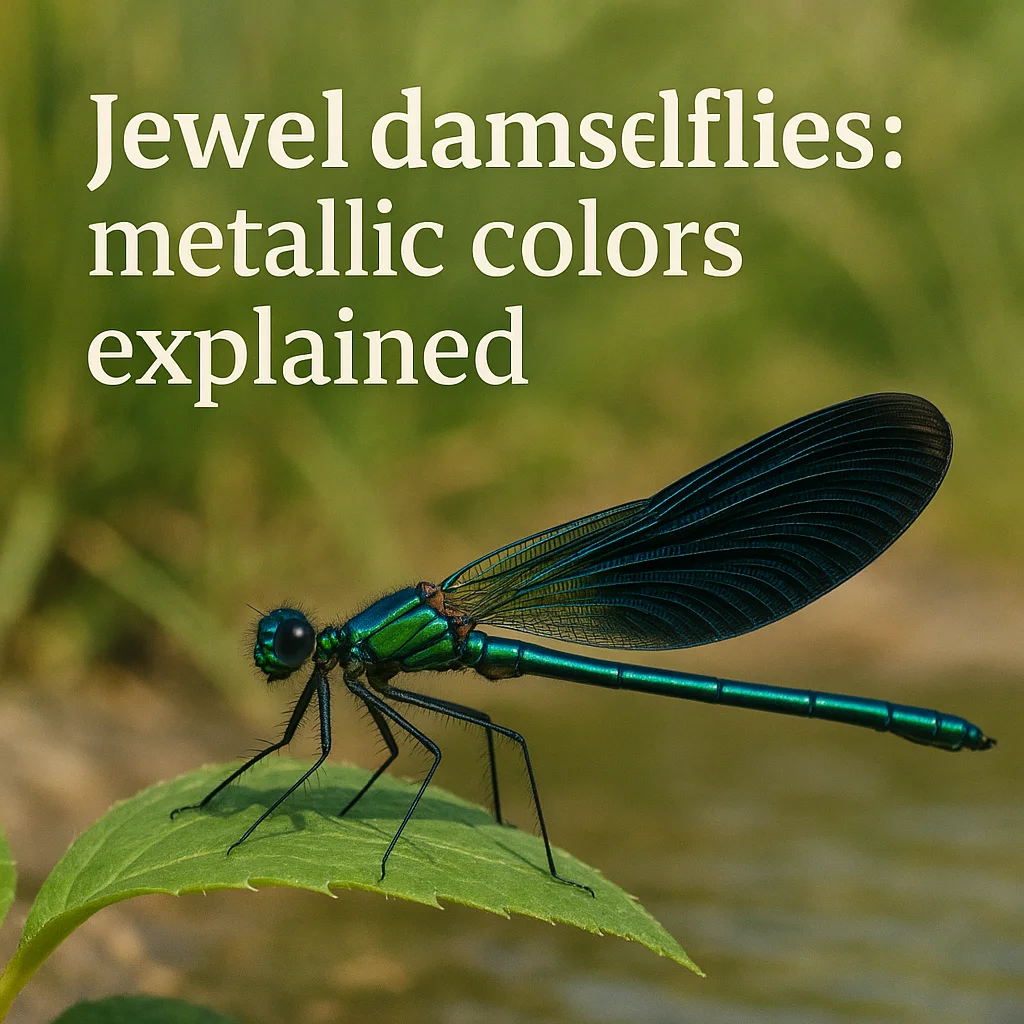
- Common names: Jewel Damselflies, Sparkling Damselflies
- Scientific name: varies (family Chlorocyphidae)
- Insect or not: Yes, they are insects, part of the Odonata order.
- Order / family: Odonata / Chlorocyphidae
- Typical size range: 2–3.5 cm (adult)
- Key colors/patterns: Metallic blue, green, red, with often intricate patterns
- Activity: Diurnal (active during the day)
- Typical habitats: Freshwater bodies like streams and rivers; forested areas nearby
- Where in the world: Predominantly in tropical regions of Asia, Africa, and Madagascar
- Seasonality: Most active during warmer months, varies by region
🔍 Identification
Recognizing Jewel damselflies in the wild can be an intriguing challenge due to their striking metallic colors. These damselflies have elongated slender bodies with a recognizable silhouette that helps in identification. Look for the characteristically large, compound eyes and small antennae that are typical of damselflies.
Jewel damselflies are known for their iridescent wings, usually clear but sometimes tinted, coupled with a graceful flight pattern. Their long, delicate legs allow them to perch elegantly on vegetation near water bodies. When searching, one may confuse them with dragonflies; however, damselflies rest with their wings closed rather than spread out.
- Top ID Tips:
- Look for slender, metallic bodies with intense colors.
- Observe their wing resting position – typically closed over the body.
- Note the location – near freshwater habitats.
- Check for large, separated eyes typical of damselflies.
- Watch for their delicate, fluttery flight pattern.
- Use their metallic sheen as a key distinguishing trait.
🧠 Basic Body Structure
The Jewel damselfly, like all insects, has a tripartite body structure: head, thorax, and abdomen. The head features wide, separated compound eyes, the thorax supports three pairs of slender legs, and the abdomen is elongated. Jewel damselflies possess an exoskeleton, a hard outer structure providing protection and support, and undergo molting as they grow. As invertebrates, they lack a spinal column, which differentiates them from vertebrates.
🌍 Habitat & Distribution
Jewel damselflies thrive in ecosystems rich in freshwater habitats, such as streams, rivers, and sometimes lakes with clear water and abundant vegetation. They prefer humid environments and are often found in tropical and subtropical forests, where they can access both water and suitable perching spots.
Geographically, these damselflies are distributed across tropical regions of Asia, Africa, and Madagascar. Changes in water quality and habitat destruction impact their distribution, often reducing sightings in degraded environments.
📅 Seasonal Appearance & Activity
Jewel damselflies are most visible during the warmer months, although this may vary by region. Being diurnal creatures, they are primarily active during daylight, often seen around dawn and dusk. Their activity is influenced by favorable weather conditions, with mild temperatures and low wind enhancing their visibility.
- Best Time to Spot It:
- Look during mid to late spring through summer.
- Search predominantly in daytime hours.
- Warm, sunny days increase activities.
- Reduction in activity noted in heavy winds or cool weather.
🥚 Reproduction & Egg-Laying
Mating in Jewel damselflies involves elaborate courtship displays, where males exhibit their vibrant colors to attract females. After successful mating, females typically lay eggs on submerged vegetation or other aquatic plants. The number of eggs varies across different species within the family, with some laying hundreds during the breeding season.
🌀 Metamorphosis & Life Cycle
Jewel damselflies undergo incomplete metamorphosis, meaning their lifecycle stages are egg, nymph, and adult. Upon hatching, nymphs live a fully aquatic life, hunting for small aquatic organisms. Their nymphal stage varies significantly depending on temperature, but it usually lasts several months.
Once they mature, nymphs undergo a transformation, emerging as adults to take on a terrestrial life. Adult damselflies are mostly carnivorous, feasting on small insects and providing natural pest control.
🍽️ Diet & Feeding Behavior
As nymphs, Jewel damselflies are voracious predators of small aquatic creatures. They utilize their nimble movements and camouflaged body to ambush prey like mosquito larvae and other small insects.
In adulthood, they adapt to a flight-based predation style, capturing small insects mid-air with their superior maneuverability and speed. Their mandibles are adept for consuming a diet of flying insects.
🦉 Predators & Defense
Naturally, Jewel damselflies face predation from birds, fish, amphibians, and larger insects like dragonflies. Their defense strategies include the use of speed and agility to evade capture, and their metallic colors can serve as camouflage, blending with sparkling water or bright foliage.
Some species exhibit startle displays or mimicry to fend off would-be attackers.
- Defense Highlights:
- Camouflage: Blends with the reflective water surface.
- Agility: Quick flight movements to escape predators.
- Startle display: Flashing colors to confuse predators.
- Mimicry: Imitates unpalatable species.
👥 Social Behavior & Swarms
Jewel damselflies are primarily solitary, with interactions generally limited to mating encounters. They do not form colonies or swarms as numerous species do. However, their territories, especially those of males, are often vigorously defended, demonstrated through aerial displays or direct confrontations with rivals.
🧭 Senses & Communication
Jewel damselflies rely heavily on their acute vision for detecting movement and identifying potential mates across their habitats. Visual signals are paramount during courtship. Their sense of smell, though less documented, plays a role in detecting pheromones used for mating.
Communication primarily involves visual displays, with males showcasing vibrant colors to express fitness and readiness to mate.
🌱 Role in the Ecosystem
Jewel damselflies play a pivotal role in maintaining ecological balance within their ecosystems. As predators of aquatic larvae and adults of flying insects, they help control pest populations naturally. They contribute significantly to the food web, serving as prey for higher trophic-level predators.
Interactions with other species also include mutualistic relationships with aquatic plants through habitat preferences for egg-laying, thereby supporting plant proliferation and diversity.
📉 Population & Conservation Notes
The population status of Jewel damselflies varies widely across regions. While some remain common in undisturbed habitats, others face threats from pollution, habitat destruction, and climate change. Conservation efforts focus on preserving freshwater ecosystems and minimizing pesticide usage.
- How to Help (Low-Impact):
- Plant native vegetation to support local ecosystems.
- Avoid the use of pesticides near water bodies.
- Preserve natural shorelines and reduce bank erosion.
- Participate in local conservation initiatives.
⚠️ Human Interaction & Safety
Jewel damselflies do not bite or sting and generally pose no threat to humans. They are non-aggressive and are invaluable for educational and ecological purposes. Observing them should be done respectfully and ethically, avoiding capture or harm to their natural environments.
If providing general first-aid advice for insect interactions, clean any areas contacted with clean water, avoid scratching, and seek professional advice if allergic reactions occur.
📌 Summary
- Striking metallic colors make Jewel damselflies easily recognizable.
- Found predominantly near freshwater sources in tropical climates.
- Most active during warm daylight hours, best spotted in less windy conditions.
- Incomplete metamorphosis lifecycle with distinct nymph and adult ecological roles.
- Email, diet comprises small insects, contributing to natural pest control.
- Prey for birds, amphibians; rely on camouflage and agility for defense.
- Critical role in the ecosystem as both predator and prey.
- Human impact minimal, promote conservation to ensure thriving populations.