🕷️ Aquatic nymph hunting: underwater predators
🧾 Quick Facts
Aquatic nymphs, also known as naiads, are the immature forms of certain aquatic insects. These predators play a critical role in the ecosystem by preying on other small aquatic organisms. They exhibit remarkable adaptations for underwater hunting and are an essential part of freshwater habitats.
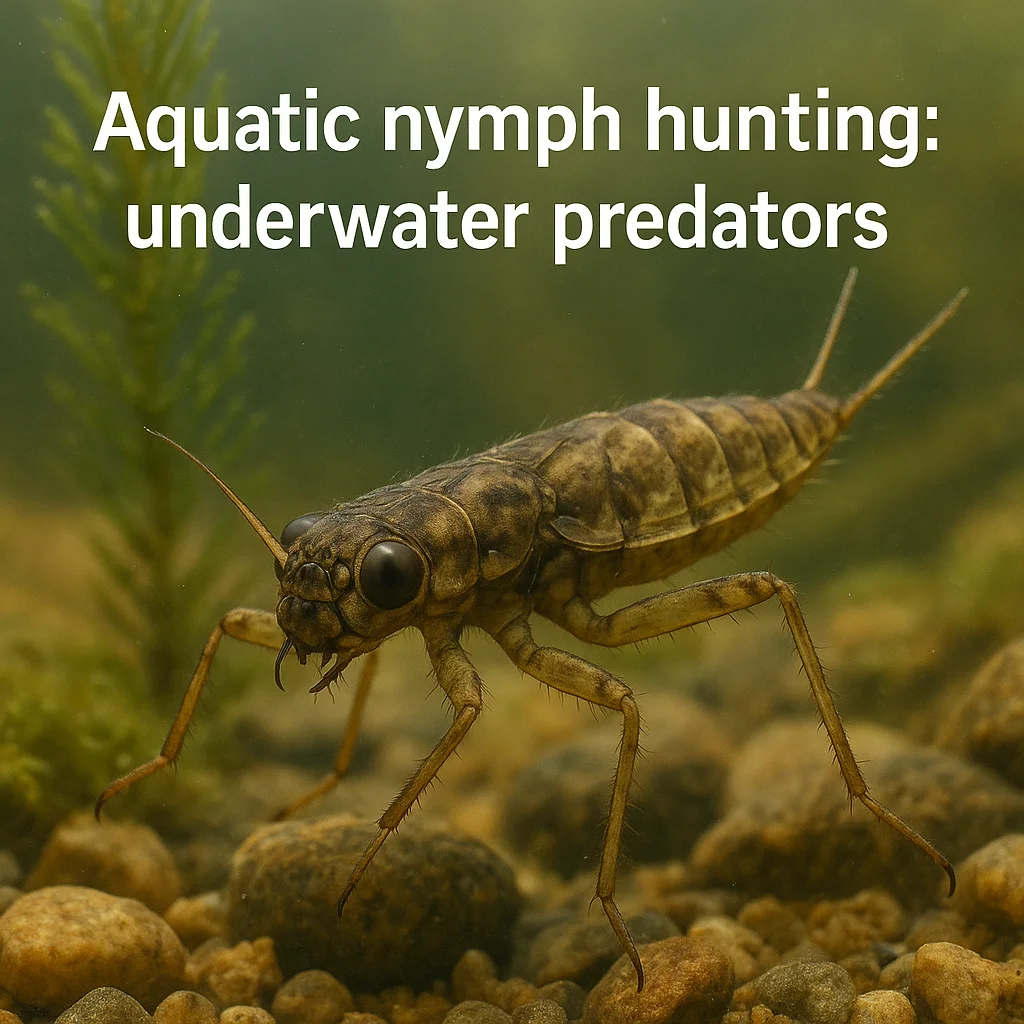
- Common names: Water nymphs, naiads
- Scientific name: Varies by species (specific examples include mayfly naiads, dragonfly naiads)
- Insect or not: Insect, invertebrate
- Order / family: Varies (e.g., Ephemeroptera, Odonata)
- Typical size range: 5mm to over 30mm depending on species
- Key colors/patterns: Typically brown, green, or mottled patterns
- Activity: Primarily diurnal
- Typical habitats: Ponds, streams, lakes, wetlands
- Where in the world it occurs: Found globally, especially in temperate and tropical regions
- Seasonality: Varied presence, often most visible in warmer months
🔍 Identification
Aquatic nymphs can be identified by their elongated bodies and specialized adaptations for aquatic life. Recognizing them involves observing body shape, antenna size, and other distinctive features.
- Body shape and silhouette: Streamlined, elongated bodies
- Antennae type: Short and bristle-like
- Wing features: Wings develop during emergence, not visible as naiads
- Leg traits and movement style: Strong, adapted for swimming and grasping prey
- Distinguishing look-alikes: Often confused with juvenile fish or small crustaceans
- Elongated, streamlined body
- Bristle-like short antennae
- Legs adapted for swift swimming
- Mottled or camouflaged coloration
- Presence in aquatic environments
- Best spotted in spring and summer months
- Diurnal hunters
- Increased activity after rainfall
- Presence peaks during warm spells
- Camouflage within aquatic vegetation
- Swift swimming to evade predators
- Hiding among debris or substrate
- Armor-like exoskeleton in some species
- Preserve natural water bodies
- Minimize pollution
- Promote native aquatic vegetation
- Avoid pesticides near water sources
- Identifiable by streamlined bodies and short antennae
- Inhabit diverse freshwater environments
- Most active in warmer months, diurnal
- Undergo incomplete metamorphosis
- Carnivorous predators of smaller aquatic life
- Face predators including fish and birds
- Essential to aquatic ecosystems roles
- Generally safe for human interaction
🧠 Basic Body Structure
Aquatic nymphs, as insects, possess three main body segments: the head, thorax, and abdomen. They have six legs emerging from the thorax, making them true insects. Their exoskeleton provides protection and support, and they undergo molting periodically as they grow. As invertebrates, they lack an internal skeleton.
🌍 Habitat & Distribution
Aquatic nymphs thrive in freshwater environments such as ponds, lakes, streams, and wetlands. They often inhabit microhabitats like water edges, submerged vegetation, and silt beds. These environments provide shelter and abundant food sources. Aquatic nymphs are found globally, with high concentrations in temperate and tropical regions. Habitat modifications like pollution or climate change can significantly affect their populations.
📅 Seasonal Appearance & Activity
Most aquatic nymphs are active during warmer months when water temperatures rise. They are primarily diurnal, hunting during daylight hours. Seasonal rainfall and water flow can influence their visibility and activity.
🥚 Reproduction & Egg-Laying
Mating behavior in aquatic insects usually involves specific courtship rituals, although this varies significantly. Eggs are typically laid in water, sometimes on submerged plants or directly on the water's surface. Egg count and strategies vary widely, from a few dozen to several hundred eggs per batch. Environmental conditions heavily influence reproductive success.
🌀 Metamorphosis & Life Cycle
Aquatic nymphs undergo incomplete metamorphosis, progressing from eggs to nymphs before maturing into adults. As nymphs, they primarily consume other small aquatic creatures. They reside underwater, utilizing camouflage and agility to avoid predators. The nymphal stage length varies, influenced by species and environmental conditions. The final transformation to adulthood involves emerging from the water, shedding the exoskeleton, and developing functional wings.
🍽️ Diet & Feeding Behavior
Throughout their development, aquatic nymphs are carnivorous, preying on smaller aquatic organisms like insects and crustaceans. They possess chewing mouthparts and strong mandibles adapted for capturing and consuming prey. As predators, they play a crucial role in maintaining the balance of aquatic ecosystems.
🦉 Predators & Defense
Aquatic nymphs, despite their adaptations, face numerous predators including fish, amphibians, and birds. They employ a range of defense strategies such as camouflage, rapid swimming, and hiding within vegetation or substrate.
👥 Social Behavior & Swarms
Aquatic nymphs are generally solitary predators. They may exhibit territorial behavior, particularly when establishing feeding areas. While some adult aquatic insects form swarms during mating flights, nymphs do not gather in such swarms. Environmental triggers like temperature changes affect adult swarm behavior.
🧭 Senses & Communication
Aquatic nymphs rely on a suite of senses to navigate their environment. Their vision helps them detect movement, while chemical receptors sense prey and danger. They communicate subtly through vibrations and water movement rather than vocal sounds. These sensory adaptations aid in their survival and hunting efficacy.
🌱 Role in the Ecosystem
Aquatic nymphs significantly impact their ecosystems as both predators and prey. They help regulate populations of smaller aquatic organisms and contribute to nutrient cycling. By feeding on detritus, they aid in decomposition. Aquatic nymphs also serve as essential food sources for many aquatic and terrestrial predators, highlighting their integral role in food webs.
📉 Population & Conservation Notes
While aquatic nymphs are generally common in suitable habitats, their populations can be threatened by factors such as habitat destruction, pollution, and climate change. Conservation efforts focus on preserving aquatic ecosystems and water quality. Local abundance varies, and data is often limited regarding specific population trends.
⚠️ Human Interaction & Safety
Aquatic nymphs do not pose a direct threat to humans and are safe to observe in their natural habitats. They do not bite or sting, making them harmless to people. For safe observation, avoid disturbing their habitats and remember that physical collection is unnecessary.