🕷️ Dragonfly wing patterns: how to read them
🧾 Quick Facts
Dragonfly wing patterns can be fascinating identifiers for these agile insects in the wild. Understanding their wing patterns helps in recognizing different species across the globe. This group of insects is known for their vibrant colors and multifaceted behaviors.
- Common names: Dragonflies
- Scientific name: Varies by species
- Insect or not: Insect, as they possess an exoskeleton and six legs
- Order / family: Odonata / Various families
- Typical size range: 2-5 inches wingspan as adults
- Key colors/patterns: Metallic blues, greens, reds, and elaborate wing venation
- Activity: Primarily diurnal (active during the day)
- Typical habitats: Wetlands, ponds, lakes, streams, and marshes
- Where in the world it occurs: Found on every continent except Antarctica
- Seasonality: Most visible during spring and summer
🔍 Identification
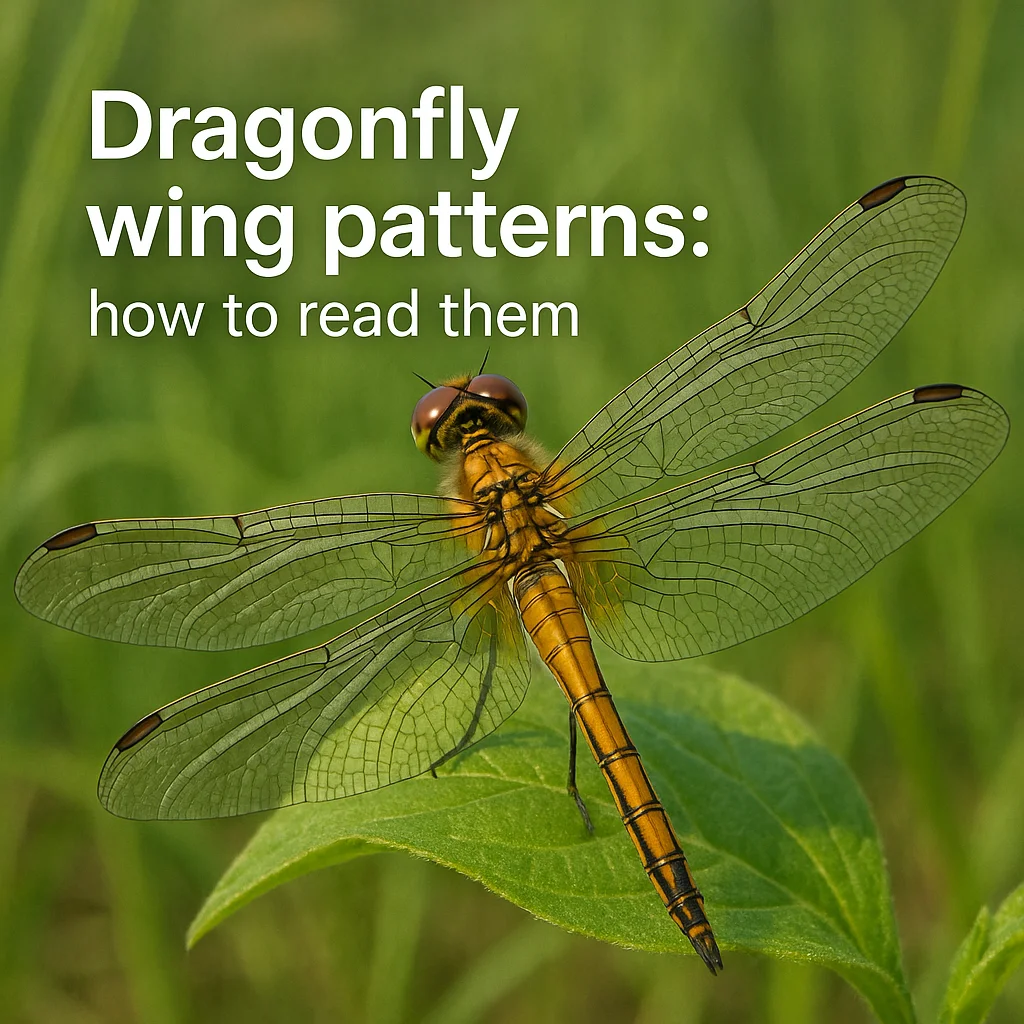
Dragonflies can be recognized by their elongated body, shimmering wings, and unique flight abilities. They have relatively short antennae and their wings are large in proportion to their body, aiding in their agility. Dragonflies often perch with their wings open and have large, multifaceted eyes that cover most of their head.
- Body shape and silhouette: Slim, elongated abdomen with a robust thorax
- Antennae type: Short and bristled, not prominent
- Wing features: Two pairs of wings; strong, transparent with subtle vein patterns
- Leg traits and movement style: Legs positioned forward, used mainly for catching prey, not walking
- Distinguishing look-alikes: Often confused with damselflies, which are more slender and hold wings over the body
- Top ID Tips:
- Look for the vivid colors and reflective wings
- Check for eyes that cover nearly the entire head
- Observe flight patterns – dragonflies are strong, fast flyers
- Wings held open when perched, unlike damselflies
- Note the short, inconspicuous antennae
- Consider habitat – often near water bodies
🧠 Basic Body Structure
As insects, dragonflies have a segmented body divided into three main parts: the head, thorax, and abdomen. Their six legs originate from the thorax, which also supports their two pairs of wings. As invertebrates, they lack a vertebral column and rely on an exoskeleton for structural support and protection.
🌍 Habitat & Distribution
Dragonflies thrive in a variety of aquatic environments, including ponds, lakes, rivers, streams, and marshy lands. They are especially common in regions where water is plentiful, as this provides both habitat and breeding grounds. Geographically, dragonflies are distributed globally except in Antarctica. They adapt to temperate and tropical climates, and their presence often indicates a healthy aquatic ecosystem.
📅 Seasonal Appearance & Activity
Dragonflies are most active during the warmer months. In temperate regions, they emerge in spring and are commonly seen throughout summer. Their activity is primarily diurnal, as they rely on sunlight for vision and warmth to fuel their flight. Weather conditions such as temperature and humidity can significantly influence their activity levels.
- Best Time to Spot It:
- During warm, sunny days of late spring
- Peak activity observed in summer
- Most visible at water bodies on calm, sunny afternoons
- Less active in cooler temperatures or cloudy weather
🥚 Reproduction & Egg-Laying
Dragonflies exhibit intricate courtship behaviors, often involving aerial displays and territorial defense by males. Females lay their eggs in or near water, with some species inserting eggs into plant material while others release them directly into the water. Egg counts can vary widely among species, influenced by environmental factors and resource availability.
🌀 Metamorphosis & Life Cycle
Dragonflies undergo incomplete metamorphosis, consisting of the stages: egg, nymph, and adult. The nymph stage is aquatic and involves multiple molts, during which the nymph hunts small aquatic organisms and gradually develops wings. This stage can last from months to several years, depending on the species. Upon reaching maturity, dragonflies emerge for their final molt into adults, transitioning to a primarily terrestrial life focused on reproduction.
🍽️ Diet & Feeding Behavior
Throughout their life stages, dragonflies are voracious predators. Nymphs feed on aquatic invertebrates and even small fish, using extendable jaws. Adults trap and consume other insects, such as mosquitoes, flies, and even other dragonflies, using their legs to form a basket to catch prey during flight. Their diet makes them crucial for controlling pest insect populations.
🦉 Predators & Defense
Dragonflies face predation from birds, fish, amphibians, reptiles, and larger insects. To survive, they utilize several defense mechanisms, including flight agility, camouflage, and startle displays using their reflective wings. While generally not harmful to humans, their robust exoskeleton provides armor against smaller threats.
- Defense Highlights:
- Agile flying skill evades aerial predators
- Reflective and camouflaging colors deter detection
- Sturdy exoskeleton provides protection
- Startle displays using wing movements
👥 Social Behavior & Swarms
Dragonflies are predominantly solitary but interact during mating. They do not form colonies or exhibit complex social behaviors. However, under certain environmental conditions, such as abundant food supply, swarming can occur, often leading to mass migrations. This swarming is primarily driven by instincts for breeding and feeding.
🧭 Senses & Communication
Dragonflies rely heavily on their acute vision facilitated by compound eyes, which afford them nearly 360-degree vision. While they lack strong chemical sensors, their tactile senses and ability to detect vibrations aid in locating prey and avoiding predators. Communication is largely visual, with males using their agile flight to signal territory and courtship intentions.
🌱 Role in the Ecosystem
Dragonflies play a vital ecological role as predators, helping control populations of insects like mosquitoes. By regulating these populations, they maintain ecosystem balance and reduce disease transmission risks to humans. They also serve as food sources for higher trophic levels, linking aquatic and terrestrial food webs, and aid in biodiversity conservation when present in healthy wetland ecosystems.
📉 Population & Conservation Notes
While dragonflies are often abundant in suitable habitats, their populations can be vulnerable to urbanization, pollution, and climate change, leading to habitat loss. Conservation efforts focus on preserving wetland habitats and encouraging biodiversity-friendly practices. Monitoring by local enthusiasts and researchers also aides in conservation awareness.
- How to Help (Low-Impact):
- Create or maintain garden ponds and wetlands
- Plant native vegetation to support ecosystems
- Avoid pesticide use
- Participate in local wildlife monitoring initiatives
⚠️ Human Interaction & Safety
Dragonflies are generally harmless to humans and do not sting or bite people. They can be observed closely and safely in natural settings, providing valuable opportunities for education and nature appreciation. Observers are encouraged to respect their habitats and avoid capturing or handling these delicate creatures.
📌 Summary
- Recognizable by their vivid colors and distinctive wing patterns
- Habitats include aquatic environments globally, except Antarctica
- Most active during warm seasons in daylight
- Life cycle includes incomplete metamorphosis
- Predators include birds, fish, and amphibians
- Important biological control for insect populations
- Populations affected by habitat loss and climate change
- Safe for human interaction; best left in natural habitats