🕷️ Dragonfly Wing Wear How To Estimate Age In The Field
🧾 Quick Facts
The aging of dragonflies in the field can often be estimated by examining the wear and tear on their wings. This natural phenomenon can provide insights into the life stage and overall vigor of these fascinating insects. Below are some quick facts regarding dragonflies:
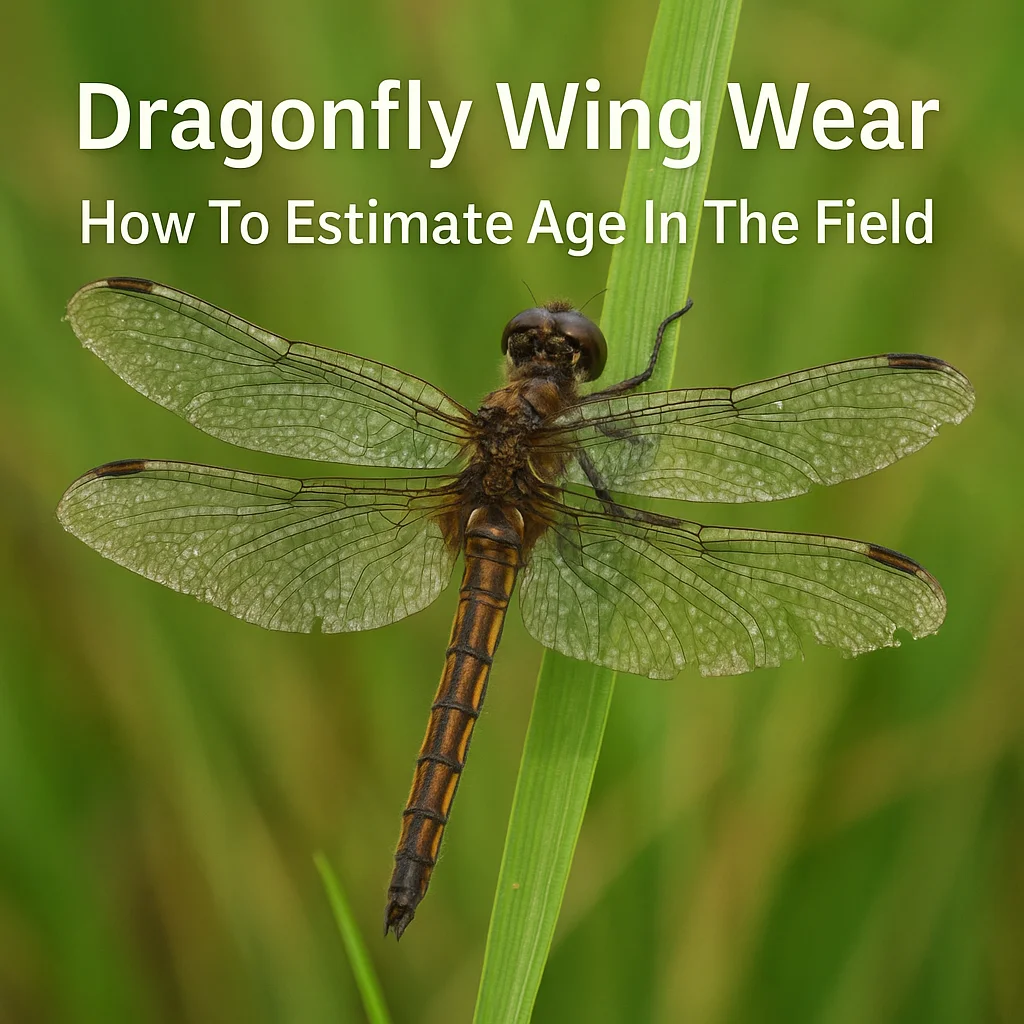
- Common Names: Dragonfly
- Scientific Name: Varies depending on species
- Invertebrate Status: Dragonflies are invertebrates, specifically insects
- Order/Family: Odonata/varies per species
- Typical Size Range: 2-5 inches wingspan
- Key Colors/Patterns: Brightly colored wings with intricate patterns
- Activity: Primarily diurnal
- Typical Habitats: Wetlands, ponds, rivers, lakesides
- Global Occurrence: Found globally, particularly in temperate and tropical regions
- Seasonality: Most active during warm months
🔍 Identification
Dragonflies are easily recognizable in the field by their distinct body shape and flying patterns. Generally, dragonflies have a long, slender abdomen, paired with two sets of transparent wings that extend horizontally when at rest. Below are some noticeable features:
- Their body shape is elongated with a distinct head, thorax, and abdomen.
- Dragonfly antennae are short and bristle-like.
- Their wings are transparent, often with visible veins and sometimes with colorful patches.
- Legs are adapted for catching prey in flight and are positioned strategically for aerodynamic efficiency.
- Dragonflies may be confused with damselflies; however, damselflies typically rest with wings closed and have a thinner body.
- Top ID Tips:
- Look for long, slender bodies and two sets of transparent wings.
- Notice how they hold wings spread at rest.
- Observe short, bristle-like antennae.
- Identify by the distinctly colored patterns on wings and body.
- Spot them near water bodies.
- Compare with damselflies by observing wing position at rest.
🧠 Basic Body Structure
Dragonflies are classic examples of insects, characterized by their segmented bodies, which include a head, thorax, and abdomen. They possess six legs, two pairs of wings, and an exoskeleton that provides protection and support. Dragonflies, like all insects, are invertebrates, meaning they do not have a backbone.
🌍 Habitat & Distribution
Dragonflies favor aquatic habitats such as marshes, ponds, lakes, and rivers. They are often found in areas with abundant water plants, which provide shelter and a breeding ground. Their geographic range extends worldwide, from tropical to temperate regions, depending on the species. As habitats change due to climate and human impact, sightings may fluctuate accordingly.
📅 Seasonal Appearance & Activity
The presence of dragonflies is most notable during warmer months when adults emerge to hunt and breed. They are primarily diurnal, maximizing daylight for hunting. Weather greatly influences their activity, with sunny and warm conditions being ideal for flight.
- Best Time to Spot It:
- During late spring to early autumn.
- On sunny, warm days.
- Around midday.
- Near bodies of fresh water with ample vegetation.
🥚 Reproduction & Egg-Laying
Dragonflies exhibit fascinating mating behaviors, often involving aerial acrobatics. Males may guard territories and engage in courtship flights to attract females. Egg-laying occurs in aquatic environments where females deposit eggs on plants or in water. The number of eggs laid varies widely among species.
🌀 Metamorphosis & Life Cycle
Dragonflies undergo incomplete metamorphosis, progressing through the stages of egg, nymph, and adult. Nymphs, or naiads, live in water, feeding on small aquatic organisms. They undergo a series of molts as they grow, finally emerging as adults in a process called ecdysis. The time spent in each stage varies among species and environmental conditions.
🍽️ Diet & Feeding Behavior
Dragonflies are predatory at all life stages. Nymphs hunt underwater, capturing prey with extendable mouthparts. Adults primarily feed on other insects, such as mosquitoes and flies, using their keen eyesight and agile flight to catch prey mid-air. They play a valuable role in controlling insect populations.
🦉 Predators & Defense
Despite their prowess, dragonflies have numerous predators, including birds, frogs, spiders, and larger insects. Defense strategies involve swift flight, erratic movements, and camouflage. Their vibrant coloration can also deter predators by indicating unpalatability or toxicity.
- Defense Highlights:
- Agile flight to escape predators.
- Erratic flying patterns for confusion.
- Camouflage within natural habitats.
- Bright coloration signaling potential danger.
👥 Social Behavior & Swarms
Dragonflies are typically solitary creatures, each establishing and defending territories along water bodies. Occasionally, environmental conditions, such as food abundance or breeding calls, can lead to temporary swarming. These congregations are not social like bees but are rather opportunistic gatherings.
🧭 Senses & Communication
Dragonflies possess highly developed vision, with compound eyes that allow a nearly 360-degree view. Visual communication is crucial during courtship and territorial displays. While chemical communication like pheromones is less significant, vibrations and physical displays play roles in mate attraction and competition.
🌱 Role in the Ecosystem
As predators, dragonflies regulate populations of smaller insects, contributing to pest control. They are also vital food sources for numerous animals, forming significant links in aquatic and terrestrial food webs. Indirectly, they support plant health by controlling herbivorous insects.
📉 Population & Conservation Notes
While many dragonfly species are commonly seen in suitable habitats, some face threats from habitat loss, water pollution, and climate change. Conservation efforts focusing on preserving aquatic ecosystems and minimizing pesticide use are vital to maintaining dragonfly populations.
- How to Help (Low-Impact):
- Plant native vegetation around water bodies.
- Limit pesticide use near aquatic environments.
- Preserve natural water bodies and wetland areas.
- Create water features in gardens to attract dragonflies.
⚠️ Human Interaction & Safety
Dragonflies do not bite or sting humans and are harmless, posing no threat. They can be observed respectfully in their natural habitats without interference. Encouraging natural observations over collecting helps to preserve these beneficial insects.
📌 Summary
- Dragonflies are easily identifiable by their elongated bodies and transparent wings.
- They thrive in aquatic habitats like ponds, lakes, and rivers.
- Adults are most active during warm and sunny months.
- Their life cycle includes egg, nymph, and adult stages.
- Dragonflies are predatory and help control insect populations.
- Natural predators include birds and amphibians.
- They are crucial players in aquatic and terrestrial ecosystems.
- Conservation efforts focus on habitat preservation.
- They are safe to observe, posing no threat to humans.