🕷️ How to ID dragonflies by posture
🧾 Quick Facts
Dragonflies are captivating insects known for their vibrant colors and agile flight. Understanding dragonflies by their posture can aid in identifying different species within this diverse group.
- Common names: Dragonfly
- Scientific name: Varies by species
- Insect: Yes, an invertebrate
- Order / family: Odonata / varies
- Typical size range: 2.5 cm to 10 cm in length
- Key colors/patterns: Metallic blues, greens, red, yellow
- Activity: Diurnal (active during the day)
- Typical habitats: Wetlands, ponds, lakes, rivers, gardens
- Where in the world it occurs: Globally, except Antarctica
- Seasonality: Late spring to early autumn
🔍 Identification
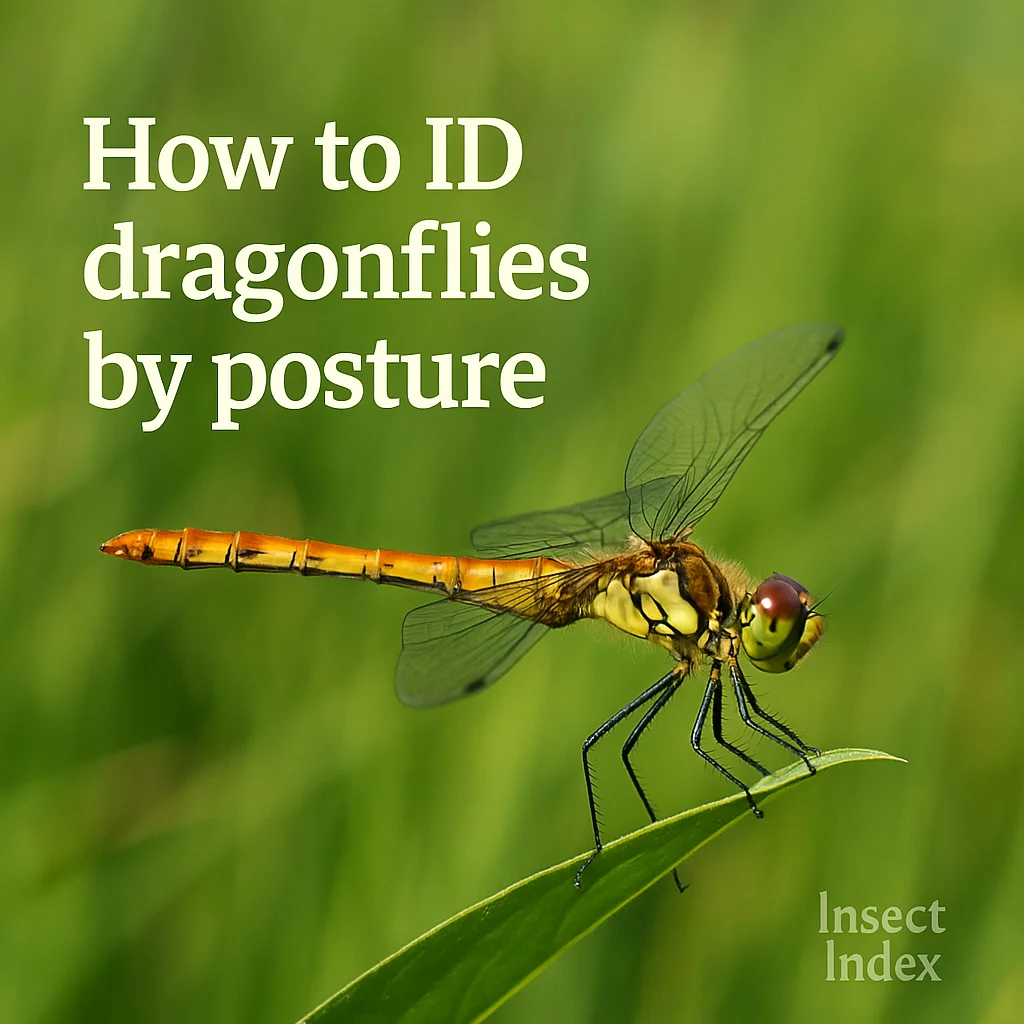
Recognizing dragonflies involves observing their unique body postures and flight behaviors. Unlike other insects, their distinctive way of perching with wings open is a key characteristic.
- Body shape and silhouette: Long, slender bodies with elongated abdomens
- Antennae type: Short and bristle-like, not usually prominent
- Wing features: Two pairs of wings, usually transparent with bright iridescence
- Leg traits and movement style: Legs grouped near the head; not used for walking
- Distinguishing look-alikes and common confusion: Often confused with damselflies; dragonflies hold wings open at rest, while damselflies close theirs
- Observe the resting posture: dragonflies rest with wings open
- Look for rapid, agile flight patterns
- Note the bright, metallic colors on the body and wings
- Pay attention to large multifaceted eyes taking up most of the head
- Check for transparency and veins in the wings
- Spot the short antennae common to dragonflies
🧠 Basic Body Structure
Dragonflies, like all insects, comprise a segmented body structure divided into three parts: the head, thorax, and abdomen. They possess six legs, and as invertebrates, they do not have a backbone. The exoskeleton provides structural support and protection. Their wings, essential for their strong flight capabilities, are a distinguishing feature, matched with their ability to molt several times before reaching maturity.
🌍 Habitat & Distribution
Dragonflies thrive in habitats near water bodies such as ponds, wetlands, streams, and rivers. Their preference for aquatic environments is due to their larval stage, which occurs underwater. These versatile insects can also be found in gardens and meadows. While they are globally widespread, climate and regional environmental factors influence their abundance. Habitat change can impact sightings, with pollution and urbanization leading to habitat loss.
📅 Seasonal Appearance & Activity
Dragonflies are most visible during warm months, typically from late spring through early autumn. They are diurnal creatures, active during the day when temperatures are warmer. Inclement weather such as rain can reduce activity, while sunlight and warm temperatures enhance sightings.
- Late spring and summer for most sightings
- Early morning and late afternoon when warmth peaks
- Clear, sunny days facilitate greater flight activity
- Avoid extremely windy or rainy days for sightings
🥚 Reproduction & Egg-Laying
Mating behavior in dragonflies involves aerial displays and territorial battles. Males are often seen protecting territories to attract females. After mating, females lay eggs in or near water. Egg-laying can occur in aquatic plants or directly in water. Depending on the species, egg counts can vary widely, from a few dozen to several hundred. Environmental conditions generally dictate the successful hatching and development of eggs.
🌀 Metamorphosis & Life Cycle
Dragonflies undergo incomplete metamorphosis with three primary life stages: egg, nymph, and adult. They do not have a pupal stage like butterflies. The nymphs are aquatic predators, feeding on small aquatic organisms and remaining in the nymph stage for several months to years, depending on the species. Once mature, they emerge as adults, climbing out of the water to molt for the last time. Adults feed on small insects, and their lifespan ranges from a few weeks to several months.
🍽️ Diet & Feeding Behavior
Dragonflies are predatory at both nymph and adult life stages. Nymphs eat aquatic insects and other small water-dwelling creatures using their extendable jaws. Adults catch flying insects such as mosquitoes and flies mid-air, using their impressive aerial skills and strong mandibles for consumption. They play a crucial role in pest control, regulating insect populations in their ecosystems.
🦉 Predators & Defense
Natural predators of dragonflies include birds, frogs, spiders, and fish. To defend themselves, dragonflies rely on their speed and agility, often flying erratically to escape threats. They can also use their coloration as camouflage among plants.
- High-speed escape flight
- Camouflage with environmental surroundings
- Erratic flight patterns
- Sharp eyesight to detect threats
👥 Social Behavior & Swarms
Dragonflies are generally solitary insects with occasional gatherings when conditions favor mating or feeding. Migrations do occur in some species, triggered by climatic changes that affect food availability or suitable habitats.
🧭 Senses & Communication
Dragonflies have exceptional vision, with large compound eyes that provide almost 360-degree views and detect movement quickly. This vision assists in hunting and evading predators. Communication during mating involves visual signals and aerial displays rather than vocal or chemical communication.
🌱 Role in the Ecosystem
Dragonflies are vital to the ecosystems as both predators and prey. They control populations of mosquitoes and other insects and provide a food source for birds, amphibians, and other predators. Their presence indicates a healthy, balanced ecosystem, as they are sensitive to pollution and habitat destruction.
📉 Population & Conservation Notes
Dragonflies are often reported as common in suitable habitats, yet some species face threats due to habitat loss, pesticides, and climate change. Conservation efforts focus on maintaining clean water bodies and minimizing pesticide use.
- Plant native vegetation near water bodies
- Reduce pesticide use in gardens and fields
- Support wetland conservation initiatives
- Promote education on dragonfly ecological importance
⚠️ Human Interaction & Safety
Dragonflies do not bite or sting humans. They are harmless and safe to observe up close, making them an attractive subject for nature photography and study. Always practice respectful observation, and avoid capturing or harming these beneficial insects.
📌 Summary
- Dragonflies are identified by their unique postures and vibrant colors
- Found globally near water bodies and gardens
- Most active during warm months and in daylight
- Undergo incomplete metamorphosis: egg, nymph, adult
- Predatory at all life stages, controlling pest populations
- Predators include birds, fish, and amphibians
- Impressive aerial abilities and excellent vision
- Indicators of ecological health and sensitive to pollution
- Conservation requires clean habitats and reduced pesticides
- Non-threatening to humans; enjoy from a safe distance