🕷️ Drain Flies Fuzzy Bathroom Flies And Where They Come From
🧾 Quick Facts
Drain flies, often known for their fuzzy appearance, are common dwellers in many households. They are particularly noted for their presence in moist environments like bathrooms. Here are some key facts about these flies:
- Common Names: Drain flies, sewer flies, filter flies, moth flies
- Scientific Name: Varies (commonly belong to the family Psychodidae)
- Insect or Not: Yes, they are insects
- Order / Family: Diptera / Psychodidae
- Typical Size Range: 1.5 to 5 mm in length
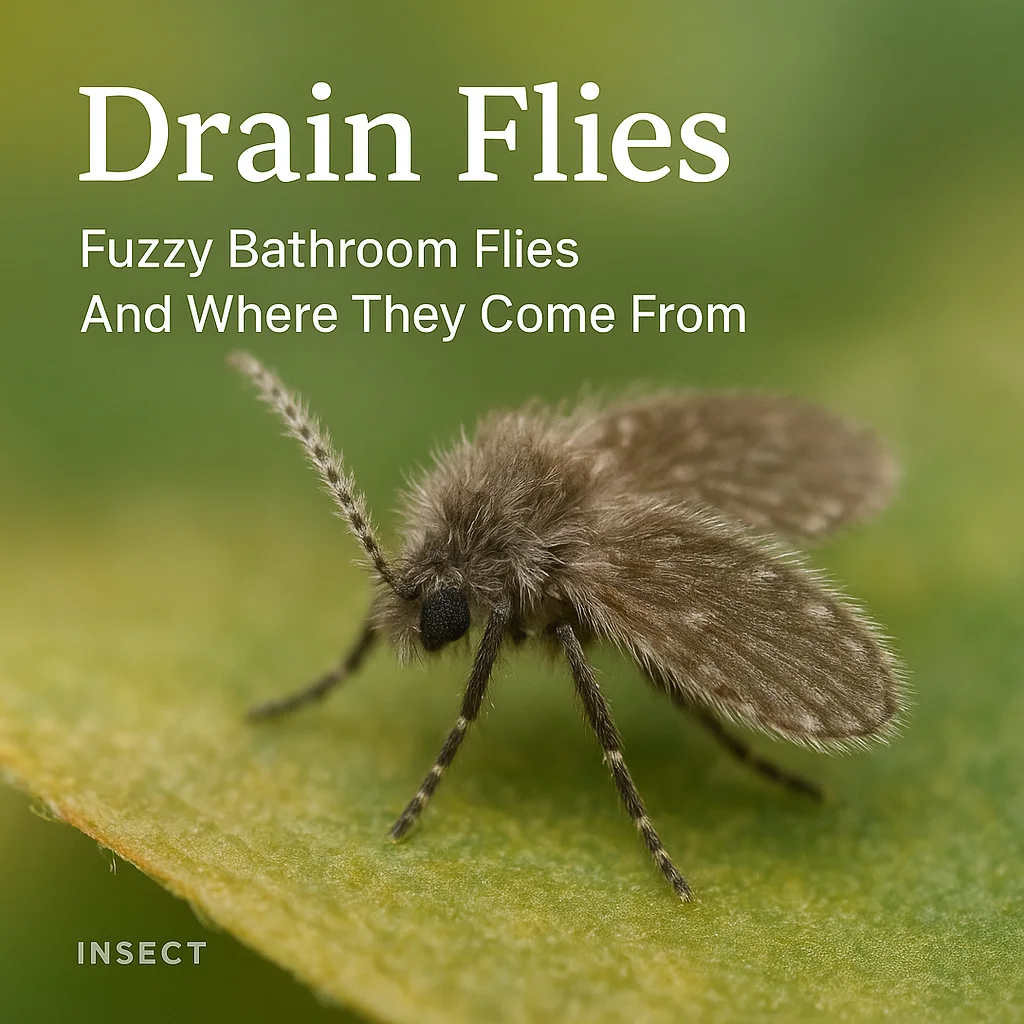
- Key Colors/Patterns: Grey or tan fuzzy appearance with moth-like wings
- Activity: Primarily nocturnal
- Typical Habitats: Moist areas, especially around drains, sewage systems, or damp locations
- Where in the World It Occurs: Worldwide, commonly in urban and suburban environments
- Seasonality: Can be found throughout the year in indoor environments
🔍 Identification
Recognizing drain flies involves noting their unique body characteristics. These tiny flies have a distinct moth-like appearance due to their fuzzy body and wings.
- Body Shape and Silhouette: Small and stout body with broad wings
- Antennae Type: Short and hairy antennae
- Wing Features: Wings covered with fine hairs, giving a furry look; wings are held roof-like over the body when at rest
- Leg Traits and Movement Style: Legs are short and fly movements are limited, often found resting on surfaces
- Distinguishing Look-alikes: Can be confused with small moths due to their wing shape
- Top ID Tips:
- Look for the fuzzy appearance
- Most active at night
- Usually found near drains
- Size between 1.5 to 5 mm
- Check for broad, hairy wings
- Distinct moth-like body shape
🧠 Basic Body Structure
Drain flies exhibit the fundamental body structures typical of insects.
Their body structure consists of three main parts:
- Head: Contains complex eyes and mouthparts adapted for liquid intake
- Thorax: Houses the muscles for movement and supports two pairs of wings
- Abdomen: Extends from the thorax and encompasses major digestive and reproductive organs
Being insects, they have six legs and an exoskeleton, which rigidly protects their body. It's important to note that they also undergo molting, although the finest exoskeleton features make movement possible. Drain flies are invertebrates, meaning they do not have a spine.
🌍 Habitat & Distribution
Drain flies thrive in moist environments where organic matter is abundant. Such environments provide the necessary conditions for breeding and feeding.
Common habitats include:
- Bathrooms and kitchens
- Indoor drain pipes
- Sewer systems
- Damp basements
They can be found across continents, prevalent in both temperate and tropical climates. The availability of suitable breeding grounds strongly influences their presence; thus, they are often prevalent in urban settings where such conditions are easily met.
📅 Seasonal Appearance & Activity
Drain flies can be observed year-round, especially in homes where indoor climate conditions remain stable and suitable for their activity.
They tend to be mostly active during:
- Evening and night hours
- Periods of high humidity
They thrive irrespective of seasonal changes by utilizing the constants of indoor environments, making them commonly spotted in households no matter the time of year.
- Best Time to Spot It:
- Evening times
- After rain when humidity is high
- Near drain openings
- Inside bathrooms or kitchens where warmth prevails
🥚 Reproduction & Egg-Laying
Drain flies follow a relatively common reproductive strategy among small flies, where they rely on available moisture and organic material for successful reproduction.
Their eggs are usually laid in clusters in moist environments, such as inside drains or on surfaces with accumulated organic debris. The number of eggs produced can vary greatly, depending on specific environmental conditions, often in the range of several dozen per cluster.
🌀 Metamorphosis & Life Cycle
Drain flies undergo complete metamorphosis, encompassing four stages: egg, larva, pupa, and adult.
Egg Stage: Eggs are typically laid in moist areas, such as grime inside pipes.
Larva Stage: Upon hatching, larvae are elongated and thrive on organic matter, aiding in decomposition. This stage lasts a few weeks.
Pupa Stage: Larvae transform into pupae, a non-feeding stage, which occurs within days.
Adult Stage: Adults emerge from pupae ready to reproduce; adults live for about two weeks depending on environmental conditions.
🍽️ Diet & Feeding Behavior
At each life stage, drain flies have different feeding behaviors suitable for their needs:
- Larvae: Responsible for decomposition, larvae feed on organic sludge found in drains
- Adults: Possess sponging mouthparts, allowing them to feed on liquid or semi-liquid materials
Drain flies primarily act as decomposers, contributing to the breakdown of organic matter.
🦉 Predators & Defense
Drain flies face various natural predators that help control their populations:
- Birds and bats
- Small amphibians and reptiles
- Spiders and various insects
In terms of defense, drain flies rely on:
- Quick take-off and erratic flight patterns to evade predators
- Camouflage due to their small size and coloration
- Hiding in unreachable spots like deep inside drains
- Blending in with their surroundings due to their fuzzy appearance
- Defense Highlights:
- Small size makes them harder to spot
- Seek safety in dark, hidden environments
- Erratic flight can confuse predators
- Mottled color provides good camouflage
👥 Social Behavior & Swarms
Drain flies are generally solitary insects, focusing their activity around reproduction and feeding rather than elaborate social structures or swarming behaviors. They are mostly encountered alone or in small groups due to shared favorable environmental conditions rather than social communication or intentional grouping.
🧭 Senses & Communication
Drain flies primarily utilize smell and touch to navigate and interact with their environments.
Smell: They have highly sensitive antennae for detecting pheromones and identifying moist breeding sites.
Communication: While not known for elaborate signaling, they employ basic pheromone cues for mating and locating suitable habitats. Visual communication is less significant, given their nocturnal nature.
🌱 Role in the Ecosystem
Drain flies play a beneficial role in the ecosystem as decomposers. By feeding on microbial films and organic debris, they help recycle nutrients and contribute to the decay processes in moist environments.
The larvae are instrumental in breaking down organic matter that accumulates in drains and other damp areas, making them essential for preventing the buildup of waste. While this is beneficial ecologically, their presence near human dwellings can pose minor nuisances, especially when found in large numbers.
📉 Population & Conservation Notes
While not a species of conservation concern, the presence of drain flies can indicate underlying issues in a household's drain system. Proper maintenance of plumbing and the elimination of excess moisture are crucial for managing populations.
Their global abundance and resistance to urban changes deem them a ubiquitous presence in cities worldwide. Nevertheless, limiting pesticide use and promoting natural drainage can assist in maintaining their role within their ecosystems without overpopulation risks.
- How to Help (Low-Impact):
- Ensure regular cleaning of drains and pipes
- Avoid excessive pesticide use, favoring natural obstacles
- Promote proper drainage and reduce standing water
- Encourage biodiversity with a variety of plant life
⚠️ Human Interaction & Safety
Drain flies do not bite or sting humans. They are considered harmless in terms of direct physical interaction. If found annoying due to their presence, the best practice includes cleaning and maintenance of affected areas. Regularly removing organic buildup in drains and maintaining a dry environment can significantly reduce their numbers.
When observing these flies, respect their place within the ecosystem by avoiding harm and practicing non-intrusive observation methods.
📌 Summary
- Drain flies are small, fuzzy flies often found in bathrooms and kitchens.
- Common family: Psychodidae, with a moth-like appearance.
- While nocturnal, they can be spotted around drains all year.
- They lay eggs in moist environments, with a four-stage lifecycle.
- Feed on microbial and decaying organic material.
- Natural predators include birds, spiders, and amphibians.
- Function as decomposers in ecosystems, aiding organic matter breakdown.
- Practice respectful observation and proper household hygiene to manage their presence.