🕷️ No-see-ums Biting Midges Tiny Bites Big Itch
🧾 Quick Facts
No-see-ums, often known for their tiny size and infamous bites, are actually a group of insects belonging to the biting midges. These minute creatures are part of a larger insect order and exhibit diverse characteristics depending on their particular species and regional occurrence.
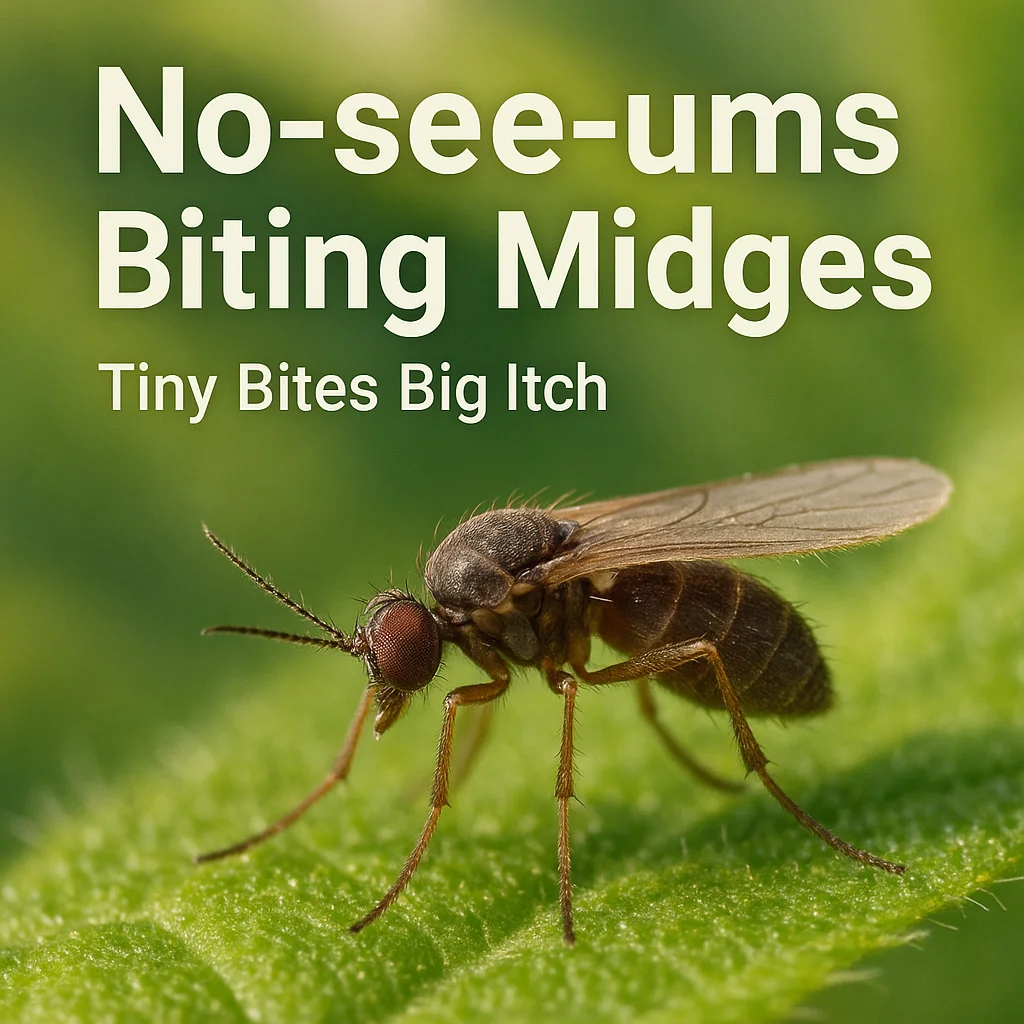
- Common names: No-see-ums, Sandflies, Punkies, Biting Midges
- Scientific name: Varies by species; commonly from the Culicoides genus
- Insect or not: Yes, they are insects, members of the invertebrate class
- Order / family: Diptera / Ceratopogonidae
- Typical size range (adult): 1–3 mm
- Key colors/patterns: Varies, often gray or brown, sometimes with spotted wings
- Activity: Mostly crepuscular and nocturnal
- Typical habitats: Wetlands, marshes, forest edges, urban areas near water
- Where in the world it occurs: Found globally in tropical, subtropical, and temperate regions
- Seasonality: Spring to fall, depending on regional climates
🔍 Identification
Recognizing no-see-ums in the field can be challenging due to their exceedingly small size. They possess a characteristic body shape typical of midges: small, slender, and often arch-backed. Their delicate wings, which are sometimes spotted, fold flat over the abdomen. The antennae of these insects are filiform but not particularly prominent due to the tiny scale.
These insects are often confused with mosquitoes and blackflies but are distinguishable by their smaller size and different wing pattern. Observing their feeding behavior and habitat can aid in identification.
- Small and barely noticeable to the naked eye
- Spotted wings, when visible, differentiate them
- Delicate, slender body with drooping posture
- Short, compact antennae for sensing surroundings
- Movements can appear erratic but are often buoyant
- Typically found in swarms, especially near water sources
🧠 Basic Body Structure
No-see-ums, like all insects, have a segmented body divided into the head, thorax, and abdomen. They possess six legs, a typical feature of insects, and an external skeleton known as an exoskeleton, which requires periodic molting for growth. Wings are present, albeit small and often patterned. As invertebrates, they lack a backbone, instead relying on their tough exoskeleton for support and protection.
🌍 Habitat & Distribution
No-see-ums thrive in environments with ample moisture, such as marshes, wetlands, and along the edges of bodies of water. They can also be found in urban areas, especially in gardens close to water sources. Their distribution is widespread, encompassing tropical, subtropical, and temperate regions across all continents except Antarctica.
Changing habitats, such as urban development and climate shifts, can influence where no-see-ums are found, often pushing them closer to human dwellings where suitable breeding sites occur.
📅 Seasonal Appearance & Activity
These tiny biting insects are most prevalent during the warmer months, often appearing from spring through fall. They are primarily crepuscular, active during dawn and dusk, but may also be active during warm, humid nights when conditions are conducive to their activity.
- Most visible during warm weather (spring to fall)
- Active during early morning and late afternoon
- Prefer humid conditions with minimal wind
- Peak activity often after rainfall
🥚 Reproduction & Egg-Laying
No-see-ums engage in mating rituals that involve swarming behavior often initiated by males, who form loosely organized, aerial congregations to attract females. Females lay eggs in moist environments, preferring substrates such as damp soil, rotten wood, or decaying plant matter, which provide the larvae with necessary moisture.
The number of eggs laid varies significantly by species and environmental conditions, leading to variability in population densities across regions.
🌀 Metamorphosis & Life Cycle
No-see-ums undergo complete metamorphosis, transitioning through four distinct life stages: egg, larva, pupa, and adult. This developmental process typically proceeds as follows:
Eggs: Laid in clusters in moist substrates. They hatch into larvae after a few days, though timing can vary with temperature and moisture.
Larvae: Aquatically inclined or moisture-dependent, feeding on organic matter and detritus. Their development ranges from weeks to months based on environmental factors.
Pupa: In this non-feeding stage, they prepare for a final transformation, usually lasting several days.
Adult: Emerge, mate, and seek blood meals for reproduction. The adult stage can last from several days to weeks.
🍽️ Diet & Feeding Behavior
No-see-um larvae primarily feed on micro-organic matter found within their wet habitats. As adults, these biting midges of the Culicoides genus are known for their female members' bloodsucking habits, necessary for egg production. They have piercing-sucking mouthparts designed to penetrate the skin of vertebrate hosts, including humans and other animals.
Besides their notorious blood meals, adult no-see-ums may also consume nectar, demonstrating roles as opportunistic feeders and occasional pollinators.
🦉 Predators & Defense
No-see-ums fall prey to a variety of predators, including birds, frogs, toads, and insectivorous mammals. Spiders and predatory insects also constitute significant threats. While these insects do not possess potent defensive capabilities, their small size and ability to form large swarms provide them with some protection against predators.
- Blends with environment when not flying
- Quick, erratic flight patterns
- Small size makes them difficult targets
- Swarming behavior can overwhelm lone predators
👥 Social Behavior & Swarms
No-see-ums are not particularly social insects but exhibit group behavior primarily when mating or during feeding swarms. Swarming is a prominent feature, often triggered by environmental cues like warmth and humidity which increase feeding opportunities and reproductive success. Their large numbers can sometimes form formidable clouds.
🧭 Senses & Communication
These tiny midges rely heavily on their heightened senses to navigate their environments. Their vision is less acute than that of other insects, relying instead on their developed sense of smell to detect carbon dioxide and other chemicals emitted by potential hosts. Vibration and changes in temperature further guide feeding and mating behaviors.
Communication is mostly chemical, with pheromones playing a crucial role in both mating and aggregating behaviors.
🌱 Role in the Ecosystem
No-see-ums make significant contributions to their ecosystems. They act as pollinators for numerous plants, particularly those that bloom during dawn or dusk when these insects are most active. Their larvae contribute to the decomposition process by breaking down organic materials, thus enriching the soil.
They are an integral part of the food web, forming a crucial food source for many predators, thereby supporting biodiversity and contributing to ecosystem balance.
📉 Population & Conservation Notes
Generally, no-see-ums are considered common and not currently at risk. Their populations remain resilient despite habitat changes, though certain species may face declines due to their reliance on specific environmental conditions that can be disrupted by urbanization, pollution, and climate change. Conservation efforts focus on maintaining wetlands and other natural habitats.
- Preserving wetland areas
- Minimizing pesticide use that impacts larvae
- Promoting native plant growth to support ecosystems
- Maintaining natural buffers along waterways
⚠️ Human Interaction & Safety
No-see-ums are notorious for their painful bites, which can cause irritation and allergic reactions in sensitive individuals. Bites may result in itchy welts; however, they do not typically transmit diseases as mosquitoes do. Basic first aid includes washing the affected area and avoiding scratching. Medical advice should be sought if severe allergic reactions occur.
Observing no-see-ums should be done respectfully, avoiding the capture or harm to individual specimens to preserve their populations.
📌 Summary
- No-see-ums are tiny, globally distributed biting midges with a significant presence in diverse ecosystems.
- They thrive in wetland environments and are active mostly in the early morning and late afternoon.
- Their life cycle includes complete metamorphosis, with females requiring blood meals for reproduction.
- Key predators include birds and other insectivores, with defense primarily through small size and swarm numbers.
- These insects contribute to pollination and decomposition, playing a vital role in the ecosystem.
- Conservation focuses on protecting natural habitats that support their life stages.
- Preventing annoyance and irritation related to human interaction is essential in promoting coexistence.