🕷️ Mosquito myths and facts
🧾 Quick Facts
Mosquitoes are well-known insects observed around the globe, notorious for their itchy bites and their ability to transmit diseases. Here are some quick facts to help you understand this prevalent invertebrate.
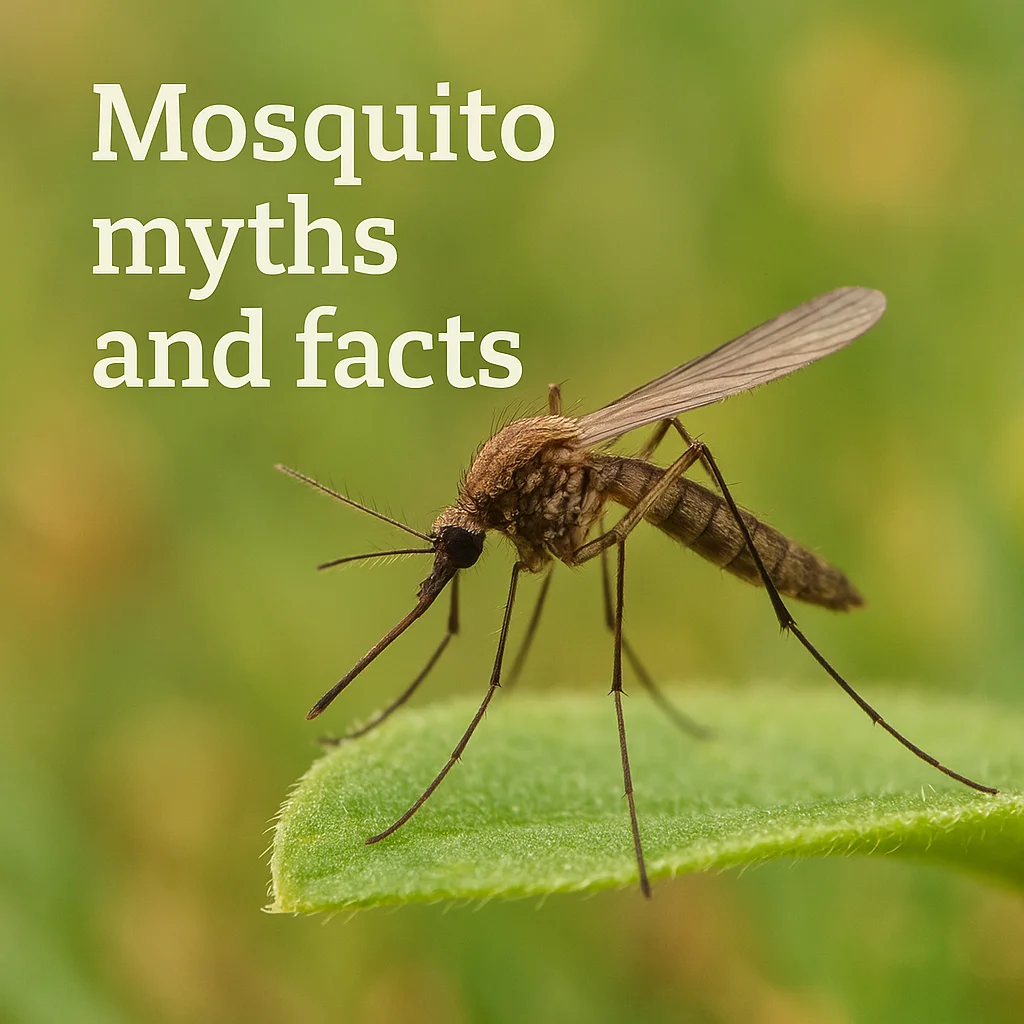
- Common names: Mosquito
- Scientific name: Varies (e.g., Aedes aegypti, Culex pipiens)
- Insect or not: Insect (invertebrate, member of the Diptera order)
- Order / family: Diptera / Culicidae
- Typical size range: 3 to 6 mm (adult)
- Key colors/patterns: Gray, brown, black, some with distinct white markings
- Activity: Mostly nocturnal, but some species are active during the day
- Typical habitats: Near stagnant water bodies, wetlands, urban areas
- Where in the world it occurs: Worldwide, except for Antarctica
- Seasonality: Warmer months; varies by region
🔍 Identification
Recognizing mosquitoes in the field involves noting their specific body characteristics that distinguish them from other insects.
- Body shape and silhouette: Slender bodies with long, thin legs and a distinctive proboscis
- Antennae type: Long, feathery in males and shorter in females
- Wing features: Narrow wings covered in tiny scales that can reflect light
- Leg traits and movement style: Long legs that dangle during flight; agile fliers
- Distinguishing look-alikes: Midges (similar but lack proboscis)
- Slender, elongated body
- Prominent proboscis
- Long, thin legs
- Scaled wings
- Feathery antennae in males
- Buzzing flight sound
🧠 Basic Body Structure
Mosquitoes have the typical three-part structure of insects: head, thorax, and abdomen. They possess six legs and a pair of wings. The exoskeleton, composed of chitin, provides support and protection. Mosquitoes, like other insects, are invertebrates, meaning they lack a backbone.
🌍 Habitat & Distribution
Mosquitoes inhabit areas close to water, as larvae are aquatic. They are commonly found in forests, grasslands, wetlands, and urban gardens across all continents except Antarctica. Habitat disruption, like draining wetlands or climate changes, can affect sightings and abundance.
📅 Seasonal Appearance & Activity
Mosquitoes are typically more prevalent during warmer months. Their visibility and activity are influenced by temperature and humidity levels, with increased activity after rain.
- Spring to fall
- Warmer climates year-round
- Most active dusk and dawn
- Higher activity after rain
🥚 Reproduction & Egg-Laying
Mosquitoes engage in mating swarms, typically at dusk. Females lay eggs on the surface of stagnant water, such as ponds and marshes. Egg counts can vary greatly, generally in the hundreds, with a strategy to disperse offspring across multiple sites to increase survival chances.
🌀 Metamorphosis & Life Cycle
Mosquitoes undergo complete metamorphosis, starting from egg to larva, then pupa, and finally adult.
Egg stage: Females lay eggs in clusters (rafts) on water. They hatch within days, though this can vary with temperature.
Larva stage: Also known as "wigglers," larvae are aquatic and feed on micro-organisms, lasting from a week to several months, influenced by temperature.
Pupa stage: Pupae, or "tumblers," are active and move with water currents, generally lasting a few days till they emerge as adults.
Adult stage: Males usually emerge first, waiting for females in mating swarms. Adults feed and seek mates. Lifespan varies from a few days to a few weeks.
🍽️ Diet & Feeding Behavior
Adult mosquitoes typically feed on nectar for energy. Females, needing protein for egg production, may also consume blood using piercing-sucking mouthparts. Larvae survive on organic matter and micro-organisms in water. Mosquitoes play a role as pollinators when feeding on floral nectar.
🦉 Predators & Defense
Mosquitoes fall prey to birds, bats, dragonflies, amphibians, and spiders. Their defense strategies include flight speed, erratic movement, and camouflage through coloration. Some exhibit startle displays or disperse en masse when threatened.
- Fast, erratic flying
- Camouflage through color
- Dispersal when threatened
- Elusive movement pattern
👥 Social Behavior & Swarms
Mosquitoes are generally solitary but form swarms for mating purposes. These swarms are typically triggered by environmental cues like temperature and humidity. Outside of these occasions, adults are mostly non-social and dispersed.
🧭 Senses & Communication
Mosquitoes rely on their strong sense of smell, facilitating host detection through carbon dioxide and body odors. They also perceive vibrations and use visual cues for swarming. Communication is primarily via these sensory responses, whilst mating involves chemical signals.
🌱 Role in the Ecosystem
Ecologically, mosquitoes are more than mere nuisances. As pollinators, they contribute to plant reproduction. They also serve as a crucial food source for numerous predators, maintaining the food web balance. Certain species' larvae help in controlling aquatic micro-organism populations.
📉 Population & Conservation Notes
Mosquito populations generally thrive in suitable environments. However, pesticide use, habitat destruction, and climate change can threaten localized populations. Conservation focuses on balanced ecosystem preservation rather than protecting mosquitoes specifically.
- Encourage natural predators
- Maintain wetland habitats
- Avoid artificial chemical use
- Promote water management
⚠️ Human Interaction & Safety
Mosquitoes bite to access necessary nutrients for egg production. Most bites result in minor reactions, but they can transmit diseases like malaria or dengue. Basic first-aid includes washing bites, avoiding scratching, and seeking professional medical advice if reactions are severe. Responsible observation practices mean appreciating these insects from a distance without endangerment or collecting.
📌 Summary
- Identifiable by slender body and proboscis
- Habitat ranges from forests to urban areas
- Active mostly in warmer months
- Complete metamorphosis life cycle
- Nectar and blood feeders
- Numerous natural predators
- Ecologically significant as pollinators and prey
- Balance of conservation and control necessary
- Precaution advised in case of bites