🕷️ Insect look-alikes: spiders and more
🧾 Quick Facts
While often mistaken for insects, spiders and other similar arachnids possess unique traits that set them apart. This profile examines these look-alikes, highlighting their differences from true insects while offering insights into their biology and ecology.
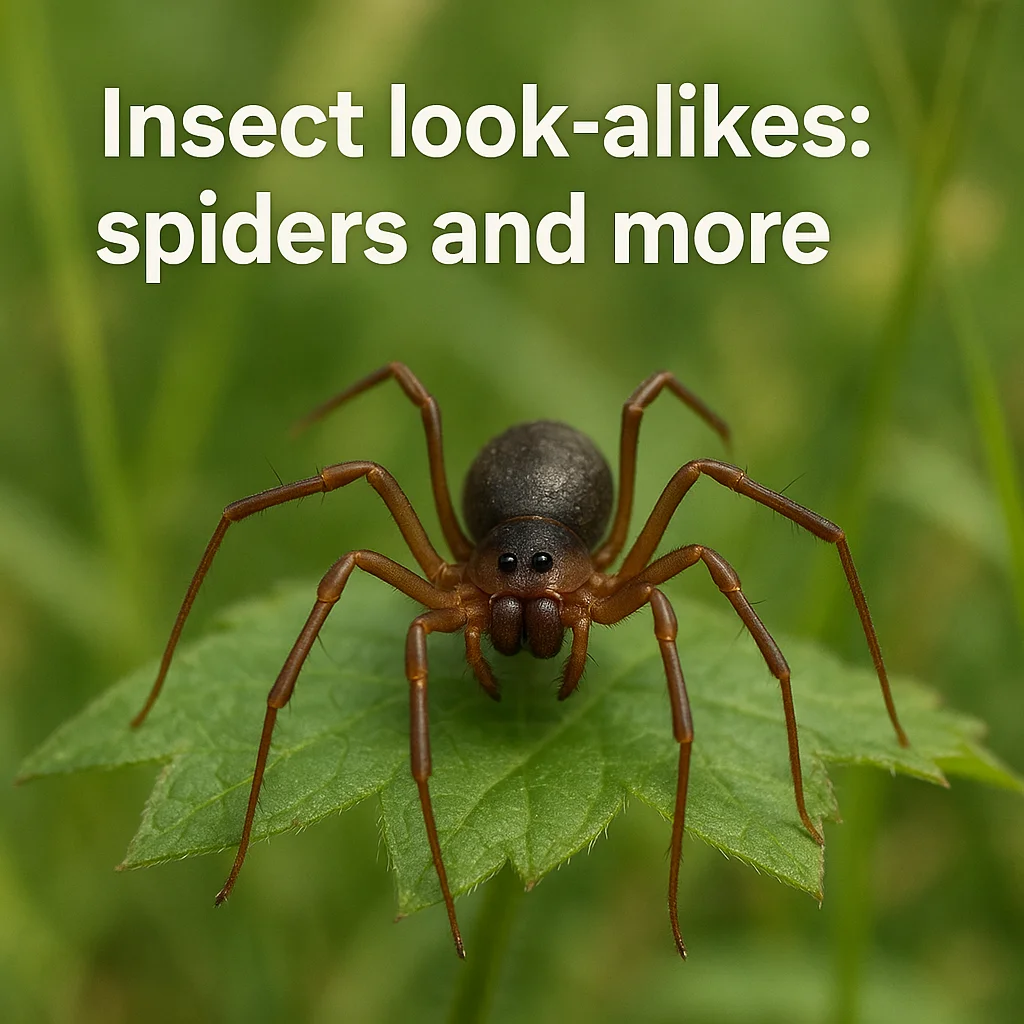
- Common names: Spiders, harvestmen, pseudoscorpions
- Scientific name: Varies
- Insect or not: Not insects; these are invertebrates known as arachnids.
- Order / family: Varies (e.g., Araneae for spiders)
- Typical size range: 1 mm to 10 cm, depending on species
- Key colors/patterns: Brown, black, grey; some brightly colored or patterned
- Activity: Mainly nocturnal, though some are active during the day
- Typical habitats: Forests, grasslands, urban areas, deserts
- Where in the world it occurs: Globally, with the highest diversity in tropical regions
- Seasonality: Visible year-round in warm climates; seasonally active in temperate regions
🔍 Identification
Identifying arachnid look-alikes involves understanding their distinct body structure compared to insects. They have two main body segments (cephalothorax and abdomen) and eight legs, unlike insects, which have three body segments and six legs. Spiders vary greatly in shape, from sleek and thin to stocky and robust.
- Body shape and silhouette: Two main segments, cephalothorax and abdomen
- Antennae type: No antennae present
- Wing features: None
- Leg traits and movement style: Eight legs; movement varies from agile sprinters to slow stalkers
- Distinguishing look-alikes role: Many mimic insects for protection or hunting strategies
- Top ID Tips:
- Count the legs: Eight legs indicate an arachnid.
- Look for two body segments.
- Check for the absence of wings.
- Identify behavioral cues: web spinning or ambush predator.
- Observe feeding habits: arachnids are typically predatory.
- Look for silk use: spiders often leave silk traces.
🧠 Basic Body Structure
Arachnids are a group of invertebrates characterized by their exoskeleton, which they must occasionally shed to grow—a process known as molting. Unlike insects, arachnids have eight legs, two main body segments, and lack antennae and wings.
🌍 Habitat & Distribution
Arachnids thrive in diverse environments, including forests, grasslands, deserts, and urban areas. Many species favor microhabitats like under rocks, leaf litter, and tree bark. Although predominantly found in tropical regions, they can adapt to various climates worldwide.
Changes in habitat due to urban development or agriculture can affect arachnid populations and visibility. In some cases, habitat fragmentation might limit their roaming and hunting activities.
📅 Seasonal Appearance & Activity
In tropical regions, arachnids can often be found all year, while in temperate zones, they are more active in warmer months. Nocturnal by nature, many arachnids prefer to hunt under the cover of darkness, but daytime appearances are not uncommon, especially in cooler environments.
- Most visible in spring and summer in temperate areas.
- Year-round presence in tropical climates.
- Peak activity during warm, humid nights.
- Less active during dry or excessively hot conditions.
🥚 Reproduction & Egg-Laying
Arachnid reproduction usually involves intricate courtship behaviors, where males perform specific displays or dances to attract females. Eggs are typically laid in secure locations such as under leaves or within silk nests, where they are less susceptible to predators. The number of eggs varies greatly among species, from a few dozen to several hundred.
🌀 Metamorphosis & Life Cycle
Arachnids undergo incomplete metamorphosis, consisting of the egg, juvenile, and adult stages. Juveniles resemble small adults and gradually mature through successive molts. Their diet mainly consists of small insects, which they often capture using webs or ambush techniques.
The time taken for an arachnid to reach adulthood can vary widely, from weeks to several years, dependent on species and environmental conditions.
🍽️ Diet & Feeding Behavior
Arachnids are mostly carnivorous, feeding on insects and other small invertebrates. They use specialized tools, such as fangs and venom, to subdue prey. While spiders utilize webs to trap prey, others like scorpions rely on stealth and precision.
Arachnids play a vital role as predators, helping control insect populations and maintaining ecological balance.
🦉 Predators & Defense
Arachnids face threats from birds, reptiles, amphibians, and larger mammals. Their defense mechanisms include camouflage, speed, and, for some species, venomous bites or stings. Despite their fearsome reputation, many prefer flight over fight when confronted.
- Camouflage allows them to blend into surroundings.
- Speed assists in escaping predators.
- Certain species exhibit aposematic coloration to warn off attackers.
- Some release noxious chemicals as a defense.
👥 Social Behavior & Swarms
Most arachnids are solitary, only coming together for mating. However, some spiders, like those in the family Theridiidae, may exhibit social behavior, forming colonies to cooperatively build webs and capture prey. Swarming is typically linked to specific environmental conditions that promote such behaviors.
🧭 Senses & Communication
Arachnids rely heavily on their excellent sense of vibration, enabling them to detect prey and predators. While their vision varies, many have acute night vision. Chemical signals, like pheromones, can be important for finding mates, and some communicate through body vibrations or touch.
🌱 Role in the Ecosystem
Arachnids are crucial in ecosystems as both predators and prey. By preying on insects, they help control pest populations. Their presence supports a diverse web of interactions, from mutualistic relationships with certain plants to serving as an essential food source for higher predators.
📉 Population & Conservation Notes
Arachnid populations are generally stable in many habitats but can be impacted by habitat destruction, pesticide use, and climate change. Conservation efforts are essential to maintain the ecological services they provide.
- Plant native flora to support local ecosystems.
- Avoid excessive pesticide use.
- Leave leaf litter and other natural debris undisturbed.
- Participate in local conservation initiatives.
⚠️ Human Interaction & Safety
While arachnids such as spiders and scorpions can bite or sting as a defense mechanism, incidents are rare and generally not serious. Washing the affected area and avoiding scratching is advisable. If a severe reaction occurs, seeking professional advice is recommended. Emphasis should be placed on observing these creatures respectfully and avoiding unnecessary contact.
📌 Summary
- Arachnids have eight legs, not six like insects.
- Common in diverse habitats, from forests to urban gardens.
- Most active at night, especially in warm, humid conditions.
- Undergo incomplete metamorphosis: egg to juvenile to adult.
- Carnivorous, playing a key role in controlling pest populations.
- Face natural predation with diverse defense mechanisms.
- Primarily solitary, with exceptions in social spider species.
- Sensitive to environmental changes but resilient in many areas.
- Interaction with humans is typically non-threatening and beneficial.