🕷️ Crickets: chirping and temperature myths
🧾 Quick Facts
Crickets are fascinating insects primarily known for their characteristic chirping, which is often associated with temperature predictions. However, the belief that cricket chirps can accurately reflect temperature is a myth, albeit one rooted in some scientific observation.
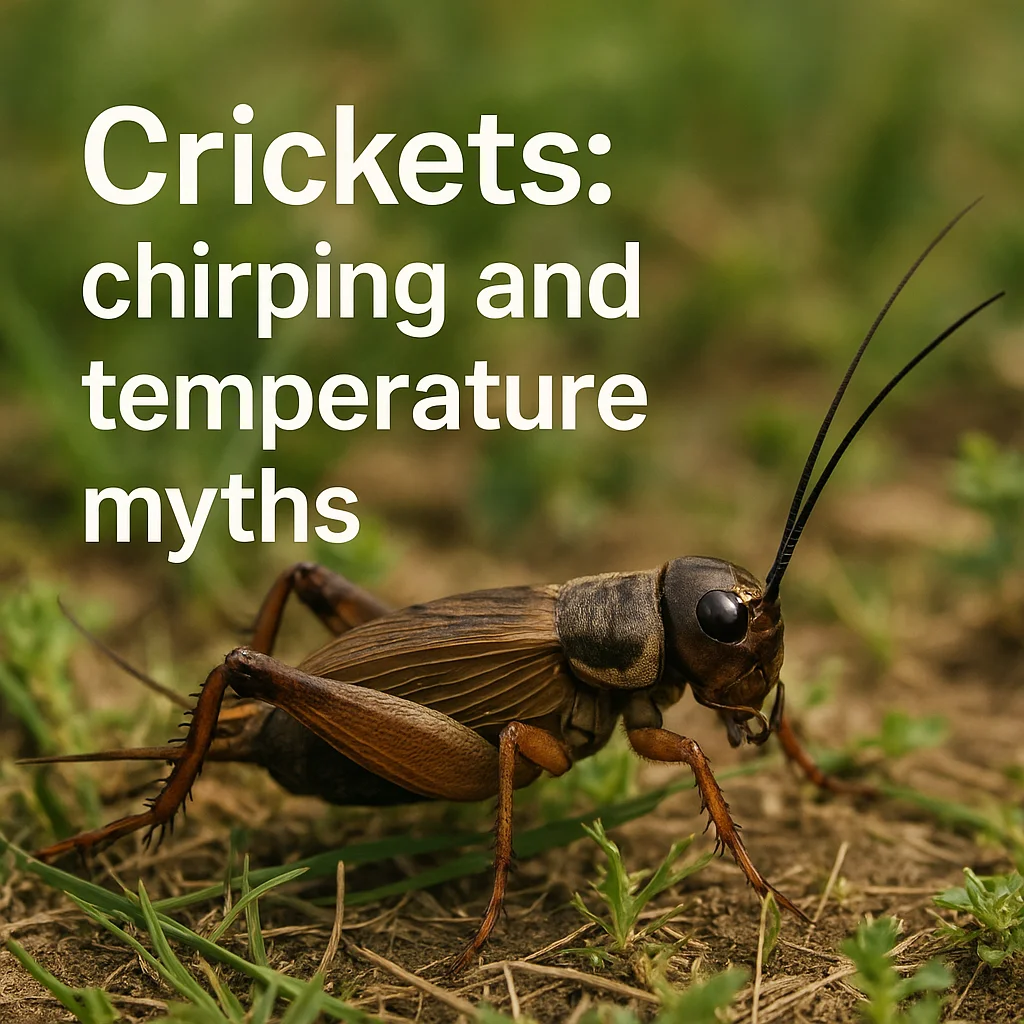
- Common names: Crickets
- Scientific name: Varies (Gryllidae family)
- Insect or not: Yes, they are insects, characterized by their six legs and invertebrate nature
- Order / family: Orthoptera / Gryllidae
- Typical size range: 1 to 2 inches (2.5 to 5 cm)
- Key colors/patterns: Typically brown or black, sometimes green
- Activity: Primarily nocturnal
- Typical habitats: Grasslands, forests, caves, and gardens
- Where in the world it occurs: Found globally except Antarctica
- Seasonality: Most active in late summer to early fall
🔍 Identification
Crickets can be identified in the field by their robust, somewhat flattened bodies and powerful hind legs adapted for jumping. They have long, slender antennae that often exceed their body length. Crickets possess wings, but not all species are adept fliers. Their legs are adapted for jumping, making swift, hopping movements their most common form of mobility. While grasshoppers, a common confusion with crickets, have shorter antennae and a typically more vibrant color pattern, crickets are usually more subdued in appearance.
- Top ID Tips:
- Look for long antennae extending beyond the body
- Observe powerful hind legs designed for jumping
- Note the robust, somewhat flattened body shape
- Listen for the distinct chirping sounds, especially at night
- Identify subdued colors compared to grasshoppers
- Check for wings held flat along the body
- Consider the setting: usually found in grass or foliage
- Best Time to Spot It:
- Late summer evenings
- Warm nights
- During periods of high humidity
- In gardens and fields after rain
- Defense Highlights:
- Camouflage to blend with surroundings
- Rapid jumping to escape threats
- Nocturnal habits reduce visual detection
- Chirping to confuse predators with sound
- How to Help (Low-Impact):
- Plant native vegetation
- Reduce pesticide use in gardens
- Leave leaf litter and organic debris
- Create habitats like rock or log piles
- Crickets are recognizable by their chirping and jumping abilities.
- They inhabit grasslands, gardens, and forests worldwide.
- Primarily active in late summer and are nocturnal.
- They undergo incomplete metamorphosis with egg, nymph, and adult stages.
- Omnivorous diet contributes to ecosystem health via decomposition.
- Preyed upon by birds, reptiles, and other predators.
- Play a crucial role in the ecosystem as both prey and nutrient recyclers.
- Common in many areas, but conservation includes habitat protection.
- Safe for humans, best admired in their natural habitat.
🧠 Basic Body Structure
Crickets, like all insects, have three main body regions: the head, thorax, and abdomen. They feature six legs, which classify them within the insect class. Crickets have an exoskeleton that they molt periodically as they grow. Most have two pairs of wings and can fly short distances, although it varies among species. As invertebrates, they lack a backbone, distinguishing them from vertebrates.
🌍 Habitat & Distribution
Crickets prefer environments such as grasslands, forests, and gardens. They often take refuge in microhabitats under rocks, logs, or in leaf litter. They are distributed globally across most temperate and tropical zones. Changes in habitat availability and composition can significantly affect cricket populations and their visibility in the wild.
📅 Seasonal Appearance & Activity
Crickets are mainly active from late summer to early fall when adults are visible and most vocal. They are nocturnal, relying on warm temperatures to be most active and often silent during cooler months. Rainy conditions can increase their activity as they often seek damp environments for shelter.
🥚 Reproduction & Egg-Laying
Crickets are known for their distinct courtship rituals, often involving males producing a series of calls to attract females. The females deposit their eggs in soil or plant stems, with variability among species. The number of eggs laid can range widely, depending on the conditions and species specifics.
🌀 Metamorphosis & Life Cycle
Crickets undergo incomplete metamorphosis, progressing through egg, nymph, and adult stages. Nymphs resemble smaller adults without fully developed wings. They typically feed on the same materials as adults and live in similar environments, taking several months to reach maturity.
During the nymph stage, crickets primarily consume organic material and plant matter. They reside in similar environments to adults and can live for a few months up to a year, depending on the species and environmental conditions.
🍽️ Diet & Feeding Behavior
Crickets are omnivorous, eating a variety of food sources, including plant materials, insects, and decayed organic matter. They possess chewing mouthparts that enable them to process a range of foods from leaves to small insects. Their feeding behavior plays a role in the decomposition process, contributing to ecological health.
🦉 Predators & Defense
Crickets face predation from birds, reptiles, amphibians, spiders, and small mammals. They employ a variety of defense strategies, including camouflage, which aids them in blending with their environment to evade predators. Rapid escape through jumping and burrowing into safe environments also serve as effective defense mechanisms.
👥 Social Behavior & Swarms
Crickets are generally solitary creatures but can aggregate in high densities when conditions are right, usually in response to abundant food resources or suitable habitat. During mating seasons, males engage in communal calling areas to attract mates, but they do not form social colonies like some insects.
🧭 Senses & Communication
Crickets use a variety of senses to interact with their environment. They have good hearing and sense vibrations through specialized structures on their legs. Sound plays an integral role in communication, especially for mating; male crickets produce sound by stridulation—rubbing their wings together. This sound serves both as a mating call and a mechanism to ward off other males.
🌱 Role in the Ecosystem
Crickets contribute significantly to the ecosystem as both prey and predator. Their actions aid in decomposition and nutrient cycling, while they themselves provide a crucial food resource for numerous predators. They participate in soil aeration through their burrowing activities and aid in seed dispersal of certain plants.
📉 Population & Conservation Notes
Crickets are generally common in suitable environments, though populations can fluctuate with habitat changes, pesticide use, and climate conditions. Maintaining native plant environments and reducing pesticide applications can help sustain cricket populations.
⚠️ Human Interaction & Safety
Crickets do not pose a threat to humans as they neither bite nor sting. They should be observed respectfully in their natural settings, and capturing them should be discouraged to maintain ecological balance. Should any allergic reaction arise from contact, washing the area and seeking professional help for severe symptoms is recommended.