🕷️ Crickets myths and facts
🧾 Quick Facts
Crickets are fascinating insects often associated with myths and cultural depictions worldwide. Their nocturnal songs and unique appearances have captured the interest of both laypersons and entomologists alike. Here are some essential quick facts about crickets:
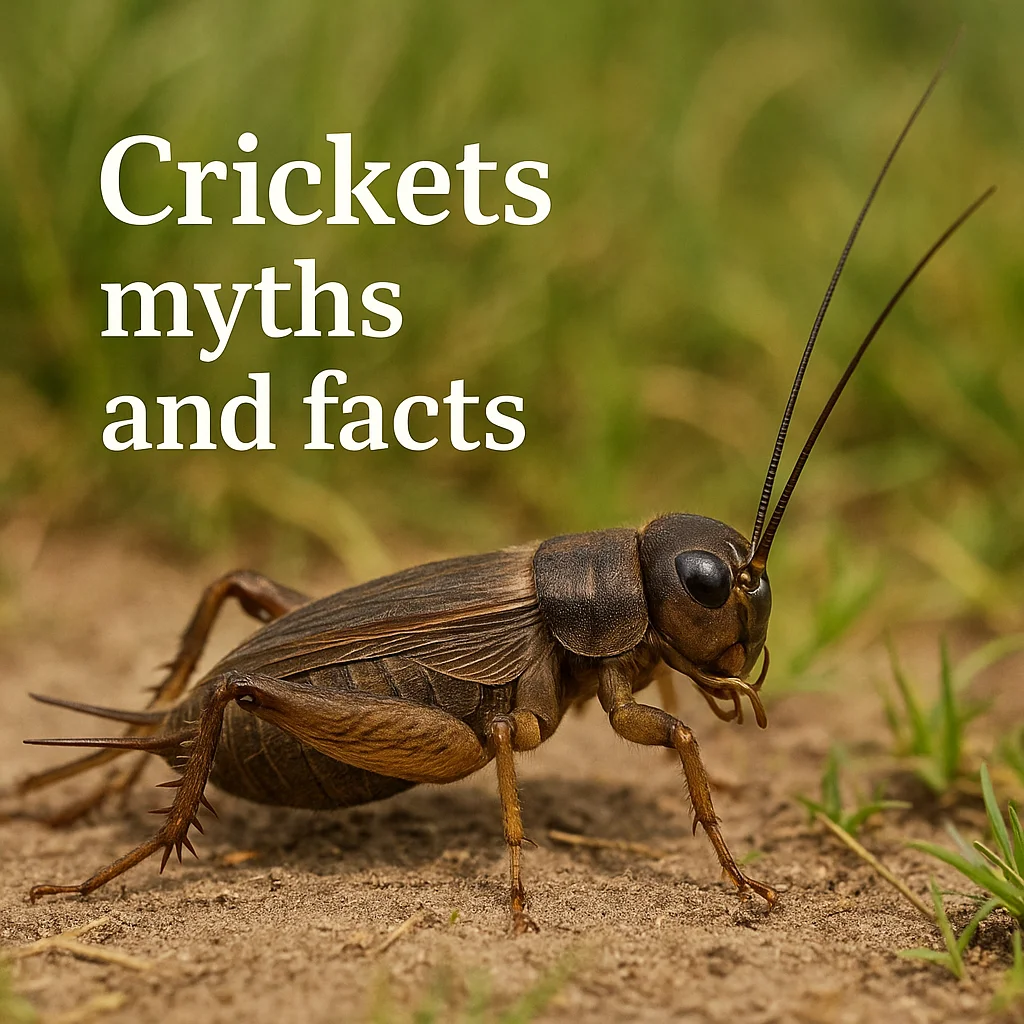
- Common names: Crickets, field crickets, bush crickets
- Scientific name: Varies (Family: Gryllidae)
- Insect status: Yes, they are true insects (invertebrates)
- Order / Family: Orthoptera / Gryllidae
- Typical size range: 1 to 2 inches (2.5 to 5 cm) in length
- Key colors/patterns: Brown, black, or greenish; some with stripes or spots
- Activity: Primarily nocturnal
- Typical habitats: Grasslands, forests, gardens, and anthropogenic environments
- Where in the world: Cosmopolitan – found on all continents except Antarctica
- Seasonality: Commonly seen from late spring to early autumn in temperate regions
🔍 Identification
Identifying crickets in the field can be challenging due to their variety, but there are distinct features one can observe:
- Body shape and silhouette: Cylindrical body with long hind legs for jumping
- Antennae type: Filamentous, long compared to body length
- Wing features: Some have well-developed wings for chirping, others are vestigial
- Leg traits and movement style: Adapted for jumping; hind legs are notably muscular
- Distinguishing look-alikes: Often confused with grasshoppers; crickets have longer antennae and mostly nocturnal habits
Crickets can vary significantly in color and size, making local field guides essential for precise identification.
- Look for long antennae
- Notice the body's cylindrical shape
- Listen for the characteristic chirping at night
- Observe the hind legs, adapted for jumping
- Spot anal cerci at the rear of the abdomen
- Inspect body color: often dark with subtle patterns
🧠 Basic Body Structure
Crickets, like all insects, have a basic body structure divided into three main parts: head, thorax, and abdomen. They possess six legs, three pairs attached to the thorax. Crickets have a hard outer covering called an exoskeleton, which they shed during growth in a process called molting. Their invertebrate status means they lack a spine, a trait shared with all insects. Some species possess wings, primarily used for sound production rather than flight.
🌍 Habitat & Distribution
Crickets inhabit a wide range of environments, demonstrating remarkable adaptability. They are commonly found in grasslands, forests, agricultural fields, gardens, and even urban areas. These insects can thrive in microhabitats such as under rocks, in leaf litter, and between soil crevices. Globally, crickets are distributed across all continents, excluding Antarctica. Climate change and habitat alteration can impact their distribution and abundance.
📅 Seasonal Appearance & Activity
An understanding of cricket phenology is beneficial for spotting them. Generally, crickets are most active during warmer months, primarily late spring to early autumn in temperate regions. They tend to be nocturnal, engaging in activities like chirping and mating at night. Crickets are influenced by weather conditions, preferring moderate temperatures and humidity.
- Best spotted on warm summer nights
- Look for them at dusk and during nighttime
- Active when temperatures are mild and humid
- Rainy nights in summer can increase activity
- Listen for chirping in the late evening
🥚 Reproduction & Egg-Laying
Cricket reproduction involves elaborate mating rituals, often characterized by males producing a series of chirps to attract females. Mating can occur over specific territories where males showcase their songs. Female crickets typically lay eggs in the soil or plant stems, using an ovipositor to deposit them safely. Egg counts vary depending on the species, with numbers ranging from a few dozen to several hundred per cycle.
🌀 Metamorphosis & Life Cycle
Crickets undergo incomplete metamorphosis, a process comprising three stages: egg, nymph, and adult. Upon hatching, nymphs resemble miniature adults but lack fully developed wings and reproductive organs. They molt several times before reaching maturity, each stage lasting anywhere from one to several weeks, depending on environmental conditions.
Cricket nymphs primarily feed on plant matter and small insects, inhabiting similar environments to adults. The transition from nymph to adult involves developing larger body sizes and functional wings where applicable.
🍽️ Diet & Feeding Behavior
Crickets are omnivorous, feeding on a range of organic materials through chewing mouthparts. They consume plants, fungi, dead organic matter, and even small insects. This varied diet allows them to act as scavengers and decomposers within the ecosystem, helping to recycle nutrients.
🦉 Predators & Defense
Crickets face numerous predators including birds, small mammals, reptiles, amphibians, and spiders. Their primary defense mechanisms include camouflage through coloration and hiding in secluded spaces. Some species use startle displays, while their ability to jump allows them to evade capture quickly.
- Excellent jumpers for quick escape
- Camouflaged with their environment
- Secrete protective chemicals subtly
- Hide during the day in sheltered areas
- Make shrill sounds to deter predators
👥 Social Behavior & Swarms
Crickets are generally solitary insects, though some species may congregate in response to ideal environmental conditions. While not colonial, these gatherings can occur where food and habitat resources are plentiful. Crickets primarily interact during mating seasons or when establishing territories.
🧭 Senses & Communication
Crickets exhibit advanced sensory capabilities, including excellent hearing facilitated by tympanic membranes on their legs. They communicate predominantly through sound, employing stridulation, where they rub their wings together to produce chirps. These songs can convey various messages, including attracting mates and deterring rivals.
🌱 Role in the Ecosystem
Crickets play integral roles within ecosystems as both prey and consumers. As decomposers, they contribute to the breakdown of organic material, thus enriching soil nutrients. They also serve as a food source for a wide array of predators. Additionally, crickets may assist in minor pollination activities by visiting flowers for feeding.
📉 Population & Conservation Notes
Cricket populations are commonly reported as abundant in suitable habitats, though they face threats from habitat destruction, pesticide use, and climate change. There is limited data on global cricket populations, making precise assessments challenging.
- Plant native vegetation to support natural habitats
- Avoid using chemical pesticides excessively
- Preserve natural leaf litter as habitat
- Create small, sheltered gardens or patches
⚠️ Human Interaction & Safety
Crickets are generally harmless to humans and do not bite or sting. However, they may become a nuisance when they establish populations indoors. Proper sealing of house entry points and maintaining a clean environment can help prevent cricket infestations. For severe reactions to any insect exposure, seek professional advice.
It is important to respect crickets and their habitats while observing them in the wild, promoting conservation and ethical interactions.
📌 Summary
- Crickets are part of the Orthoptera order, commonly recognized by their chirping
- Found in diverse habitats worldwide, they prefer warm, humid climates
- Nocturnally active, particularly during temperate seasons
- Undergo incomplete metamorphosis from egg to adult
- Omnivorous diet, feeding on plants, fungi, and insects
- Abundant predators require defense through camouflage and jumping
- Serve critical ecological roles as decomposers and prey
- Encouraged to admire in natural settings, maintaining conservation ethics