🕷️ Common grasshopper predators
🧾 Quick Facts
The category of "common grasshopper predators" encompasses various species known to prey on grasshoppers. These predators span multiple taxonomic groups and are not confined to a single species.
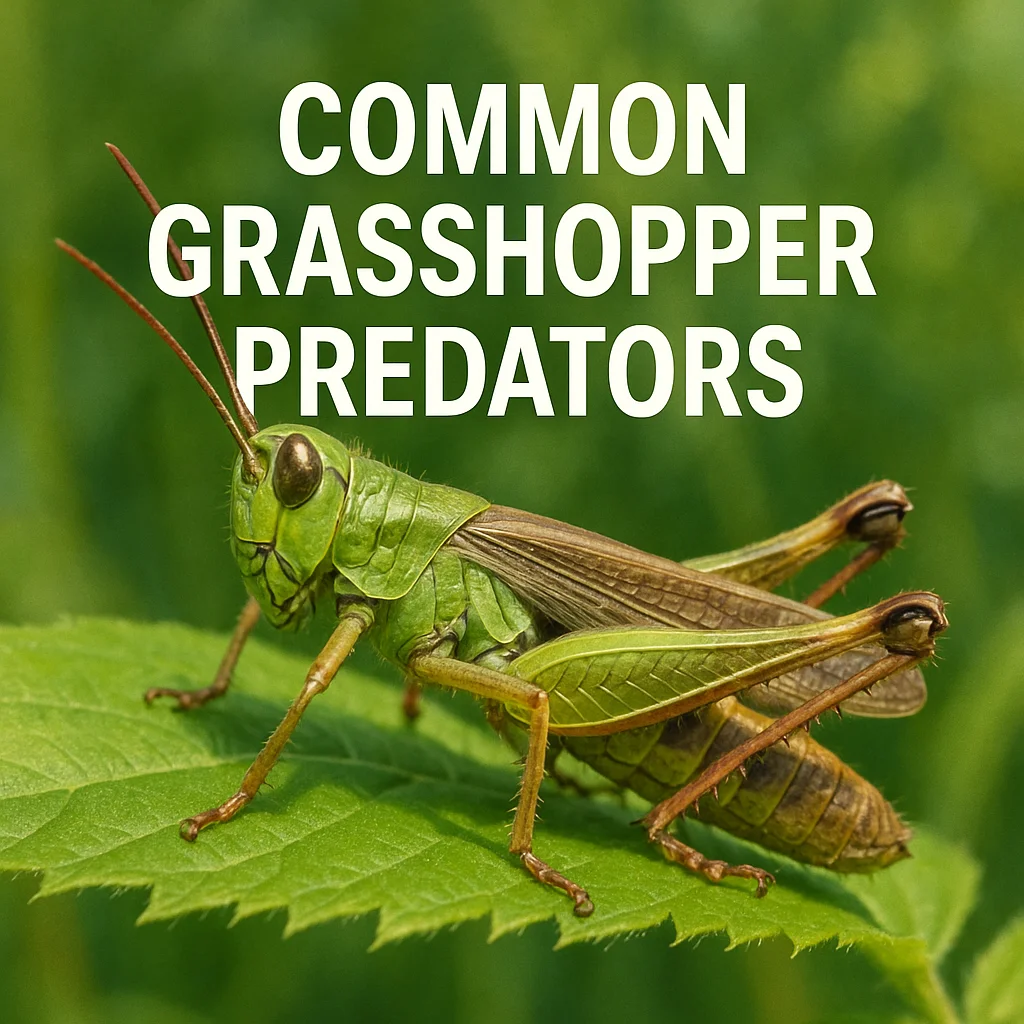
- Common names: Varies widely
- Scientific name: Varies
- Insect or not: Not always; includes invertebrates, birds, and mammals
- Order / family: Varies
- Typical size range: Ranges from small insects to larger birds and mammals
- Key colors/patterns: Varies
- Activity: Mostly day and twilight active; varies
- Typical habitats: Grasslands, forests, wetlands, gardens
- Where in the world it occurs: Globally distributed, varies by predator species
- Seasonality: Typically most active during warm months when grasshoppers are abundant
🔍 Identification
Since "common grasshopper predators" is a broad category, identification traits vary. Predatory insects and arachnids may have specific body shapes suited for hunting. Birds and small mammals utilize quick movements to catch prey.
- Body shape and silhouette: Varies; insects may resemble other predatory forms
- Antennae type: Not applicable to all groups
- Wing features: Birds have wings for flight; insects may have specialized wings
- Leg traits and movement style: Quick movements in mammals; strong legs in insects for capturing prey
- Distinguishing look-alikes: Beginners often mistake some birds for non-predatory species
- Varied size and shape based on specific species
- Predatory insects often have notable mandibles
- Quick movements may indicate predation activity
- Predatory birds often soar or dive swiftly
- Mammals may be found stalking in regions with high grasshopper density
- Different behavior patterns can help in spotting predators
🧠 Basic Body Structure
Grasshopper predators include both invertebrates such as spiders and insects, as well as vertebrates like birds and mammals. Insect predators feature the standard body parts: head, thorax, and abdomen. Many have specialized body parts allowing them to capture and consume grasshoppers, such as strong mandibles or specialized hunting legs. Insects have six legs while arachnid predators have eight.
These predators are mostly invertebrate (lacking a backbone) or vertebrate (with a backbone), which facilitates their mobility and hunting prowess.
🌍 Habitat & Distribution
Grasshopper predators are commonly found in areas where grasshoppers thrive. These include grasslands, open fields, forests, wetlands, and urban gardens. The microhabitats within these regions, such as under leaf litter or on top of vegetation, are frequent hunting grounds for these predators. Their geographic presence is widespread, filling ecological niches across various continents and climates.
Changes in habitat, such as urban development or deforestation, can alter predator sightings by either reducing available hunting grounds or concentrating prey in smaller areas.
📅 Seasonal Appearance & Activity
Grasshopper predators are most visible during warm months when their prey, grasshoppers, are also active. Activity largely depends on the time of day and temperature, with various species being diurnal, nocturnal, or crepuscular.
- Spring to late summer is peak time for sightings
- Diurnal predators active during daylight
- Nocturnal species more evident at dusk or night
- Activity generally peaks in warm, stable weather
- Best spotted after rain when grasshoppers are active
🥚 Reproduction & Egg-Laying
Reproductive behaviors vary significantly, reflecting the diversity of grasshopper predators. Insects may engage in courtship rituals using pheromones or displays. Predatory birds often establish territories for mating calls and nesting. Eggs can be laid on plants, soil, or protected locations, with numbers varying widely across species.
Egg-laying strategies differ, accommodating environmental factors and predator defenses. Counts and incubation periods can vary immensely, demonstrating evolutionary adaptations across taxa.
🌀 Metamorphosis & Life Cycle
The type of metamorphosis largely depends on the specific group. Predatory insects like certain beetles undergo complete metamorphosis: egg, larva, pupa, adult stages. Others may follow incomplete metamorphosis, transitioning from egg to nymph then adult. Birds and mammals undergo direct development from juvenile to adult stages.
Each life stage reflects the predator's diet and habitat needs. Larvae often remain in concealed environments, consuming soft prey, while adult forms actively pursue grasshoppers in more diverse habitats. The duration of stages can vary based on environmental conditions and species-specific traits.
🍽️ Diet & Feeding Behavior
Grasshopper predators encompass a wide range of dietary habits. Many insects like certain beetles and mantids possess chewing mouthparts, aiding in consumption of solid prey such as grasshoppers. Bird predators typically swallow prey whole or consume in parts. Mammalian predators may chew or crush prey before ingestion.
Predators play vital roles as biological control agents, maintaining grasshopper populations and curbing possible pest outbreaks. Their presence ensures ecological balance, contributing to food web stability.
🦉 Predators & Defense
Grasshopper predators themselves face threats from larger predators and can employ various defense strategies. Birds and mammals use camouflage and protective environments to evade superior predators. Some insects and arachnids possess mimicry, startle displays, or chemical defenses to deter attackers. Speed and agility are also crucial for escape.
- Defense Highlights:
- Use of camouflage to blend into habitat
- Mimicry to imitate other harmful species
- Startle displays to confuse predators
- Chemical releases as deterrents
- Flight and speed enhance escape potential
👥 Social Behavior & Swarms
The social structure of grasshopper predators varies. While some insects are solitary hunters, certain birds and mammals may move in coordinated groups. These predators often converge in areas rich in prey due to abundant food sources.
Swarms are not typical for these predators but they may indirectly gather in prey-rich locales, influenced by seasonal migrations of grasshoppers or greater prey availability.
🧭 Senses & Communication
Predators utilize advanced senses to locate prey. Vision in birds and mammals aids in spotting grasshoppers from a distance. Insect predators rely on multiple sensory modalities, including olfactory cues and vibration detection for hunting. Communication, if present, often involves visual or odor signals, coordinating movements or marking territory.
🌱 Role in the Ecosystem
Grasshopper predators drive ecological interactions and are crucial to maintaining grasshopper populations within controllable limits. By feeding on grasshoppers, they reduce pest populations naturally, alleviating potential agricultural impacts. These predators occupy various roles, from primary consumers like spiders and insects to secondary consumers like birds and mammals.
Their interactions contribute to biodiversity, facilitating balanced ecosystems and promoting healthy plant and animal communities through their predatory activities.
📉 Population & Conservation Notes
Grasshopper predator populations are often reported as common but may experience local variation. Habitat loss, pesticide use, and climate change are critical factors influencing their numbers. Some face threats from human-altered environments, requiring measures to support their ecological presence.
- How to Help (Low-Impact):
- Plant native flora to enhance habitats
- Limit pesticide usage
- Preserve natural landscapes
- Maintain diversity in private gardens
⚠️ Human Interaction & Safety
These predators generally do not pose direct risks to humans. However, caution is warranted near species capable of defensive bites or stings. Basic first aid includes washing affected areas and avoiding contact if uncertain. Professional advice is advised for any severe reactions. Observing these predators respectfully ensures coexistence without adverse human-wildlife interactions.
📌 Summary
- This category encompasses a diverse group of predators, with wide-ranging identification marks and ecological roles.
- Active and widespread, they are often seen in habitats shared with grasshoppers.
- Seasonality aligns with grasshopper activity, generally thriving in warmer periods when prey is plentiful.
- Life cycles demonstrate significant diversity based on the predator class, affecting ecosystem interactions.
- Their diet includes a range of grasshoppers, impacting agriculture through natural pest control.
- Predations and defenses highlight their evolutionary adaptations and roles in food webs.
- Conservation involves habitat protection and mindful human environments to support their populations.
- While mostly harmless to humans, safe and respectful observation is always advised.