🕷️ Defense tactics: startle displays and camouflage
🧾 Quick Facts
Defense tactics that include startle displays and camouflage enable insects to evade predators. Various species from insects, arachnids, and other invertebrates employ these adaptations. Here's a quick overview:
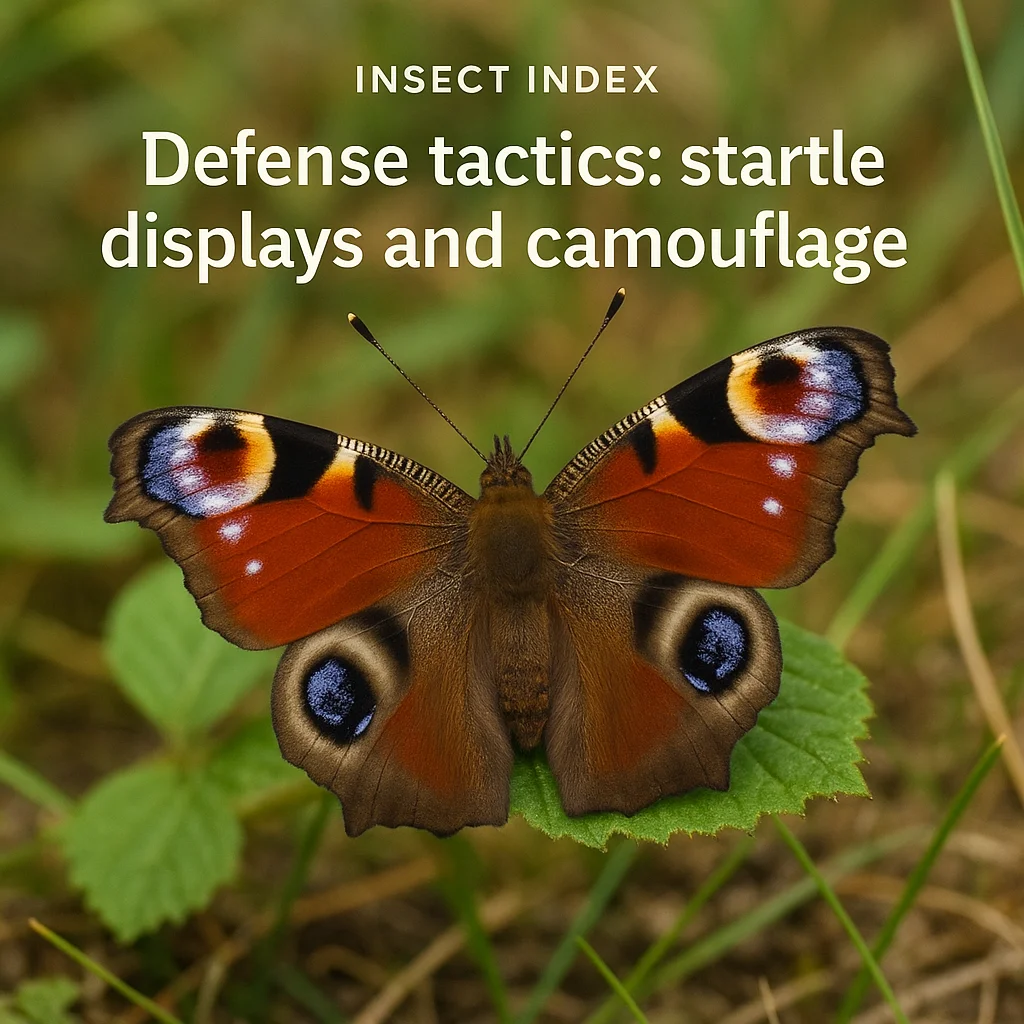
- Common names: Varies among species
- Scientific name: Varies
- Insect or not: Typically insects; includes some arachnids
- Order / Family: Varies
- Typical size range: Ranges from a few millimeters to several centimeters
- Key colors/patterns: Often mimic environment; cryptic, mottled, or striking
- Activity: Primarily day or night, depending on species
- Typical habitats: Forests, grasslands, wetlands, gardens
- Where in the world it occurs: Global, in diverse climates
- Seasonality: Most visible during warm seasons
🔍 Identification
Identifying species using defense tactics like startle displays and camouflage involves observing their adaptive features:
- Body shape and silhouette: Compact and streamlined shapes aiding disguise
- Antennae type: Varies by species; filamentous or clubbed
- Wing features: Some have reduced wings for better camouflage
- Leg traits and movement style: May move slowly; some mimic leaves or sticks
- Look-alikes: Walking sticks resemble twigs, some butterflies mimic leaves
- Top ID Tips:
- Observe color patterns mimicking the environment
- Check for movement and behavior during dusk/dawn
- Note any sudden movements or flashes of color (startle displays)
- Identify body shapes blending with specific backgrounds
- Examine limb and wing positions that aid in mimicry
- Watch for insect behavior like freezing or swaying
🧠 Basic Body Structure
Insects employing these tactics have typical three-part bodies: head, thorax, and abdomen. They possess an exoskeleton, providing protection and support, and undergo molting to grow. Wings may be present or reduced, depending on the mimicry strategy. These creatures are invertebrates, meaning they lack a backbone.
🌍 Habitat & Distribution
Species using startle displays and camouflage are found in various environments such as forests, grasslands, wetlands, and urban gardens. Microhabitats include under bark and within leaf litter. They have a global distribution, thriving in regions from temperate zones to tropical climates. Changes in habitat, such as deforestation, can affect visibility and populations.
📅 Seasonal Appearance & Activity
The appearance and activity of these species vary widely:
- Months: Most visible in spring to late summer
- Time of Day: Diurnal or nocturnal, species-dependent
- Weather Influences: More active in warm, humid weather
- Best Time to Spot It:
- Late spring mornings for leaf mimics
- Summer evenings for stick insects
- Warm, cloudy days for camouflaged arthropods
- Humid nights for nocturnal startle display species
🥚 Reproduction & Egg-Laying
Reproductive behaviors vary among species. Mating often involves visual signals or pheromones. Eggs may be laid on plants, in soil, or hidden under rocks. Egg counts vary greatly, with some species depositing numerous eggs, while others are more selective. Variability is the norm among these species.
🌀 Metamorphosis & Life Cycle
Many species exhibit complete metamorphosis (egg–larva–pupa–adult), while others have incomplete metamorphosis (egg–nymph–adult):
Egg: Laid in concealed environments or attached to surfaces; hatch varies by temperature and species.
Larva/Nymph: Larvae often mimic surroundings or exhibit safe morphologies. Nymphs look similar to adults but are smaller and wingless, living in similar habitats.
Pupal Stage: For those undergoing complete metamorphosis, this stage is within cocoons or protective shells.
Adult: Adults tend to retain camouflage or employ startle displays. This stage is for reproduction and continued survival against predators.
🍽️ Diet & Feeding Behavior
These species use a variety of feeding strategies. Some are herbivores consuming leaves, wood, or other plant parts. Others may be predators or scavengers. Mouthparts vary: chewing in grasshoppers and caterpillars, piercing-sucking in others, such as aphids. Their roles are diverse, contributing to ecosystems through herbivory, predation, and sometimes pollination.
🦉 Predators & Defense
Natural enemies include birds, reptiles, amphibians, spiders, and mammals. Defense strategies include:
- Camouflage: Blending with plants or environment to evade detection
- Mimicry: Imitating other objects or more dangerous organisms
- Startle Displays: Suddenly revealing bright colors or patterns to confuse predators
- Armor: Hardened exoskeleton for protection
- Defense Highlights:
- Exceptional mimicry in many leaf-like or stick-like species
- Sudden display of eye spots or contrasting colors
- Freezing in place when threatened
- Hiding under bark or within crevices
👥 Social Behavior & Swarms
These species can be solitary, focusing on evasion as a primary survival tactic. However, some may display social behaviors, especially during mating. Swarming or mass movements are rare but can occur if environmental triggers align, such as availability of food or suitable breeding sites.
🧭 Senses & Communication
Insects with these defense tactics rely heavily on senses for survival:
- Vision: Often attuned to detect motion and distinguish light from dark
- Smell/pheromones: Used for mating and territory marking
- Touch/vibration: Sensitivity helps in detecting ground-based threats
Communication methods may include the use of pheromone trails or vibrations rather than sounds.
🌱 Role in the Ecosystem
These species play crucial roles such as pollination and pest control. They support food webs by serving as prey for higher trophic levels and contribute to nutrient recycling as decomposers. Some have mutualistic relationships with plants, aiding in pollination or seed dispersal, while others may be pests in agricultural settings.
📉 Population & Conservation Notes
Many species employing these tactics are common within suitable habitats. However, some face declines due to habitat loss, pesticide use, and climate change. Conservation efforts focus on habitat preservation and mindful pesticide application. Data on global population numbers are limited, with local abundance varying significantly.
- How to Help (Low-Impact):
- Plant native flora to support local insect species
- Avoid using pesticides in home gardens
- Preserve natural leaf litter and other microhabitats
- Support conservation of forested areas and wetlands
⚠️ Human Interaction & Safety
While most species are harmless to humans, a few may bite or sting if provoked. Seek professional advice if severe reactions occur. Enjoy observing these creatures in their wild habitats, and practice respectful observation by not collecting wild specimens.
📌 Summary
- Adaptations for defense include startle displays and camouflage
- Inhabit various environments globally from forests to urban gardens
- Visible mostly in warmer months and during specific times of day
- Use a range of reproductive strategies, often laying eggs in concealed areas
- Undergo either complete or incomplete metamorphosis
- Roles include herbivory, predation, pollination, and scavenging
- Defense primarily through mimicry, camouflage, and occasional chemical defenses
- Interaction with humans mostly benign; good for observation in nature