🕷️ How aphids reproduce so fast
Aphids are small, soft-bodied insects known for their rapid reproductive capabilities and significant impact on agriculture and natural ecosystems. These persistent pests are often found in large quantities on plants, feeding on sap and sometimes transmitting plant diseases. Understanding their unique reproductive strategies can help manage their populations effectively.
🧾 Quick Facts
Aphids, also known as plant lice, are fascinating creatures due to their ability to reproduce quickly. Here's a quick overview of their characteristics:
- Common names: Aphids, plant lice
- Scientific name: Varies by species; includes genera such as Aphis, Myzus
- Insect or not: Yes, they are insects and are part of the invertebrate group
- Order / family: Hemiptera / Aphididae
- Typical size range: 1 to 10 millimeters
- Key colors/patterns: Green, black, brown, yellow, red; sometimes waxy or woolly
- Activity: Primarily diurnal
- Typical habitats: Gardens, crop fields, orchards, forests
- Where in the world it occurs: Worldwide, abundant in temperate regions
- Seasonality: Most active from spring through late autumn
🔍 Identification
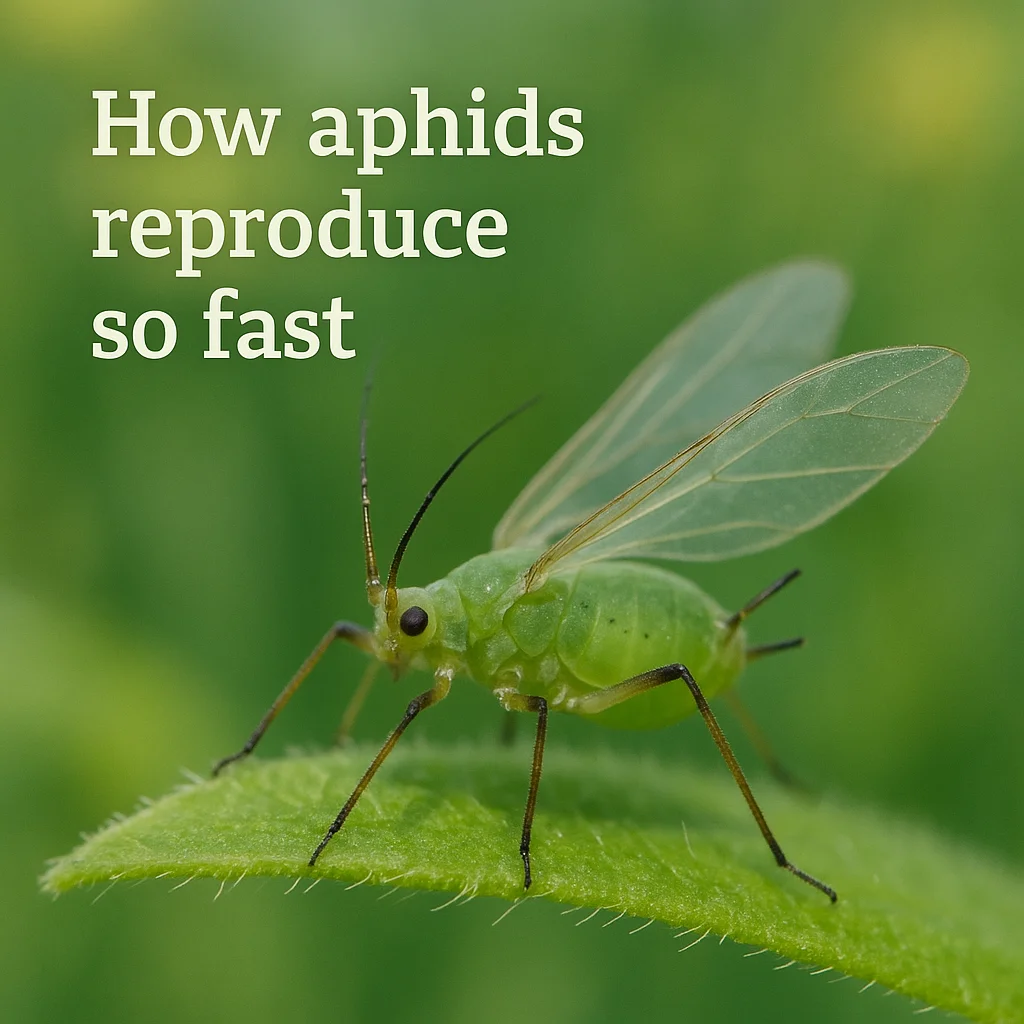
Aphids can be identified by their soft, pear-shaped bodies and the presence of cornicles, which are tube-like structures on their abdomen. They often appear in clusters on plant stems and leaves.
- Body shape and silhouette: Pear-shaped, often found in groups
- Antennae type: Long and slender
- Wing features: Some have wings; winged forms appear during certain environmental conditions
- Leg traits and movement style: Six legs, slow and deliberate movement
- Distinguishing look-alikes: Can be confused with leafhoppers and mealybugs
🧠 Basic Body Structure
Aphids, like all insects, have a body divided into the head, thorax, and abdomen. They possess six legs and an exoskeleton, which they shed through molting. Some aphids have wings, enabling them to disperse to new plants.
They are invertebrate, meaning they lack a backbone, characteristic of most small invertebrates.
🌍 Habitat & Distribution
Aphids thrive in a variety of environments, including gardens, crop fields, orchards, and forests. They prefer temperate zones worldwide but can be found in diverse climatic conditions. Microhabitats such as the undersides of leaves or within curled foliage provide shelter and feeding grounds.
Changes in habitat, such as urbanization or agricultural practices, can influence local aphid populations, often leading to increased sightings in garden settings.
📅 Seasonal Appearance & Activity
Aphids are prominent during the growing seasons of plants, typically from spring to late autumn. They are diurnal, thus visible during daylight, and weather conditions such as warmth and humidity can significantly increase their activity levels.
- Best spotted during the growing seasons
- More noticeable on warm, sunny days
- Active in the morning and afternoon
- Peak during spring and fall
🥚 Reproduction & Egg-Laying
Aphids are known for their rapid reproduction rates. They reproduce both sexually and asexually, with asexual reproduction occurring through a process called parthenogenesis, where females produce offspring without mating. This leads to quick population explosions, especially when conditions are favorable.
Eggs are typically laid on host plants, and depending on the species, egg counts and laying strategies can vary greatly.
🌀 Metamorphosis & Life Cycle
Aphids exhibit incomplete metamorphosis, developing through three stages: egg, nymph, and adult. As nymphs, they feed voraciously on plant sap and grow rapidly, undergoing several molts before reaching adulthood.
The nymphal stage is crucial for growth and feeding, while adult aphids may continue reproducing rapidly once mature. The entire life cycle can be completed in as little as a week under optimal conditions.
🍽️ Diet & Feeding Behavior
Aphids feed on plant sap using piercing-sucking mouthparts. Their feeding behavior can result in plant damage and disease transmission, impacting agricultural crops and garden plants.
They serve primarily as herbivores in their ecosystems but can influence pollination and plant growth indirectly through their interactions.
🦉 Predators & Defense
Aphids face numerous predators, including birds, ladybugs, lacewings, and parasitoid wasps. Their primary defenses include producing defensive chemicals or staying camouflaged within plant foliage.
- Primary predators: ladybugs, birds, wasps
- Release of alarm pheromones
- Rapid reproduction as a survival strategy
- Camouflage with host plants
👥 Social Behavior & Swarms
While generally considered solitary, aphids can become part of large aggregations when reproducing rapidly on the same host plant. Winged forms can migrate in response to overpopulation or environmental stress.
🧭 Senses & Communication
Aphids rely heavily on chemical cues, such as pheromones, for intra-specific communication. These chemicals help in locating host plants and signaling danger to nearby aphids. Aphids also have basic vision and tactile sense through their antennae.
🌱 Role in the Ecosystem
Aphids play a vital role in ecosystems as food for a wide array of predators. While seen as pests in agriculture due to their potential to damage crops and transmit plant diseases, they contribute to the ecological dynamics of their habitats by influencing plant health and predator populations.
📉 Population & Conservation Notes
Aphid populations are often abundant where conditions suit their rapid reproduction and dispersal capabilities. Although specific conservation efforts for aphids are not typically necessary due to their resilience, maintaining biodiversity by planting native flora and reducing pesticide use can aid in balanced ecosystem functioning.
- Plant native plants to support natural predators
- Avoid excessive pesticide use
- Encourage natural pest controls like ladybugs
- Maintain garden biodiversity to discourage aphid infestations
⚠️ Human Interaction & Safety
Aphids do not bite or sting humans and are generally harmless directly to people. Observers should focus on non-invasive methods to manage populations rather than collecting or harming them. Respectful observation and habitat conservation are encouraged.
📌 Summary
- Aphids are small insects known for rapid reproduction
- Common worldwide, particularly in temperate regions
- Identified by their pear-shaped bodies and cornicles
- Active during the day from spring through autumn
- Reproduce through both sexual and asexual means
- Feed primarily on plant sap using piercing-sucking mouthparts
- Heavily preyed upon by ladybugs and birds
- Contribute to ecosystems by serving as primary prey
- No direct harm to humans; beneficial to observe without interference