🕷️ Ladybugs vs aphids: predator relationship
🧾 Quick Facts
The predator-prey relationship between ladybugs and aphids is a fascinating dynamic that plays a crucial role in maintaining ecological balance. While they are distinct species with different lifestyles, their interaction is a critical aspect of controlling pest populations naturally.
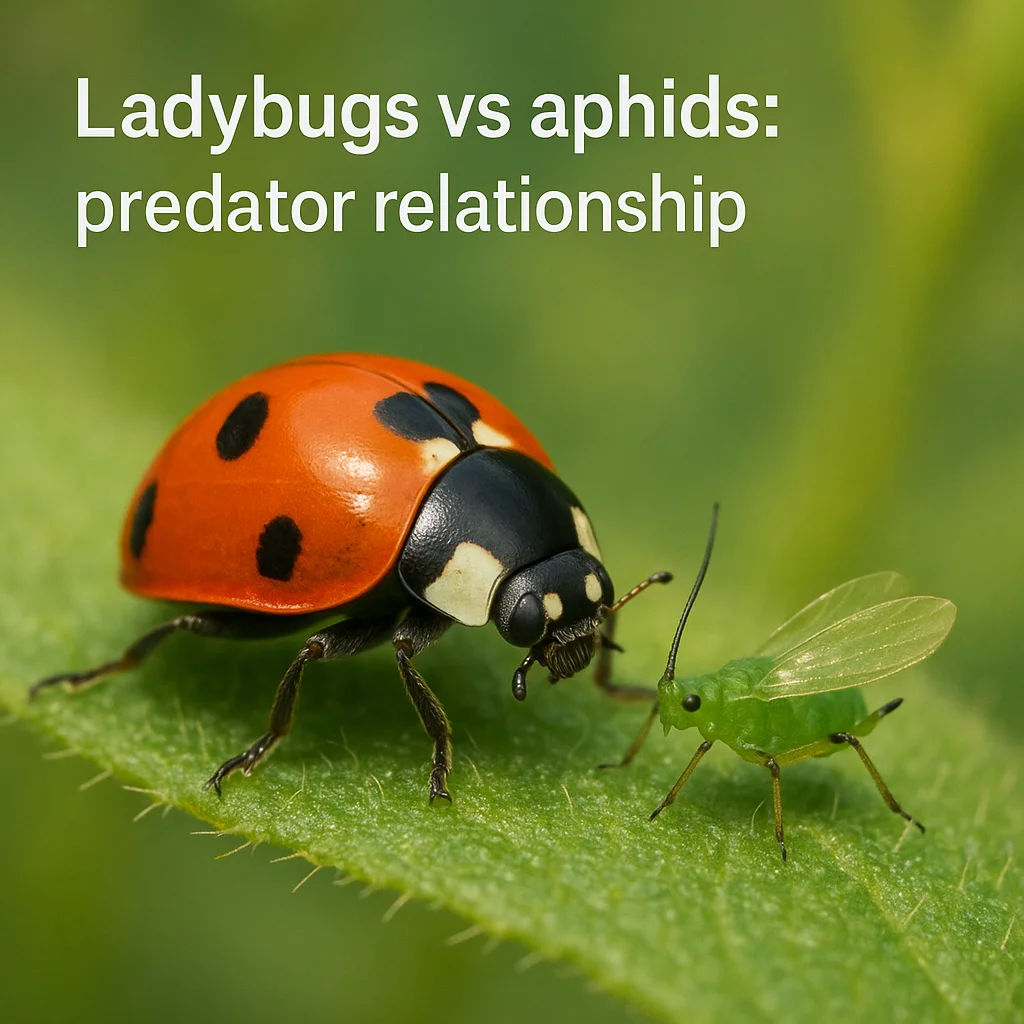
- Common names: Ladybug (also known as lady beetle or ladybird), aphid
- Scientific names: Ladybug: varies (e.g., Coccinella septempunctata), Aphid: varies
- Insect or not: Both are insects, part of the invertebrate group
- Order / family: Ladybug: Coccinellidae, Aphid: Aphididae
- Typical size range (adult): Ladybugs: 1–10 mm, Aphids: 1–5 mm
- Key colors/patterns: Ladybugs: red or orange with black spots, Aphids: varies from green, black, to brown
- Activity: Diurnal
- Typical habitats: Gardens, fields, forests
- Where in the world it occurs: Found globally; most species are common in temperate regions
- Seasonality: Most active in spring and summer when aphids are plentiful
🔍 Identification
Ladybugs and aphids can be easily identified in the field with a few key traits. Ladybugs have a rounded, dome-shaped body, often brightly colored with spots, while aphids are small, soft-bodied insects that are commonly found on plant stems and leaves.
- Ladybugs have short, clubbed antennae and two pairs of wings, with the first pair being hardened wing covers.
- Aphids are pear-shaped, with long antennae and may have winged or wingless forms.
- Their legs are slender, allowing for quick movement along plant surfaces.
- Ladybugs may be mistaken for spotted beetles, but their coloration is a distinguishing factor.
- Top ID Tips:
- Look for the rounded shape and bright colors of ladybugs.
- Note the green, black, or brown colors of aphids clustered on plant surfaces.
- Ladybugs have a hard shell with distinct spots.
- Aphids often have cornicles, two small tubes on their rear end.
- Ladybugs usually have a smooth movement over plants.
- Aphids may form large colonies on new plant growth.
🧠 Basic Body Structure
Ladybugs and aphids both share the basic insect body structure, which includes three primary parts: head, thorax, and abdomen. They each have six legs and an exoskeleton that provides structure and protection. Both are invertebrates, meaning they lack an internal vertebral column or spine.
Ladybugs possess hardened wings known as elytra, which cover their second pair of wings used for flight. Aphids, on the other hand, may exhibit a winged stage depending on environmental conditions.
🌍 Habitat & Distribution
Ladybugs thrive in a variety of environments, including gardens, meadows, and agricultural fields where aphid populations are abundant. Aphids are typically found on the undersides of leaves, stems, and flower buds where they feed on plant sap. Both ladybugs and aphids are globally distributed, although they are most prolific in temperate regions.
Microhabitats for both species include plant surfaces, garden foliage, and, for aphids, sometimes the bark of young trees. Changes in climate and pesticide use can significantly affect their visibility and population dynamics.
📅 Seasonal Appearance & Activity
Ladybugs and aphids are most active during warmer months, particularly in spring and summer. Ladybugs are diurnal and visible during the day scouring plants for aphid colonies. Aphids are also active during these times, multiplying rapidly as temperatures rise.
- Best Time to Spot It:
- Spring mornings in gardens and meadows.
- Summer afternoons on leafy plants.
- After rainfall when plant growth supports aphid increase.
- Warm, sunny days when ladybugs fly to hunt.
🥚 Reproduction & Egg-Laying
Ladybugs engage in a courtship dance involving pheromones before mating. Afterward, females lay their eggs on the undersides of leaves, ideally near aphid colonies to provide larvae with immediate food.
Aphids can reproduce both sexually and asexually (parthenogenesis). Eggs are often laid in mass formations to ensure survival, and in some climates, adults give birth to live young.
🌀 Metamorphosis & Life Cycle
Ladybugs undergo complete metamorphosis, including egg, larva, pupa, and adult stages. Eggs hatch into voracious larvae that feed on aphids for several weeks before pupating into adults. The entire lifecycle can take 4–6 weeks, although it varies.
Aphids exhibit incomplete metamorphosis, transitioning directly from nymph to adult. Nymphs resemble adults and feed on plant sap. Their rapid reproduction can lead to exponential population growth within just a few weeks.
🍽️ Diet & Feeding Behavior
Ladybugs are primarily predators, feeding on aphids using their strong mandibles to grasp and consume them. They play a critical role in controlling aphid populations.
Aphids feed by piercing plant tissues with their needle-like mouthparts to suck sap, leading to potential plant damage.
🦉 Predators & Defense
Ladybugs and aphids face numerous natural enemies, including birds, spiders, and parasitoid wasps. Ladybugs can release a foul-tasting chemical to deter predators and use camouflage and mimicry to blend into foliage.
- Defense Highlights:
- Ladybugs have bright warning colors and secrete toxins.
- Aphids may camouflage into plant life.
- Ladybugs use rapid flight to escape.
- Aphids form dense colonies as a defense.
- Aphids can excrete sticky honeydew to attract aggressive ants for protection.
👥 Social Behavior & Swarms
Both ladybugs and aphids display unique social behaviors. Ladybugs are generally solitary but may gather in groups for overwintering. Non-migratory ladybugs form aggregations for warmth.
Aphids can form large colonies. Some species are known to have symbiotic relationships with ants, where ants farm aphids for honeydew.
🧭 Senses & Communication
Ladybugs rely on vision and chemical cues (pheromones) to locate mates and food. They communicate threats through color displays.
Aphids use similar pheromones to communicate alarm and aggregation signals. They also produce honeydew, which ants use for sustenance, forming a communication chain between species.
🌱 Role in the Ecosystem
The predator-prey relationship between ladybugs and aphids is pivotal for ecosystem balance. Ladybugs control aphid populations, reducing plant damage. Aphids, while harmful to plants, serve as a food source for many insects, contributing to food webs.
Their interactions influence plant health and productivity, with ladybugs promoting healthier plant growth by reducing aphid numbers.
📉 Population & Conservation Notes
Both ladybugs and aphids are generally common in suitable environments. However, habitat changes, pesticide use, and climate variations affect their populations. Conservation efforts focus on promoting biodiverse landscapes and reducing chemical impacts.
- How to Help (Low-Impact):
- Plant native species to support balanced ecosystems.
- Limit pesticide use to protect insect populations.
- Allow leaf litter to provide cover for overwintering insects.
- Provide diverse plantings to support various insects.
⚠️ Human Interaction & Safety
Ladybugs are harmless to humans and rarely bite unless provoked. Their colorful appearance often fascinates observers. Aphids do not directly interact with humans but can cause plant damage in gardens.
For any insect bites, wash the area with soap and water, and avoid scratching. Seek professional advice if severe reactions occur.
Observing ladybugs and aphids can be enjoyable, but it is crucial to respect their natural habitats and avoid collecting wild specimens.
📌 Summary
- Ladybugs are recognized by their dome-shaped body and bright colors.
- Aphids are small, soft-bodied insects found on plant stems.
- Ladybugs use chemical defenses and feeding on aphids for protection.
- Aphids can damage plants by sucking sap.
- Both insects play critical roles in their ecosystems as predator and prey.
- Habitat changes and pesticide use impact their populations.
- Respectful observation supports conservation efforts.