🕷️ Psyllids Tiny ‘jumping Plant Lice' And Leaf Curl Signs
🧾 Quick Facts
Psyllids, commonly known as "jumping plant lice," are small, sap-sucking insects that are often mistaken for aphids or whiteflies. They exhibit a variety of forms, making them an interesting group for entomologists and gardeners alike. Their ability to affect plant appearances, particularly through leaf curling, is a hallmark of their activity.
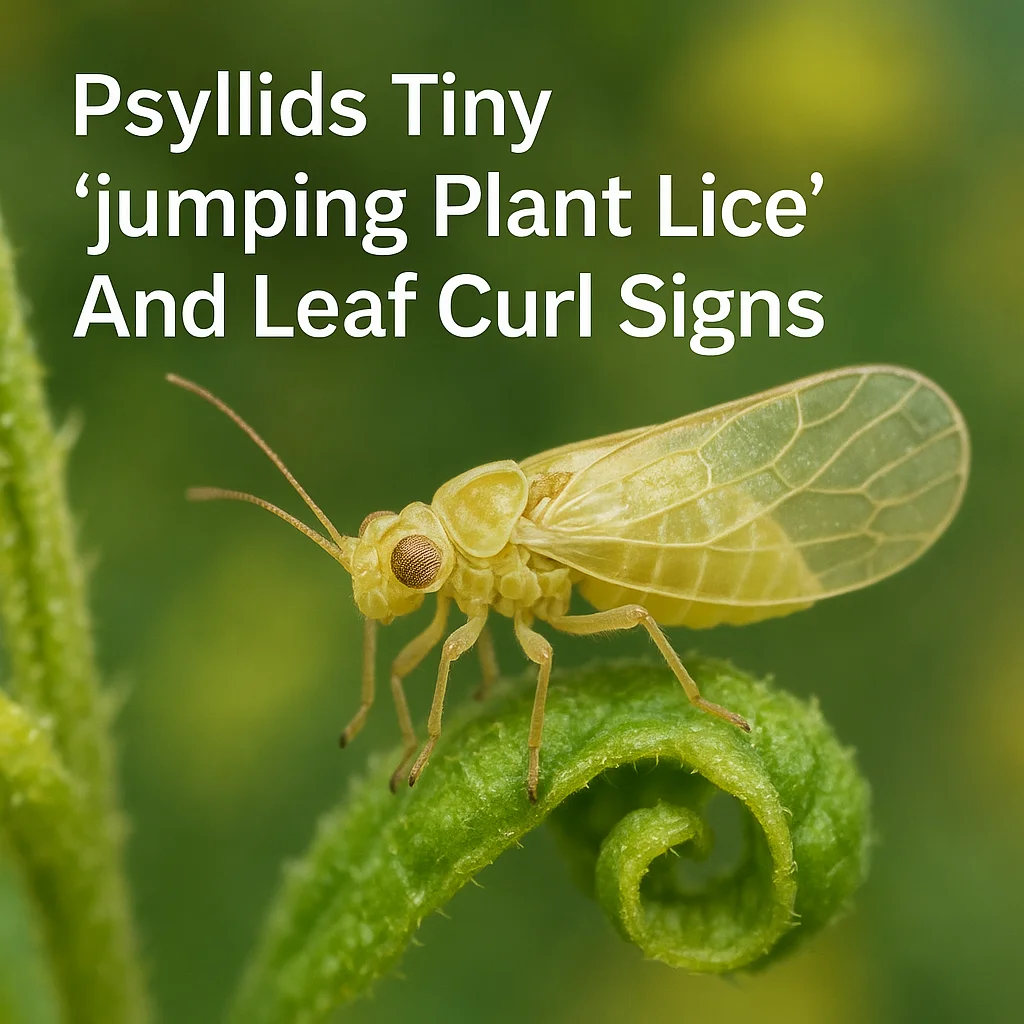
- Common names: Jumping plant lice, psyllids
- Scientific name: Varies by species
- Insect or not: They are insects; specifically, they belong to the order Hemiptera
- Order / family: Hemiptera / Psyllidae
- Typical size range (adult): 1 to 5 mm in length
- Key colors/patterns: Generally green, yellow, or brown; some species have distinctive markings
- Activity: Primarily diurnal
- Typical habitats: Gardens, farms, forests, and orchards
- Where in the world it occurs: Found globally, with some species region-specific
- Seasonality: Most active in warm months; varies by region
🔍 Identification
Psyllids are recognized by their small, delicate appearance and powerful hind legs used for jumping. They may have a compact, streamlined body with clear or lightly colored wings that lay flat over the abdomen.
- Body shape and silhouette: Small and ovate with a pronounced head and thorax
- Antennae type: Long and filiform, typically segmented
- Wing features: Transparent or lightly colored, often held roof-like over the body
- Leg traits and movement style: Strong hind legs enable jumping; walking is slow and deliberate
- Distinguishing look-alikes: Can be confused with aphids and whiteflies, though generally possess longer, more visible antennae and distinctive jumping behavior
- Small, jumping behavior when disturbed
- Often associated with leaf curling on host plants
- Transparent wings that rest in a tent-like fashion
- Typically found on the undersides of leaves
- Long, segmented antennae for their small body size
- Notable for causing galls or leaf deformations
🧠 Basic Body Structure
Psyllids, like all insects, are invertebrates, meaning they have no backbone. They possess a basic insect structure of a head, thorax, and abdomen. Their six legs are attached to the thorax; the back legs are adapted for jumping. They have an exoskeleton that provides support and protection, molting throughout their growth as they transition to adulthood. Wings are present in adults, aiding in dispersal and, in some cases, offering the option to fly short distances.
🌍 Habitat & Distribution
Psyllids thrive in environments where their host plants are abundant. They often inhabit gardens, orchards, and agricultural areas where new growth provides ample feeding opportunities. Psyllids may also be found in natural settings like forests, adhering closely to the host plants they require for sustenance and reproduction. This global group can be found on nearly every continent, with higher concentrations in temperate zones where their specific host plants flourish. Habitat change, such as the introduction of non-native plants, can either boost their populations or alter their geographical distribution.
📅 Seasonal Appearance & Activity
Psyllids are most active during the warmer months, although specifics vary widely with species and geographical location. They are primarily diurnal, relying on light and temperature to dictate their activity patterns. Weather conditions significantly affect their visibility, with temperature and humidity being main determinants.
- Best seen during spring and summer
- Diurnal activity peaks at midday
- More numerous during hot, humid periods
- Lower activity in cold or very dry weather
🥚 Reproduction & Egg-Laying
Psyllids exhibit a variety of mating behaviors, often engaging in subtle courtship rituals involving vibration signals that are sensed by potential mates. Females lay their eggs in close association with host plants, often attaching them to young leaves or stems. The number of eggs laid varies widely among species and can depend on environmental conditions. Some species are known for their ability to lay eggs in large clusters, ensuring a high probability of survival for at least some offspring.
🌀 Metamorphosis & Life Cycle
Psyllids undergo incomplete metamorphosis, consisting of egg, nymph, and adult stages. Nymphs, resembling small adults, remain in close proximity to where they hatch, feeding on plant sap. They molt multiple times before reaching maturity. The duration of each stage can vary, often dependent on temperature and food availability.
Psyllid nymphs are potent feeders and can produce honeydew, which can lead to sooty mold development on plants. The adult stage follows the final molt, at which point the psyllid gains reproductive capabilities and often disperses more widely in search of new host plants or mates.
🍽️ Diet & Feeding Behavior
As sap-sucking insects, psyllids have specialized piercing-sucking mouthparts adapted to penetrate plant tissues and extract fluids. This feeding process often leads to characteristic plant damage like leaf curling or galls. Psyllids are primarily herbivores, with very specific plant preferences, feeding on various species depending on their type. Their feeding contributes to ecological roles such as influencing plant dynamics and indirectly aiding pollinators by encouraging the growth of certain plant structures.
🦉 Predators & Defense
Psyllids face numerous threats from natural enemies, including birds, spiders, parasitic wasps, and predatory insects like lacewings. In response, they have developed various defense strategies such as camouflage that helps them blend into foliage. Some species may produce a waxy substance that deters predators or employ jumping as a rapid evasion tactic.
- Blend in with host plants for camouflage
- Quick, evasive jumping ability
- Waxy coatings or secretions to deter predators
- Beneficial relationships with ants in some species for protection
👥 Social Behavior & Swarms
Generally, psyllids are solitary insects, although at times they may be seen in groups on plants densely infested with them. They do not form swarms in the traditional sense but may be found together in high numbers when specific environmental or seasonal conditions favor their reproduction and growth. Communication among psyllids is mostly non-vocal, facilitated by substrate vibrations or chemical signals during mating.
🧭 Senses & Communication
Psyllids rely on a range of senses to interact with their environment, including sight, though their compound eyes provide basic vision primarily to detect movement. They employ chemical signals in the form of pheromones to communicate, especially during mating. Mechanical cues through vibration play a crucial role in interactions with potential mates.
🌱 Role in the Ecosystem
Psyllids interact with their environment in several ways, primarily by affecting plant health through their feeding. While often considered pests due to the damage they can cause, they also play roles in plant dynamics by promoting new growth in some species. Moreover, their presence can influence the population dynamics of other insects, such as ants that tend psyllids for honeydew.
📉 Population & Conservation Notes
Psyllid populations are generally stable, although affected by habitat changes such as urban landscaping and agriculture practices. Local abundance can vary significantly, particularly with the introduction or removal of host plants from an area. Climate change and pesticide use can also impact their populations.
- Plant native species to support diverse insect populations
- Avoid broad-spectrum pesticides
- Encourage natural predators through habitat enhancements
- Maintain plant diversity to provide varied insect habitats
⚠️ Human Interaction & Safety
Psyllids generally do not pose direct risks to humans, such as bites or stings. However, they can be agricultural pests causing indirect economic damage through plant destruction. It is crucial to manage them by natural means whenever feasible and to respect these creatures by not collecting them from the wild.
If you experience any skin irritation by indirect contact, it is advisable to wash the area thoroughly and seek professional guidance should a severe reaction occur.
📌 Summary
- Psyllids are small, jumping insects with sap-sucking habits
- They thrive in gardens, forests, and orchards worldwide
- Active primarily in warm seasons during the day
- Undergo incomplete metamorphosis from egg to adult
- Feed on plant sap, affecting plant health and appearance
- Preyed upon by birds, insects, and parasitic wasps
- Influence ecosystems by interacting with plants and predators
- Widely present but impacted by habitat and climate changes
- Should be observed respectfully in natural environments