🕷️ Assassin bugs: predatory true bugs
🧾 Quick Facts
Assassin bugs, belonging to the family Reduviidae, are fascinating predatory insects widely recognized for their ambush tactics and diverse appearances. Here's an overview of these remarkable creatures:
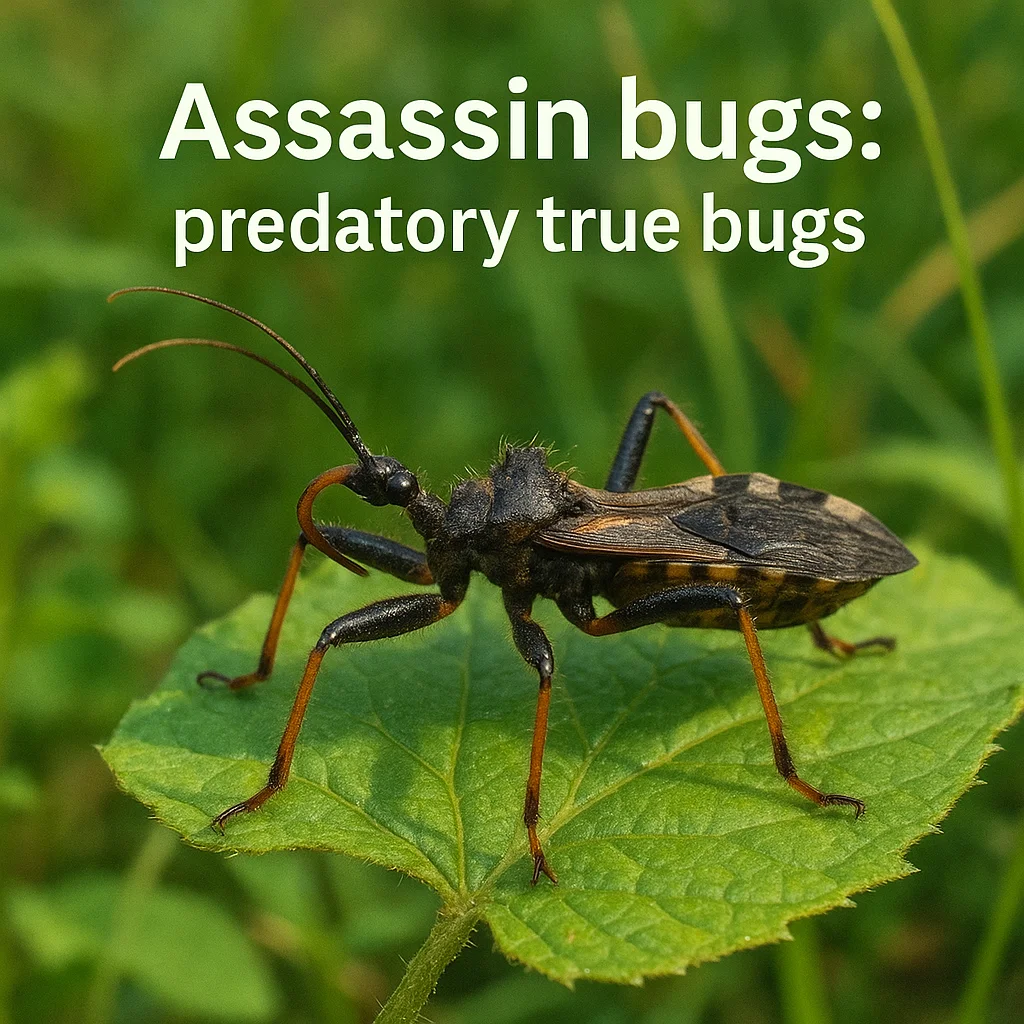
- Common names: Assassin bug
- Scientific name: Varies, as there are numerous species within the family Reduviidae
- Insect or not: Yes, Assassin bugs are insects, specifically true bugs
- Order / family: Hemiptera / Reduviidae
- Typical size range (adult): 5 to 40 mm, depending on species
- Key colors/patterns: Varies; often brown, black, red or orange, with diverse patterns
- Activity: Primarily diurnal, though some species may be nocturnal
- Typical habitats: Diverse habitats including forests, grasslands, and gardens
- Where in the world it occurs: Global, excluding Antarctica
- Seasonality: Active in warmer months, visibility varies by region
🔍 Identification
Recognizing assassin bugs in the field can be a thrilling experience for any insect enthusiast. With their varied appearances, they can sometimes be mistaken for other insects. Here's how to spot them:
Assassin bugs generally have an elongated body shape and a narrow head equipped with a prominent, curved rostrum used for piercing prey. Their antennae are long and thread-like, adding to their distinctive silhouette. When present, wings are typically folded flat over the body. Their legs are adapted for walking and grasping prey, with some species showcasing longer hind legs.
They can be confused with beetles or other true bugs, but their narrow head and rostrum set them apart.
- Top ID Tips:
- Look for a narrow, elongated body
- Note the long, thread-like antennae
- Observe the curved rostrum for piercing
- Wings are folded flat over the abdomen
- Long, grasping legs are a common trait
- Colors and patterns can vary greatly
- Common confusion with beetles, but note the lack of hard elytra
- Watch for them in hunting mode on leaves and stems
🧠 Basic Body Structure
Assassin bugs exhibit the typical body structure of insects, which includes a divided body plan consisting of a head, thorax, and abdomen. Each insect body features six legs, attached to the thorax. Their body is covered by a protective exoskeleton, which they periodically shed in a process known as molting to accommodate growth.
As invertebrates, assassin bugs lack a backbone, relying instead on their exoskeleton for structural support and protection.
🌍 Habitat & Distribution
Assassin bugs are found in a wide range of environments depending on the species. They thrive in forests, grasslands, agricultural areas, urban gardens, and even wetlands. Microhabitats include the undersides of leaves, within flower blooms, and under bark where they lie in wait for prey.
Geographically, they inhabit continents all over the world, barring Antarctica, with species adapted to tropical, temperate, and arid climates. Changes in habitat, such as deforestation or pollution, may affect local populations and sightings.
📅 Seasonal Appearance & Activity
Assassin bugs are most active and thus visible during warmer months across their ranges. Their activity can vary from diurnal to nocturnal depending on the species and environmental conditions.
- Best Time to Spot It:
- Spring through late summer in temperate regions
- During warm, sunny days
- Avoid periods of heavy rain
- Look in the early morning and late afternoon for diurnal species
- Nocturnal species may be more visible in the humid evenings
🥚 Reproduction & Egg-Laying
Assassin bugs often exhibit intriguing mating behaviors, which may include various courtship displays or signals. Mating can lead to fierce interactions due to their predatory nature.
Their eggs are typically laid on plants, within leaf crevices, or in soil, depending on the species. Egg counts can vary significantly from species to species, adapting to local environmental conditions.
🌀 Metamorphosis & Life Cycle
Assassin bugs undergo incomplete metamorphosis, transitioning from egg to nymph and finally adult without a pupal stage.
The nymphs resemble smaller versions of the adults, though they may lack wings or have undeveloped wing pads. Nymphs are also predatory, feeding on smaller insects until they reach maturity. The complete life cycle, from egg to adult, can last several months and is influenced by environmental factors.
🍽️ Diet & Feeding Behavior
Assassin bugs are true predators. At all life stages, they feed on other insects using their piercing-sucking mouthparts to inject saliva that liquefies the insides of their prey, which they then consume.
They play a crucial role as pest controllers but are not herbivorous. Some species have also been observed feeding on vertebrates, although this is rare and varies greatly between different species.
🦉 Predators & Defense
Assassin bugs face threats from various natural enemies, including birds, reptiles, and larger insects. In response, they have evolved a suite of defense mechanisms:
- Defense Highlights:
- Camouflage against surrounding foliage
- Occasional mimicry of other, less palatable insects
- Capable of emitting a defensive odor to deter predators
- Evasive action using their strong legs to escape threats
- Some species can deliver a painful bite if handled
👥 Social Behavior & Swarms
Assassin bugs are generally solitary insects, each tending to its own territory. Encounters with each other are primarily limited to mating interactions. They do not form swarms or colonies, as their lifestyle is largely independent.
🧭 Senses & Communication
These insects rely heavily on their keen sense of vision and the ability to detect vibrations through the substrate to locate prey and avoid threats. Communication, when necessary, may involve pheromones, although this is not well-documented and likely varies among different species.
🌱 Role in the Ecosystem
Assassin bugs play vital roles in their ecosystems. As predators, they help control pest populations, acting as natural pest regulators. This can be beneficial to agriculture, as they reduce the number of harmful insects.
Their interactions with plants and other insects are significant, contributing to the rich tapestry of biotic relationships within their habitats. Though primarily predators, their presence supports biodiversity by maintaining the balance of insect populations.
📉 Population & Conservation Notes
Assassin bugs are often observed as common in suitable habitats, though specific population data for individual species is generally limited. They are not currently considered at risk globally but may face challenges such as habitat loss, pesticides, and climate change impacts. Providing native plants and habitat opportunities can support local populations.
- How to Help (Low-Impact):
- Plant native flowering plants
- Avoid pesticide use in gardens
- Maintain leaf litter and natural debris
- Support conservation efforts for diverse habitats
⚠️ Human Interaction & Safety
Assassin bugs are generally harmless if left undisturbed. Their bites, which they can deliver through their rostrum if provoked, can be painful but are not dangerous, except in rare cases where individuals may have severe reactions. For any severe reactions, it is recommended to seek professional medical advice. Observing these insects with respect and caution is encouraged, and they should not be collected or harmed.
📌 Summary
- Assassin bugs are predatory true bugs from the family Reduviidae
- They exhibit diverse appearances and habitats globally
- Active mainly in warmer months and can be diurnal or nocturnal
- Undergo incomplete metamorphosis with nymph stages
- They are essential predators, aiding in pest control
- Defense mechanisms include camouflage and biting
- Solitary by nature, with minimal social interactions
- Not commonly threatened, but habitat preservation can aid conservation
- If provoked, they can bite; handle with care