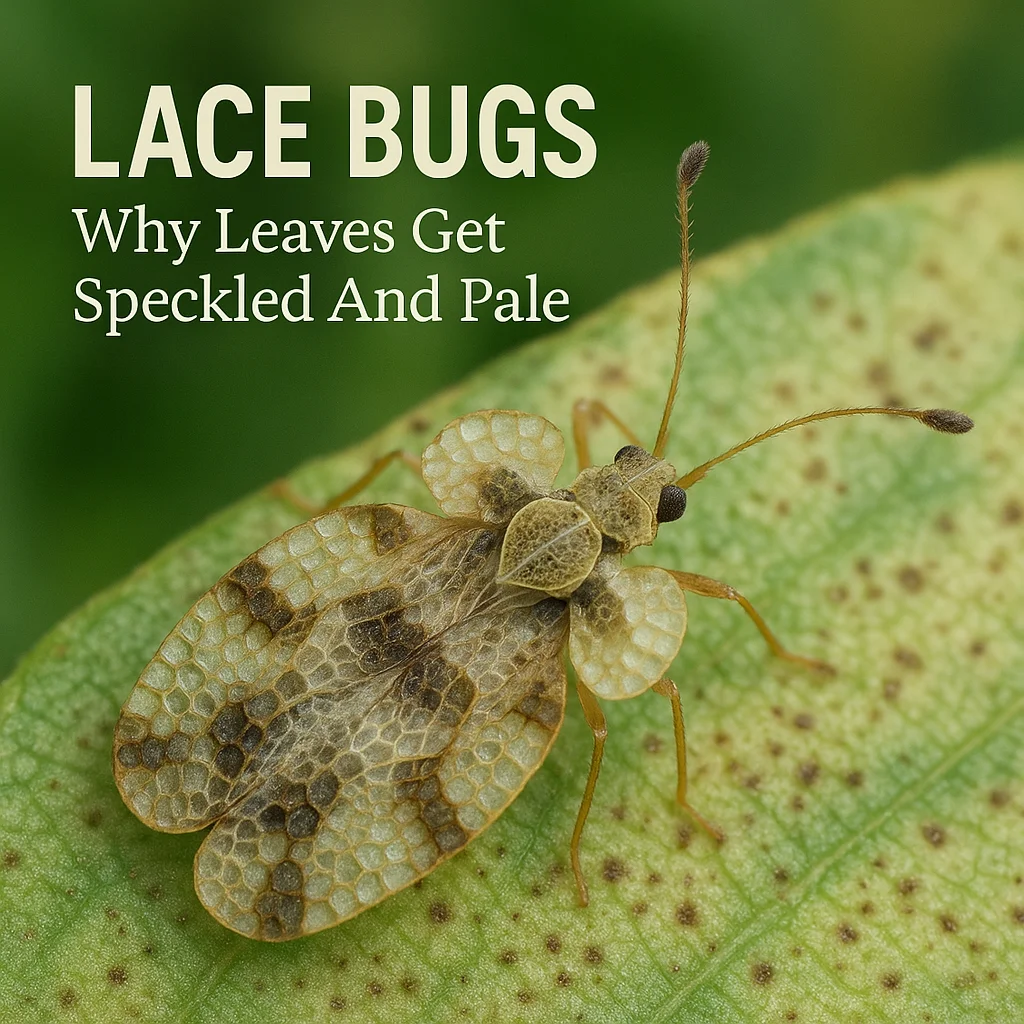
🕷️ Lace Bugs Why Leaves Get Speckled And Pale
🧾 Quick Facts
Lace bugs are small insects known for the distinctive lace-like pattern of their wings, which can create a speckled and pale appearance on leaves they inhabit. Understanding their basic facts helps appreciate their role in ecosystems.
- Common names: Lace bugs
- Scientific name: Varies by species
- Insect or not: Yes, they are true insects
- Order / family: Hemiptera / Tingidae
- Typical size range: 3 to 4 mm (adult)
- Key colors/patterns: Black, brown, and white with lace-like patterns
- Activity: Primarily diurnal
- Typical habitats: Woodlands, gardens, and fields
- Where in the world it occurs: Common across North America, Europe, and Asia
- Seasonality: Mostly visible during spring through fall
🔍 Identification
Lace bugs can be identified by their miniature size and the intricate lace-like pattern of their wings. They have a flat body silhouette, which is crucial for quick identification.
- Body is flat and small
- Antennae are short and inconspicuous
- Wings are lace-patterned, covering the body like a shell
- Legs are spiny and well-adapted for clinging to leaves
- Sometimes confused with small beetles or other Hemiptera
- Top ID Tips:
- Look for lace-like wing coverings
- Identify small size (3–4 mm)
- Check for spiny legs
- Observe in sunlight; diurnal activity
- Search for them on the underside of leaves
- Note their preference for trees and shrubs
🧠 Basic Body Structure
Like all insects, lace bugs possess a tripartite body structure consisting of a head, thorax, and abdomen, and they are equipped with six legs. Their body is covered with an exoskeleton that provides protection and support. As invertebrates, they do not have a backbone, relying instead on the rigid outer shell. Lace bugs may molt several times before reaching adulthood, shedding their old exoskeleton to grow.
🌍 Habitat & Distribution
Lace bugs thrive in environments where they can easily access foliage, such as forests, gardens, and grasslands. They are commonly found on the undersides of leaves, where they feed and reside. Geographically, lace bugs are distributed across North America, Europe, and parts of Asia—all regions that provide the necessary temperate or subtropical climates. Habitat modifications, such as urban expansion, may affect their visibility and abundance.
📅 Seasonal Appearance & Activity
The activity of lace bugs is primarily observed from spring through fall. They are diurnal creatures, most active during daylight hours. Weather conditions also influence their presence; warm temperatures and low to moderate rainfall are conducive to their activity.
- Best Time to Spot It:
- Warm spring days
- Summer mornings
- Late afternoons in fall
- After light rain
🥚 Reproduction & Egg-Laying
Mating behavior among lace bugs includes varied courtship displays that may involve scent or visual signals. Female lace bugs lay their eggs on the host plants, typically on the underside of leaves, securing them with a gummy secretion. Egg counts can vary significantly, sometimes with dozens laid at one time, reflecting regional adaptations and environmental conditions.
🌀 Metamorphosis & Life Cycle
Lace bugs undergo incomplete metamorphosis, progressing through the stages of egg, nymph, and adult. The nymphs, while resembling smaller adults, are wingless and molt several times as they grow. This process allows them to consume plant sap and increase in size. The adult stage follows the final molt, completing the life cycle over several weeks or varying by specific species and climate.
🍽️ Diet & Feeding Behavior
Throughout their life cycle, lace bugs feed mainly by using piercing-sucking mouthparts to extract nutrients from plant sap. They often target the undersides of leaves, which leads to the distinctive speckling and pale appearance on infested foliage. As herbivores, lace bugs can impact the health of their host plants, but they play an important role in maintaining ecological balance.
🦉 Predators & Defense
Lace bugs fall prey to a range of natural predators including birds, spiders, and insectivorous mammals. They have evolved several defense mechanisms to mitigate predation risks, such as their ability to blend with the leaf patterns due to their lace-like wings and occasional use of startle displays if disturbed.
- Defense Highlights:
- Camouflage with foliage
- Quick scuttling under leaves
- Flattened body increases surreptitiousness
- Use of spiny legs for grip
👥 Social Behavior & Swarms
Lace bugs are primarily solitary or found in small groups due to their limited social structure. Territory and mating interactions are the primary reasons individuals encounter each other. There is minimal evidence to suggest swarm behavior, which is uncommon for this group.
🧭 Senses & Communication
Lace bugs rely heavily on their sense of touch and smell to navigate their environment. Their sensory abilities allow them to detect pheromones for mating and to find suitable feeding locations on host plants. Potential communication may include release of pheromones to indicate territories.
🌱 Role in the Ecosystem
As important players in their ecosystems, lace bugs contribute to plant population control and serve as food for various predators. While they can become pests in agricultural settings, affecting crop yields, they are integral to the complex webs of prey-predator relationships in which they exist. Their interactions with other insects often involve competition or limited parasitism.
📉 Population & Conservation Notes
Generally, lace bugs are common in suitable environments, although their local abundance can vary due to factors like pesticide use and habitat destruction. Maintaining populations requires minimizing chemical applications and preserving natural habitats.
- How to Help (Low-Impact):
- Plant native species in gardens
- Avoid extensive pesticide use
- Leave leaf litter undisturbed
- Promote biodiversity
⚠️ Human Interaction & Safety
Lace bugs are largely harmless to humans. They do not bite or sting but can cause aesthetic damage to plants, which is mostly a concern in landscape maintenance. Observation should be respectful, and collecting from wild populations is discouraged to preserve ecological balance.
📌 Summary
- Distinguished by lace-patterned wings
- Found in temperate and subtropical zones
- Active primarily during warm seasons
- Exhibit incomplete metamorphosis
- Feed on plant sap, affecting leaf appearance
- Preyed upon by a variety of natural enemies
- Minimal negative impact on humans
- Important ecological role as both herbivores and prey