🕷️ Plant bug damage: how to recognize
🧾 Quick Facts
Plant bugs, often part of the Miridae family, are invertebrates known for causing visible damage to a variety of plants. Understanding what they are and how they affect plants is key for gardeners, farmers, and nature enthusiasts.
- Common Names: Plant bugs, fleahoppers
- Scientific Name: Varies (often from family Miridae)
- Insect or Not: Insect (invertebrate)
- Order / Family: Hemiptera / Miridae
- Typical Size Range: 3–15 mm long (adult)
- Key Colors/Patterns: Varied; greens, browns, yellows with patterns
- Activity: Mostly diurnal
- Typical Habitats: Gardens, fields, woodlands
- Where in the World It Occurs: Worldwide, with higher diversity in temperate and tropical regions
- Seasonality: Spring through fall, depending on region
🔍 Identification
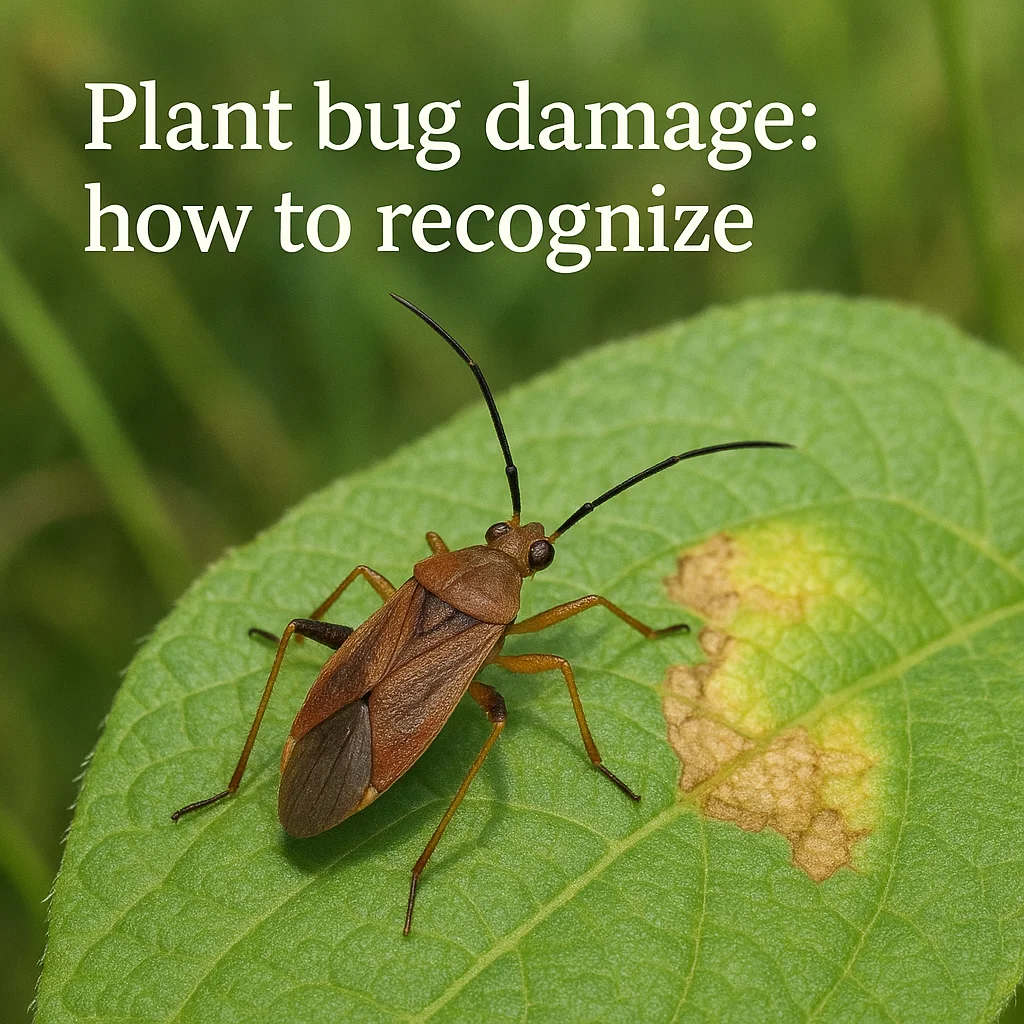
Plant bugs vary in appearance but share common features that aid in their identification. They typically possess elongated bodies with wings lying flat over their backs. Antennae are often long and slender, assisting in navigation and communication. These pests can be confused with other small bugs, but knowing specific traits can help distinguish them in the field.
- Body Shape and Silhouette: Oval to elongated with a somewhat flattened body
- Antennae Type: Long, segmented
- Wing Features: Folded flat over abdomen, often partially transparent
- Leg Traits and Movement Style: Adapted for hopping or running; agile
- Distinguishing Look-Alikes: Differ from aphids and cicadas by smaller size and distinct wing positioning
- Check for elongated body shape
- Look for transparent or patterned wings
- Observe antennae length and segmentation
- Note activity pattern (most active during daylight)
- Spot them on plant leaves and stems
- Use a magnifier for pattern and coloration details
- Late spring through late fall
- Warm, sunny days
- Mid-morning to late afternoon
- Avoiding rainy or exceptionally hot days
- Effective camouflage with plant environments
- Agile movements to escape predators
- Utilization of plant crevices for hiding
- Chemical defenses, varying by species
- Plant native vegetation
- Reduce pesticide use
- Create wildlife-friendly gardens
- Support organic farming practices
- Plant bugs belong to Hemiptera and are small insects causing plant damage.
- They thrive in gardens, forests, and fields, globally.
- Active during the warm months and mostly diurnal.
- Reproduction involves laying eggs on host plants, with nymphs undergoing incomplete metamorphosis.
- Primarily herbivores, feeding on plant sap through piercing-sucking mouthparts.
- Natural predators include birds and spiders, with defenses like camouflage.
- They play a dual role, affecting agriculture but regulating plant growth in nature.
- Human interaction should be respectful, avoiding handling or collecting them.
- Top ID Tips
🧠 Basic Body Structure
Like other insects, plant bugs have a body divided into three parts: the head, thorax, and abdomen. They have six legs which they use effectively for movement and escape. Plant bugs possess an exoskeleton that protects their internal organs and supports their body. As they grow, they undergo molting, shedding their exoskeleton. Their wings, often ornate and functional, are a key identification feature. Being invertebrates, they lack a backbone, relying instead on their exoskeleton for structural support.
🌍 Habitat & Distribution
Plant bugs inhabit various environments, favoring areas where their host plants thrive. They are adaptable to gardens, agricultural fields, forests, and even urban parks. Within these habitats, they can be found in microhabitats like under leaves, in plant crevices, and around flowers. Their vast distribution includes temperate and tropical regions across continents, thriving in climates that support a variety of plant hosts. Changes in habitat, such as urban development and agriculture, influence their distribution and population density.
📅 Seasonal Appearance & Activity
Typically, plant bugs are visible from spring to fall, with peak activity during warm months. Their presence is more pronounced during daylight, as they are diurnal creatures. Weather plays a crucial role in their activity; they are most active during moderate temperatures and stable weather conditions, avoiding extreme heat or heavy rain.
- Best Time to Spot It
🥚 Reproduction & Egg-Laying
Plant bugs engage in courtship displays and use pheromones for attracting mates. Females lay eggs on host plants, often strategically placing them to ensure young larvae have immediate access to food. Egg counts can range from a few dozen to several hundred, depending on the species and environmental conditions. The location and number of eggs laid vary, reflecting the adaptability of plant bugs to different ecological niches.
🌀 Metamorphosis & Life Cycle
Plant bugs undergo incomplete metamorphosis, which consists of three stages: egg, nymph, and adult. Eggs hatch into nymphs that resemble smaller versions of adults. These juveniles feed heavily on plant sap, typically staying on the same plant where they were born. Nymphs go through several molts, gradually developing wings until they become adults capable of reproduction. The life cycle duration varies by species and climate; some can complete their cycle in a matter of weeks.
🍽️ Diet & Feeding Behavior
Plant bugs are primarily herbivores with piercing-sucking mouthparts that allow them to extract sap from plant tissues. This feeding behavior often results in visible damage to plants including curling, yellowing, or wilting leaves. In their nymph stage, they focus on tender plant parts, while adults can handle more robust plant tissues. Their role in the ecosystem can fluctuate, serving as pest controllers or sometimes as pests themselves, depending on their population and plant interactions.
🦉 Predators & Defense
Plant bugs face predation from various animals including birds, spiders, and small mammals. Their primary defense strategies include camouflage and rapid movement to evade capture. Some species might employ chemical defenses, although this is less common among plant bugs. These survival strategies help maintain their populations despite natural threats.
- Defense Highlights
👥 Social Behavior & Swarms
Plant bugs are mostly solitary, interacting with conspecifics primarily during mating seasons. They do not form large swarms or colonies but may gather in areas with abundant resources, giving the appearance of high population densities. These aggregations are temporary and mainly relate to food availability rather than social behavior.
🧭 Senses & Communication
Vision and the use of pheromones play significant roles in plant bugs' sensory and communication methods. While they rely on sight to navigate through their environment and avoid threats, pheromones are crucial for mating and territory marking. Touch and vibration sensing also aid in recognizing environmental changes and potential predators.
🌱 Role in the Ecosystem
Plant bugs contribute to the ecosystem by participating in plant regulation and serving as prey for numerous animals. While they can pose challenges for agriculture due to the damage they inflict on crops, they also aid in controlling plant overgrowth in natural settings. Their interactions with plants and other organisms create a complex web of relationships that underline their ecological importance.
📉 Population & Conservation Notes
Generally, plant bugs are reported as common in suitable habitats. However, like many species, their populations can be affected by habitat loss, pesticide use, and climate change. While precise global population numbers are not well-documented, local abundances vary with environmental conditions. Conservation efforts that promote biodiversity and sustainable practices benefit plant bug populations.
- How to Help (Low-Impact)
⚠️ Human Interaction & Safety
While plant bugs do not pose a direct threat to humans, some species can cause mild skin irritation if handled. Generally, they do not bite humans but may do so defensively. It is advisable to wash the affected area, avoid scratching, and seek professional advice if a severe reaction occurs. Observing these insects respectfully in their natural environments ensures minimal disturbance to both humans and insects.